Tiny Urban Kitchen

Exploring Food from Boston to Hong Kong and Beyond

  • About Me
  • Travel
  • Recipes
  • Michelin
  • Subscribe
  • Taiwanese
menu icon
go to homepage
  • About Me
  • Travel
  • Recipes
  • Michelin
  • Subscribe
  • Taiwanese
    • Email
    • Facebook
    • Instagram
    • LinkedIn
    • Pinterest
    • Twitter
    • YouTube
  • subscribe
    search icon
    Homepage link
    • About Me
    • Travel
    • Recipes
    • Michelin
    • Subscribe
    • Taiwanese
    • Email
    • Facebook
    • Instagram
    • LinkedIn
    • Pinterest
    • Twitter
    • YouTube
  • ×
    Home » You searched for tokyo sushi

    Search Results for: tokyo sushi

    Has It Been A Year Already? Birthday Reflections

    November 18, 2016 by Jennifer Che

    image

    Barolo, Italy

    Today's my birthday.

    And what a crazy, eventful year it's been!

    I'm shocked that it has already been one year since I stepped on a plane headed for Milan en route to Alba, Italy. In some ways that felt like yesterday. In other ways, I feel like so much has happened.
    _X1C0322
    I started a new job just a little over a year ago at a really exciting biotech startup in Cambridge. I've fallen in love with the energy that's ever-present at a startup. The work is fascinating, the people are great, and the company LOVES good food. It's a perfect match!

    Bryan and I have continued to travel a lot, visiting Spain twice (Madrid in June and Barcelona in October - posts for that trip coming soon) and visiting the fjords of Norway via cruise ship in August. We also took a few quick weekend trips to New York, Sonoma, and Chicago.

    _DSC1460

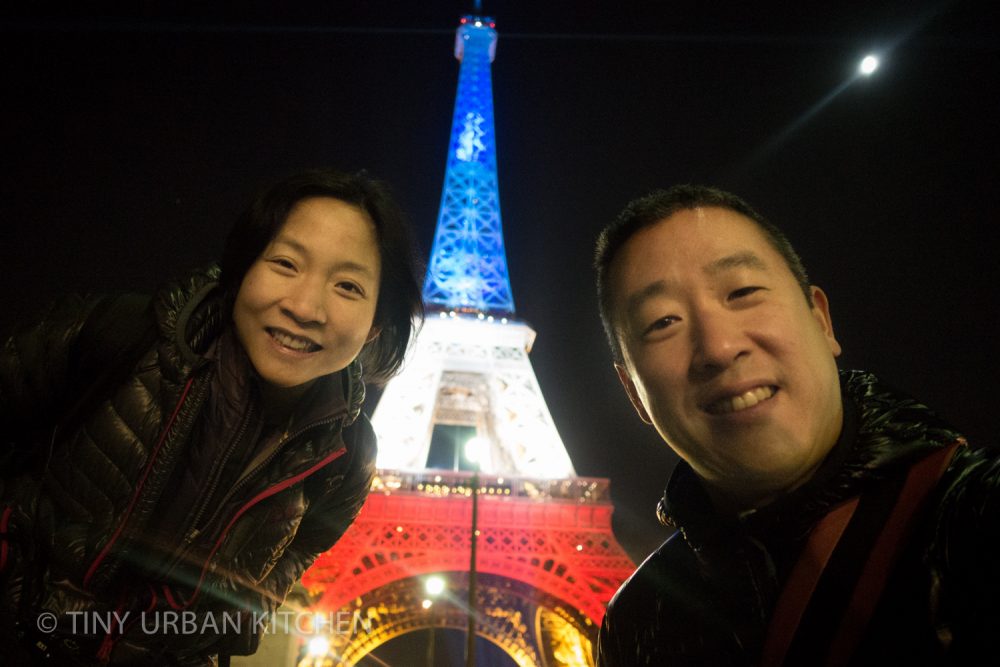
    Eiffel Tower, Paris, France

    I vowed that I would finish the Around the World Birthday Extravaganza trip series before the 1-year annivesary of my trip. I guess technically I missed the 1-year anniverary of the beginning of the trip, but I returned on December 3, 2015, so I still have a couple more weeks to finish off the series. 😉

    image

    Kiddie Land in Omotesando, Tokyo

    I just recently finished my last Japan post (Sushi Yoshitake) so we will move onto Hong Kong next, the last stop of our trip.

    wpid23243-D4C4486.jpg

    Hong Kong Mid-Level Escalators

    Stay tuned for posts about excellent classic dim sum places, a high-end Michelin starred Chinese restaurant, and awesome dumplings.

    For now, please enjoy the many other posts from this series!

    INTRO
    Around the World Birthday Extravaganza

    PIEDMONT, ITALYDSC4600.jpg
    Alba White Truffle Fair
    Osteria Dei Sognatori - A Traditional Piedmontese Dinner
    Italy Wine Tour - Barbaresco
    Lunch at Donna Selvatica in Neive, Italy
    Dinner at a Truffle Hunter's Inn - Tra Art e Querce
    G.D.Vajra Winery
    Trattoria Della Posta in Montfort D'Alba
    Nighttime Truffle Hunting with a Dog in Alba
    Osteria della Arco - last dinner in Alba
    Stunning Images of La Morra and Barolo, Italy

    BORDEAUX, FRANCEX1C0622.jpg
    First Day In Bordeaux, France - Une Cuisine en Ville
    Chateau Haut-Brion Tour in Bordeaux France
    Restaurant Le St. James
    Touring Bordeaux Wineries - Day 1 - Left Bank
    La Tupina, Bordeaux
    Cos d'Estournel Tour
    Touring Bordeaux - Pauillac, Chateau Lynch-Bages
    Chateau Cordeillan-Bages

    PARIS, FRANCEuntitled-1475
    A Different Paris
    Le Relais de l'Entrecote
    Pirouette Paris
    L'Ambroisie Paris
    L'Arpege

    TOKYO, JAPANTotoro Cream Puff
    Hiking at Mount Takao in Japan
    Florilege
    Sushi Harutaka
    Rokurinsha ramen breakfast (六厘舎)
    Azabu Kadowaki
    Nakameguro Iguchi yakitori (中目黒いぐち)
    Sushi-Ya (すし家)
    Shirohige's Cream Puff Factory - Totoro Cream Puff
    Sushi Yohitake

    Cafe La Haye Sonoma

    November 11, 2016 by Jennifer Che

    Cafe-LeHaye-Sonoma-1.jpg

    Cafe La Haye Sonoma

    This is the second post in the series titled Weekend in Sonoma + Napa.

    Cafe La Haye is the type of place I would visit regularly if I lived in Sonoma Valley. It’s a small, cozy, romantic family-owned restaurant that serves an ever-changing seasonally-inspired menu.

    Saul is the owner, and he’s great. A veteran of the restaurant industry (he worked for years in New York City and San Francisco before settling down in Sonoma), Saul is warm, friendly, and seems to know everyone who is dining at the restaurant. If he doesn’t know you, he makes a sincere effort to talk to you and warmly welcome you to the restaurant.

    Cafe La Haye is considered one of the top 25 restaurants in Sonoma County by Sonoma.com, was voted “Most Romantic” restaurant in the Sonoma Index Tribune, and is mentioned in the Michelin Guide, Gayot, Zagat, and countless other publications.

    We visited Cafe La Haye for dinner our first evening in Sonoma. We were exhausted at that point, having woken up at 3AM to catch a 5AM flight out of Boston that morning. Our 8PM PST dinner felt like 11PM to our east coast brains, and thus we were a bit like zombies....

    Read More »

    Shirohige's Cream Puff Factory - Totoro Cream Puff

    October 31, 2016 by Jennifer Che

    Totoro Cream Puff
    This is the thirty-first post in the Around the World Birthday Extravaganza Series. Please scroll to the bottom to see all the other posts in this series.

    Hello Totoro cream puff!

    It had been my goal for years to visit this cute Totoro-themed cafe and try its signature Totoro cream puff. It's the only cafe that has the licensed rights to make all of these Totoro-themed desserts (call it the "official" Totoro Cafe). The cafe is owned by Hayao Miyazaki's sister-in law. Hayao Miyazaki is the founder of Studio Ghibli and creator of My Neighbor Totoro along with many other well-known movies.

    I was so excited to finally be able to set aside the time to make the 30-40 minute journey from my hotel to this quaint little cafe off the beaten path.
    ...

    Read More »

    Nakameguro Iguchi yakitori (中目黒いぐち)

    October 26, 2016 by Jennifer Che

    Nakameguro Iguchi yakitori

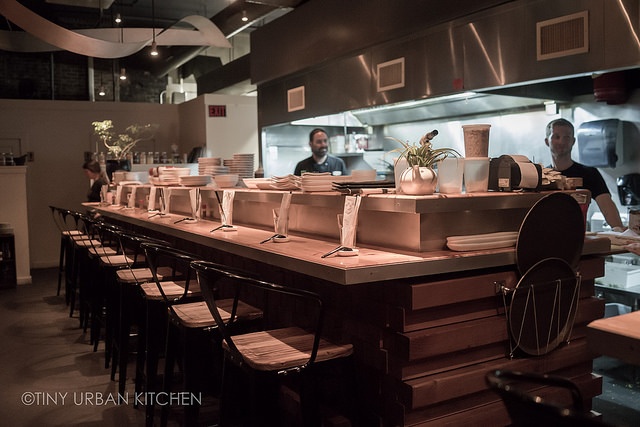
    Nakameguro Iguchi yakitori counter

    This is the twenty-ninth post in the Around the World Birthday Extravaganza Series. Please scroll to the bottom to see all the other posts in this series.

    Locals tell me that a real, authentic yakitori experience involves a dark, smoky, and crowded space, loud chatter, and lots of drinking. Of course, the chicken is the star, and the restaurant will serve every part of the chicken, down to all the good offaly bits.

    I am a bit embarrassed to say that I have never been immersed in that authentic yakitori experience. In fact, the one time I tried to go to yakitori (in Boston, when Yakitori Zai was still open), we were unable to find parking and never made it into the restaurant. Sadly, the highly-rated restaurant soon closed and we never got to go. In Tokyo, we've focused on sushi more (it's Bryan's favorite Japanese food), and thus haven't made it to a yakitori yet.

    Until this trip....

    Read More »

    Azabu Kadowaki (麻布)

    October 19, 2016 by Jennifer Che

    Azabu-Kadowaki-4.jpg

    Azabu Kadowaki counter seat view

    This is the twenty-eighth post in the Around the World Birthday Extravaganza Series. Please scroll to the bottom to see all the other posts in this series.

    Two words: truffle rice

    These were the words that first drew me to this place. One of my Japanese friends who lives in Azabu-juban (right on the edge of Roppongi) told me about the divine truffle rice at this two-Michelin starred restaurant, Azabu Kadowaki. Azabu Kadowaki is a kaiseki restaurant that focuses on traditional, high-end tasting menus.

    Imagine . . . a bowl of hot, steaming rice with generous slices of shaved black truffles on top. I was sold immediately, and decided that I would most definitely visit this place the next time I was in Japan....

    Read More »

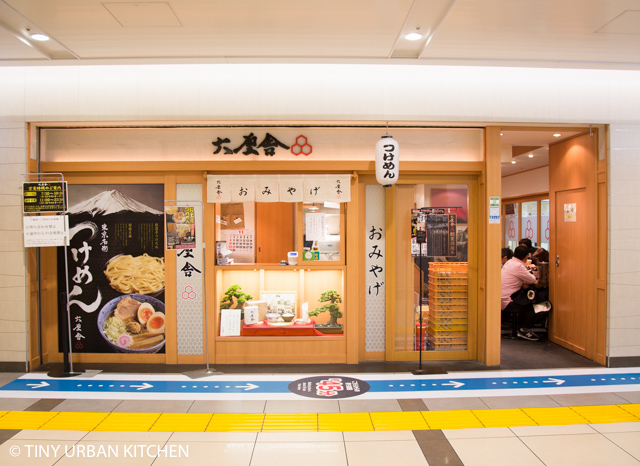
    Rokurinsha ramen breakfast (六厘舎)

    October 19, 2016 by Jennifer Che

    Rokurinsha ramen breakfast
    This is the twenty-seventh post in the Around the World Birthday Extravaganza Series. Please scroll to the bottom to see all the other posts in this series.

    Anyone who wants to try the most famous ramen shops in Tokyo will undoubtedly visit Ramen Street.

    Rokurinsha ramen breakfast

    Rokurinsha ramen breakfast line

    This is where eight of the city’s top ramen places – in a row – serve swoon-worthy bowls of noodles at one of the most convenient intersections of the entire city. For a ramen-seeker, it’s a dream come true. Forget trekking around the city to random out-of-the-way places just to seek out ethereal bowls of noodles. Now they are all conveniently in one location.

    Once you arrive, you'll quickly see lines forming around the most popular places. Invariably, the one place with the longest line is Rokurinsha, a super popular tsukemen (dipping noodle) place with several locations in Tokyo. Be prepared to wait at least an hour during peak times, if not more.
    Rokurinsha ramen breakfast
    The last time I went, I waited at least an hour. I remember feeling crazy hungry during that wait. Never did a bowl of noodles taste so satisfying after such a long wait.

    But there's a little known, secret way of avoiding the line. It's a bit weird, but if you don't like waiting, it works quite well.

    Have ramen for breakfast....

    Read More »

    About Me

    Who is Tiny Urban Kitchen?

    Hi! My name's Jen and welcome to my blog!

    Tiny Urban Kitchen was born out of a tiny urban kitchen in my tiny urban condo located between my alma mater and the other school in Cambridge. Despite the size, I till managed to do tons of crazy kitchen experiments there - everything from learning my mom's Taiwanese recipes and creating cute Totoro foods to exploring complex techniques like sous vide and molecular gastronomy.

    To read more about how the blog started, check out my entry for round 1 of Project Food Blog, which describes not only how this blog began, but really the core of what motivates me and what defines Tiny Urban Kitchen.

    Cooking?

    _DSC1301.jpg

    If this is your first time here, welcome! Here are some quick tips to help you navigate the site.

    If you're interested in cooking, definitely check out the Recipes Index , where you can search a visual gallery of all the recipes on this site by various categories. Some fun recipes to check out include the delicious Thai recipes from my cooking classes in Bangkok, Malaysian recipes from a cooking class I took in Kuala Lumpur, and my large collection of Taiwanese / Chinese recipes.

    Interested in the sous vide technique? Here's a primer on sous vide, including links to several recipes I’ve made from famous chefs like Thomas Keller and David Chang.

    The top ten recipes I personally used on the blog are Taiwanese Grilled Corn, Grilled Bok Choy, Taiwanese Meat Sauce over Rice, Tea Eggs, Taiwanese Three-Cup Chicken, Milanese Veal Osso Buco, Baja-style Fish Tacos, Crispy Basil Smashed Potatoes, Authentic Roman-style Pasta Carbonara, and Matcha Mochi Cake.

    12473694924_426bcd48b6_z

    Need Boston Dining Recommendations?

    If you're visiting Boston, definitely check out Jen's Picks, a list of all my restaurant recommendations for anyone visiting Boston. If you still want to explore more, check out the Boston Page, which leads to many surrounding neighborhoods. Click on any one and explore the visual gallery that leads you to individual restaurants.

    For day trips from Boston, consider the Berkshires (Boston Pops in the summer, foliage in the fall), Cape Cod, Cape Ann, or Portland, Maine.

    Travel

    I travel A LOT, and I always do extensive research about food before going to a new location. Therefore, if you're planning on visiting a new place, definitely check out the places I've visited and written about in these locations when you're planning your trip.

    15167698049_d4fccb5cc8_z

    Start with the Japan Guide if you're visiting Tokyo. There are lots of posts about Japan, since I've been going almost every year for the last 8 (!) years.  In Asia, I've also eaten my way around China, Taiwan, Hong Kong, Thailand, Malaysia, and Singapore.

    In Europe, we have eaten in some phenomenal restaurants in London, experienced the local cuisine in Munich, spent unforgettable weeks exploring Rome and the Piedmont region in Italy, visited Greece's numerous ruins and gorgeous islands, and spent a week in the resilient country of France just one week following the Paris attacks. We've eaten our way around Spain (both Barcelona and Madrid) and spent a week on a cruise of the fjords of Norway ending in Copenhagen.

    There's a ton of really good food in Montreal, Canada, and tons of stuff to see in Australia and New Zealand.

    I've traveled extensively throughout the U.S.  The cities with the most posts would probably be Las Vegas (I go annually for the CES conference), Napa and Sonoma (wine country!), and New York City (it's just so close to Boston!). In 2014, we went on an extensive 2+ week trip to the Hawaiian Islands (one of the most memorable trips I've taken recently), and we still regularly visit Los Angeles and San Francisco to see friends and relatives.

    For a fun photo gallery of all the Michelin Starred restaurants I visited, check out the Michelin Stars Gallery.

    wpid16257-DSC0542.jpg

    What has surprised you most about food blogging?
    I think everyone says the same thing, and I have to agree. The community is AWESOME. Most people start food blogging to share recipes with friends and family, or to keep a record of all the restaurants they've visited - at least that's why I started my blog. You never really realize how food blogging can connect you to so many like-minded people around the world. I've had the great privilege to "meet" people from Europe, Asia, Australia, Canada, and, of course, all over the US. Things like the Foodbuzz Festival are great ways to connect with other food lovers. I never would have thought that starting a food blog would open the door to so many other friendships, opportunities, and experiences.

    What has been the most amazing food opportunity that you've had as a result of food blogging?

    One that is up there is definitely my trips to Napa Valley to blog about the S. Pellegrino Almost Famous Chef Competition. In 2010, Foodbuzz and S. Pellegrino had hosted a contest to send one person there. I was thrilled and beyond belief that I had actually won the contest. The trip really opened my eyes to what the food industry is like. The food industry, especially the restaurant industry, is grueling, and it takes a ton of hard work and perseverance to make it. I was so privileged to be able to see this up close. It really gave me a new perspective and added respect for those who choose to follow this career path. Of course, Napa Valley is also beautiful, and I had a fabulous time there just checking out the vineyards and trying some amazing restaurants!

    D4C3819.jpg

    What camera do you use? What's your process in photography?

    I switch between my Sony DSC RX1R (which is more pocket-sized so I carry it around with me everywhere I go) and my Canon 5D MKIII depending on the situation. The SLR is really big and heavy, so I use it more during vacations and food events that are clearly "camera-friendly." I would say 80% of the pictures on my blog are taken with the pocket sized cameras. For social media, I mostly use the iPhone 7. I use Adobe Photoshop Lightroom 3 to catalog and work up my images, which are all shot in raw format. I then export them to WordPress.

    I got the Canon 5D MKIII in 2012 and the Sony DSC RX1R in 2015, so any photos before those dates were taken with either a Sony DSC RX1, Panasonic Lumix GF1, Canon 5D MkII, or Canon 5D, all of which are excellent cameras.

    Which posts did you have the most fun creating?

    Man, that’s a tough question! Before Project Food Blog, there was a really fun post I worked on called Kyaraben on Steroids. I spent the day making sushi and other foods in the shapes of my favorite Japanese anime characters. It was a ton of work and took all day, but to this day I still love looking at the pictures of the cute Hello Kitty, Domokuns, Totoros, and Keroppis that I made for this post.

    Kyaraben

    I had a lot of fun creating posts for the numerous rounds in Project Food Blog. My favorites would have to be a toss up between the final post in the last round (Final Reflections where I made a moving stop-animation video of Boston constructed out of vegetables (and sang a song!)) and the hand-pulled noodle instructional video that I made for Round 7.

    What have been some of your favorite dining experiences ever? In the world?
    There's no better place for sushi than in Japan, and all of my favorite sushi experience are there - from the world famous Sukiyabashi Jiro and Sushi Mizutani (Jiro's disciple) to many, many others.

    8437559110_18f5cf8de2_c

    Some of my favorite high-end meals were from places like Le Bernardin in New York City, The Ledbury in London, and Saison in San Francisco, where the phenomenal Japanese-inspired food, warm ambiance, and exquisite service really made for an unforgettable experience.

    I love dumplings. Nothing beats a freshly wok-crusted shenjianbao (pan fried bao) from Yang's Fy Dumpling in Shanghai or a steaming black truffle pork dumpling from Din Tai Fung in Taiwan (or China!). The baked chasu pork bun at Tim Ho Wan blew me away the first time I had it (with its flaky, almost butter crust).

    wpid23633-DSC4548.jpg

    In Rome, I will never forget the pasta carbonara at Roscioli or the paper-thin pizza crust at Pizzeria Dal Paino. I will always remember the smoky wok-hei from the drunken noodle at Raan Jay Fai, an an open-air stall in Bangkok. I still dream about the white truffles in Alba, and I fondly remember the chili crab and Hainanese chicken rice in Singapore. And don't forget the delicious freshly baked bagels from Montreal, a treat that is available 24 hours of the day.

    Final Thoughts? 

    I love interacting with my readers through my various social media platforms. Although I offer lots of information on the blog, I have also learned a lot of things from my readers. The communication totally goes both ways, and I love it that way!  I realize in the age of social media that people are moving those conversations to a wider variety of platforms.

    So please, feel free to say hello via any of my numerous social media channels.

    Thanks for visiting!

    Warmly,

    Warmly,

    New Series! Around the World Birthday Extravaganza Trip

    January 6, 2016 by Jennifer Che

    _X1C0322
    Happy New Year!

    This is a continuation of my post reflecting on 2015, A Look Back at 2015, Part I. This is Part II, and essentially is a very condensed summary of my three week around-the-world trip. It's hard to fit three weeks worth of content in a reasonably-sized blog post, but I'll try my best!

    Bryan had seen a sale for "around-the-world" tickets on American Airlines over six months ago. At the time, we had toyed around with the idea of planning a big trip in celebration of my milestone birthday. Since I'm one of those people who can never commit to anything, Bryan went ahead and booked a general itinerary which included Alba (I've always wanted to go to Alba during the White Truffle Fair in November), Bordeaux (a trip we've been meaning to take with friends for years now), Paris (beautiful & romantic + the food!), Japan (my favorite!), and Hong Kong (one of Bryan's favorite cities in Asia).
    image
    I promise I will write about all these places in much more detail in the upcoming months (yes, I actually believe it will take that long to cover everything). Of course, I will intersperse those travel posts with Boston restaurant posts and some cooking posts as well.

    For now, here's a preview of how we spent our time from mid-November to early December!
    ...

    Read More »

    Saison

    December 15, 2015 by Jennifer Che

    wpid22784-DSC3560.jpg
    This is the tenth and final post in the West Coast! A Week in San Francisco and Sonoma Series. Other posts in this series include Sonoma Starlight at Francis Ford Coppola Winery, Sonoma Wine Country Weekend - Taste of Sonoma 2015, Glen Ellen Star Sonoma, and Sante Restaurant at the Fairmont Mission Inn & Spa, Russian River Brewing Company, Kin Khao Thai Eatery, Exploring San Francisco's Ferry Building Marketplace, Burma Superstar, and Quince.

    A near perfect dining experience requires a lot of things.

    First and foremost, the food obviously has to be very, very good - enough to surprise you multiple times throughout the meal with thoughts of "wow, this is phenomenal." There really shouldn't be any complete "misses". You should enjoy the flavors, the textures, and the overall sequences of the dishes. Execution should be near flawless.

    But there is so much more to a very good dining experience than just the food. Ideally, the diner feels like a special guest. Service runs smoothly, and never at any point in the night does the diner feel bored, hungry, or restless.
    wpid22786-DSC3559.jpg
    Ambiance is important. I personally like to feel comfortable and relaxed. Environments that are "stuffy" and overly formal make me feel on edge, afraid that I might do something improper. For me, noise level also makes a huge difference. I like to be able to talk to my dining companions without having to whisper or shout.

    It is very, very difficult for a restaurant to execute that perfect dining experience. Even if the food reaches that "wow" level, usually there are some courses that are mediocre or even an occasional miss. Service can vary a lot, and I often find myself waiting too long between courses.

    But occasionally, there will be that near-perfect meal.

    Bryan and I were in San Francisco on our 14th (!) wedding anniversary. I decided to take the plunge and book Saison for dinner on the actual night of our anniversary.

    I was blown away, and it has since quickly become one of my favorite high-end restaurants in the United States....

    Read More »

    Greetings from Europe and Asia!

    November 30, 2015 by Jennifer Che

    _D4C4340

    I hope you all had a fantastic Thanksgiving holiday!

    So sorry I haven't been posting as much. I have been traveling for two weeks straight throughout Europe and Asia. I thought I would be able to catch up on blogging during my flights in between my trips. Who would have thought that jetlag would totally consume me, and I would end up sleeping most of my flights.

    So for now, I've compiled a few of my Instagram posts to give you a sense of what I've been up to. Please feel free to check out the entire feed (also available on Twitter and Facebook), if you want to see more details about my trip so far. Of course, I will follow up with very detailed posts about everything in the next several months to come.

    Enjoy!...

    Read More »

    Hotel Herman Montreal

    September 14, 2015 by Jennifer Che

    wpid21108-DSC2590.jpg
    This is the seventh post in the Montreal Jazz Festival Weekend series. Other posts include New Series! Montreal Jazz Festival Weekend, L'Express Montreal, A Tour of Montreal Bakeries and Bagel Shops, Lawrence, Market Jean-Talon and Mont Royal, and Patati Patata.

    I'm all about enjoying the food that's famous for a particular region. If I'm in Japan, I most certainly will seek out the best sushi, ramen, and other local fare. When I was in Southeast Asia, I focused more on street food, the hawker stalls in Singapore, the Muslim Indian restaurants in Malaysia, and streetside noodles stalls in Thailand (still the best noodles I've ever had).

    So when I arrived in Montreal, of course I had to do the same. I sought out Montreal's famous bagels, smoked meat, and poutine. I realized Montreal was most known for restaurants that focused on ultra-rich dishes, likes dishes that make liberal use of foie gras in all sorts of crazy ways.
    wpid21106-DSC2598.jpg
    Though it was fun to experience all of these Montreal specialties, I was feeling pretty icky by the third day of our trip. All that fat - from the carb-heavy bagels and gravy-laden French fries to the copious amounts of meat - was making me a bit tired of rich foods.

    Our last dinner in Montreal turned out to be one of my favorite meals of the entire trip. Hotel Herman is located in Montreal's Mile End neighborhood and first opened in the summer of 2012. It focuses on seasonal, produce-driven dishes.

    The entire menu consists of creative small plates (my favorite kind!), and showcases them beautifully. The menu is not huge, and thus our table of four was able to experience a bulk of the dishes, which was great fun....

    Read More »

    Apfelwein, Outdoor Festivals, and Business in Frankfurt Germany

    August 17, 2015 by Jennifer Che

    wpid21125-DSC1220.jpg
    The Eiserner Steg (Iron Bridge)

    Bryan often travels for work. Occasionally, armed with his trusty little Sony camera (affiliate link!), he takes photos and sends me his thoughts on some of the more note-worthy restaurants he has visited. Other posts I've written for places he has visited (but I have not!) are Sushi Yoshitake (3-Michelin stars) and Sushi Kanesaka in Tokyo, Luce in San Francisco, Olo in Helsinki, and The Square and Sketch in London.

    Other posts in the London & Munich series include The Square, Sketch, Dinner by Heston Blumenthal, Exploring London by Foot, Alain Ducasse, Marcus Wareing, Classic Munich Beer Houses: Hofbrauhaus & Wirtshaus, Viktualienmarkt and De Pschorr, Chinesischer Turm Beer Garden, Visiting the Residenz and lunch at Spatenhaus, and Weinstephaner Brewery - Oldest Brewery In the World.

    Alas, our fun European adventures were coming to an end.

    After spending a week together in London & Munich, Bryan and I parted ways in Munich. I returned to Boston to prepare for a food photography workshop I was running with an out-of-town friend. Bryan continued his European adventures by heading over to Frankfurt for some more business meetings. During his week there, he had many opportunities to try the local food and drink, as well as explore the city a bit....

    Read More »

    Sketch London

    July 8, 2015 by Jennifer Che

    wpid18952-DSC00479.jpg
    We continue  the London & Munich series with another solo meal from Bryan. 

    Bryan often travels for work. Occasionally, armed with his trusty little Sony camera (affiliate link!), he takes photos and sends me his thoughts on some of the more note-worthy restaurants he has visited. Other posts I've written for places he has visited (but I have not!) are Sushi Yoshitake (3-Michelin stars) and Sushi Kanesaka in Tokyo, Luce in San Francisco, Olo in Helsinki, and The Square in London.

    Other posts in the current London & Munich series include The Square, Dinner by Heston Blumenthal, Exploring London by Foot, and Alain Ducasse.

    Going to Sketch in London is so much more than just a trip to a restaurant.

    It's about entering the wild imagination of David Shrigley, the artist who designed the crazy, whimsical space. It's about tasting the handiwork of one of the most talented chefs in the world, 3-Michelin starred master chef Pierre Gagnaire from France. It's about letting yourself pretend, even if just for a moment, that you're living in another world.
    wpid19027-SketchEntrance.jpg
    London's most expensive restaurant is hardly subtle or understated. It's famous for its over-the-top treatment of everything, from its multi-course meals (where each course further comprises multiple additional courses) to the plethora of wacky art that adorns its walls, ceilings, and floors.

    Writers have used terms like "sensory overload" and "gastronomic playground for the well-heeled scenester" to describe the restaurant.

    And that's really not far from the truth.
    wpid19000-DSC00543.jpg
    The space is huge and is an adventure to explore. One moment you think you're Alice in Wonderland. Turn the corner, and you're in a forest with what looks like overgrown trees over your head. Hopscotch your way down the hall and up a set of stairs into a room decked out with plush pink chairs and jewels on the walls. The entire two-story building includes multiple bars (all with different themes), dining rooms, and a bakery cafe (five separate establishments). In the afternoon, you can even enjoy a fancy afternoon tea.
    wpid18954-DSC00484.jpg
    But it's not just about the space.

    The food here is exquisite and similarly extravagant. The Lecture Room and Library is where the upscale dinners are held. This is also the restaurant that holds two Michelin stars.

    Let's live vicariously through Bryan as we enter the whimsical land of Sketch and spend an evening dining solo here.
    ...

    Read More »

    The Square London

    June 17, 2015 by Jennifer Che

    wpid18842-DSC00438.jpg
    We kick off  the London & Munich series with a meal Bryan had in London solo earlier this year!

    Bryan often travels for work. Occasionally, armed with his trusty little Sony camera (affiliate link!), he will take photos and send me his thoughts on some of the more note-worthy restaurants he has visited. Other posts I've written for places he has visited (but I have not!) are Sushi Yoshitake (3-Michelin stars) and Sushi Kanesaka in Tokyo, Luce in San Francisco, and Olo in Helsinki. 

    I am no stranger to London.

    In fact, out of all the foreign cities I have visited, I would count London and Tokyo as the cities I know the best. I am particularly familiar with London because I have been visiting the UK for work almost annually since 2009. Interspersed throughout my London trips through the years, I have had the opportunity to try many fantastic places.

    Up to this date, my favorite London dining experience ever has been at The Ledbury, a meal that blew me away so much that I described it as the type of rare meal where "every single course truly delights and impresses the palate."
    wpid18846-DSC00440.jpg wpid18848-DSC00441.jpg
    It wasn't until much later that I learned about  Chef Philip Howard.

    It was Chef Howard who helped launch my beloved Ledbury (in partnership with Nigel Platts-Martin) as well as Kitchen W8 (in partnership with Rebecca Mascerenhas). Well before those two restaurants came into existence, Chef Howard was the chef-owner of The Square, a well-respected restaurant in London that has held onto its two Michelin stars for fifteen consecutive years.

    During Bryan's last business trip to London, he had the opportunity to enjoy dinner at The Square. Though I was not able to come on this trip, I hope Bryan's photos and my accompanying text based on his notes give you a sense of the exquisite food coming out of this incredible kitchen....

    Read More »

    Olo Helsinki Finland - 1 Michelin Star

    May 11, 2015 by Jennifer Che

    wpid18294-DSC0654.jpg
    Bryan, my husband, often travels for work. Occasionally, armed with his trusty little Sony camera (affiliate link!), he will take photos and send me his thoughts on some of the more note-worthy restaurants he has visited. Other posts I've written for places he has visited (but I have not!) are Sushi Yoshitake (3-Michelin stars) in Tokyo and Luce in San Francisco. This post is also part of the #31PostsInMay challenge where I aim to publish a new post every single week day.

    One of the world's most famous restaurants, Noma in Copenhagen, skyrocketed Nordic cuisine to the forefront of food enthusiasts' "must-try" lists when it repeatedly won the top spot in the World's 50 Best Restaurants list. Chef René Redzepi's intense focus on sustainability and obsession with only using local, foraged ingredients (despite the cold winters in Denmark), showed the world that exquisite and world-class cuisine was not only possible, but better, this way.

    He's not the only one.

    Olo, a modern Nordic cuisine restaurant located in Helsinki, Finland, aims to take the raw ingredients of the region and provide diners with a menu that brings to the table "what is best at a given time." Their philosophy is simple.

    "The natural and clean flavours of land and sea reign in Olo's kitchen."

    Olo has boasted a Michelin Star since 2011, and has also won a number of regional awards.
    ...

    Read More »

    Roy's Restaurant (Maui and Kauai)

    February 25, 2015 by Jennifer Che

    wpid15466-DSC9759.jpg
    It didn't take long after landing in Hawaii that I realized why this place is so perfect . . . almost too good to be true. Not only is the scenery breathtaking and the weather perfect, there is a HUGE Japanese influence on the cuisine. To me, there couldn't be a more perfect place in earth. Perfect weather, gorgeous hiking, beautiful beaches, and phenomenal Japanese food? Ahi poke on every street corner and macadamia nuts (my favorite!) readily accessible everywhere?

    Ummm . . can I move there, like now?

    Roy's is a perfect example of what this Hawaiian-inspired, Asian influenced food is all about.

    Roy Yamaguchi, a Japanese chef born and raised in Tokyo (whose father was born and raised in Maui!), is the founder of Roy's. He moved to Hawaii in 1988 after training at the Culinary Institute of America in New York and training at French restaurants in Los Angeles. Chef Yamaguchi became the first Hawaiian to win the James Beard Award. His cooking became so popular, Roy's started to and continues to grow, now at 31 locations worldwide.

    We had the opportunity to try Roy's twice: once in Maui and once in Kauai. I'll start with our meal in Kauai first, since that was the more typical Roy's experience. Our dinner in Maui was on Thanksgiving. Even though I ordered some classic Roy's dishes, Bryan insisted on getting their turkey special (heh, complete with mashed potatoes, pumpkin pie, and a kale salad. Definitely not typical Roy's food!). ...

    Read More »

    Happy New Year - A Look Back at 2014 (Part I) - Travel

    January 5, 2015 by Jennifer Che

    Happy New Year! Staying home & celebrating with homemade ginger jalapeño lime "beer"! :)
    Celebrating New Years at home with our homemade Ginger Lime Jalapeno Beers!

    Happy (Belated) New Year!

    Another year has already gone by and we're in 2015 now. Sometimes I look at that number and it still looks foreign to me . . . like it's far far in the future (like in the movie Back to the Future 2!).

    I always like taking time during this week of the New Year to reflect back on what my year was really like. It's helpful to remind myself that even though it feels like it's flying by, there's actually A LOT of stuff that has happened: new experiences, new lessons learned, and lots and lots of memories. It's nice to have this solid block of time to sit down, reflect, appreciate, and be thankful.

    It's also a good time to re-evaluate and plan for how I want things to be different (or the same!) for 2015.

    This roundup of the year serves as a rough guide to most of the blog posts I've written this past year. Perhaps you'll find a post or two (or even a whole series!) you had missed that you find interesting. Because of the sheer length of content summarized in this post, I've divided it into two posts. Today's part will focus on travel. Tomorrow's will focus on recipes and Boston restaurants from the past year!...

    Read More »

    Visiting Japan

    Jiro Dreams of Sushi
    Sukiyabashi Jiro
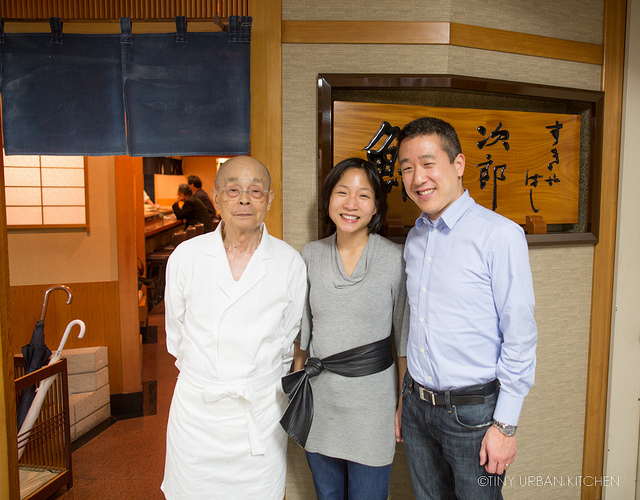
    Jiro, Jen, & Bryan at Sukiyabashi Jiro

    Japan is one of my favorite countries in the world. I fell in love with it when I lived in Tsukuba as a college during a summer internship. Since then, I've traveled back numerous times (usually tagging along on one of my husband's business trips). As a result, I've had quite a few opportunities to enjoy the fabulous food this country offers.

    I've had enough friends ask my for recommendations about traveling to Japan that I thought I'd write a brief guide on my favorite places to eat, shop, and hang out.

    Untitled
    Masamoto Tsukiji

    Where to Shop?

    As a food person, my favorite kitchen shopping neighborhood is Kappabashi Dori and Tsukiji Fish Market (for knives!). At Kappabashi, which is the restaurant supply neighborhood in Tokyo, you can pick up tons of cool Japanese kitchenware for really low prices. Make sure to bring cash, as a lot of places don't accept credit card. This is also the place where you can buy plastic fake display food and gorgeous dishes for ridiculously reasonable prices.

    Ginza is the ritzy part of town lined with high end boutiques. It is great if you're shopping for high-end stuff, but it's pricey! On Sundays they close down part of the street to traffic, so it's fun to walk and shop during that time. Harajuku and Omotesando (adjacent areas) are really fun too - you'll see a bit younger crowd, especially in Harajuku. One of my favorite shops in Omotesando is Kiddie Land, which has one of the best selection of Totoro stuff in Tokyo (even better than Studio Ghibli itself). 

    Shibuya is not too far away, and sometimes I'll walk from Shibuya to Harajuku and then to Omotessando. Between Shibuya and Harajuku is the NHK Studio, which has a fun shop that sells all sorts of Domokun stuff (Domo is their mascot). 

    Domokun
     Bryan absolutely loves Akihabara for electronics. The largest electronics store (possibly in the world) called Yodabashi Camera is there. They sell everything from electronics to kitchen applicances to even luxury handbags. It's sensory overload but definitely worth seeing.

    Akihabara is also not too far from Asakusa, where you can sample all sorts of fun Japanese snacks on the path leading to the huge temple (freshly made sembei crackers, red bean filled cakes, fresh mochi, etc).

    Speaking of snacking, don't miss roaming around the basements of the high-end department stores (called depachika), where you can gaze at (and sample!) endless amounts of incredible food. Definitely check out the basement of the department store called Isetan in Shinjuku, which houses many of the world's most famous bakeries (yes, I buy a Pierre Hermes Ispahan macaron every time!).

    Even if you can't make it out to Shinjuku, there are plenty of department stores in Shibuya, Ginza, and other areas with fun basements in which to explore. I would highly recommend grabbing lunch at least once from one of these places. You can also come back to purchase exquisitely wrapped food-focused gifts to bring back home. Nobody tops the Japanese when it comes to beautifully wrapped cookies, cakes, and other snacks as gifts.

    Favorite Places to Eat

    Y9A0276.jpg
    Tsukiji Fish Auction

    As for real dining - the options are endless depending on how much you want to spend. Definitely check out Tsukiji Fish Market and try to have super fresh and reasonably priced sushi there. I think Sushi Dai and Sushi Bun are the most famous, though lines can get long. I've personally never had the patience to wait at Sushi Dai, but even the other places are perfectly decent (we went to Sushi Bun instead, which was fine, but I actually think nearby Sushi Iwa, where we went a few years prior, is better, though more expensive).

    If you have patience, you can line up super early in the morning (we arrived at 2AM) to watch the traditional sushi auction at Tsukiji Fish Market at either 5:30AM or 6AM (there are two shifts). The fish market's days are limited because it will soon move to a different location. They only let 60 people watch the auction per day, so if you're not in line by some time between 3AM and 4AM, they won't let you in. We lined up at 2AM for a post (!). To see our entire experience, check out this full post.

    Favorite Tonkatsu (breaded pork cutlet)

    Spanish Iberian Pork Tonkatsu
     Butagumi, which serves all sorts of different breeds on pork including tonkatsu made from the famous Iberian pig in Spain. It's a little off the beaten track, so if you're short on time, you can still enjoy excellent tonkatsu at Maisen, which has several locations around Tokyo.

    Favorite Ramen

    Rokurinsha has a history of having long lines out its door - which is a sure sign of a good ramen place in Japan. Visit the location at Tokyo Station on "Ramen Street" or go to the new Tokyo Sky Tree and enjoy it there. They specialize in "tsukemen", or dipping noodles. If the line at Rokurinsha is too long for your liking (it often has the longest line at Ramen Street), head over to Ramen Honda, which is still excellent. You can also go for breakfast, when the lines are only about 20 minutes long. For a lighter, yuzu-flavored ramen, try Afuri. For an authentic experience (no English menus!), check out this charming little ramen shop in Shibuya called Suzuran. 

    Favorite Tempura

    Tempura Kondo in Tokyo boasts 2 Michelin stars and churns out the most delicate tempura using the freshest ingredients all over Japan. Try the sweet potato (even though it costs extra). This is supposedly one of the best items on the menu, though I haven't had a chance to try it since it was not in season when I went. Mikawa Zezankyo (1 Michelin star) is also very good, though I personally prefer Tempura Kondo just a tad.

    Favorite Shabu

    Seryna (Kobe beef) serves melt-in-your-mouth Kobe beef for shabu. Though it's extremely expensive (think over $100 USD for about 8 slices of beef!), it's by far the best shabu meat I've ever had in my life.

    Ukai-Tei beef

    Favorite Steak/Teppanyaki

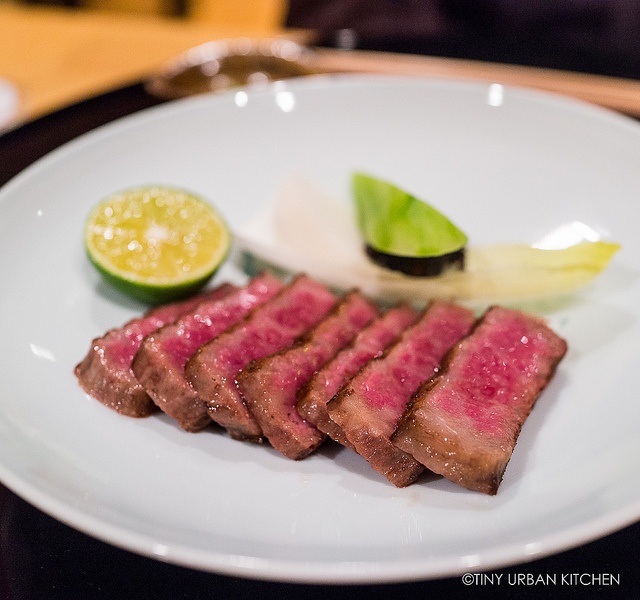
    Ukai-tei is a beautiful and elegant 1 star Michelin restaurant with superb service and excellent steak. They offer steak from specially bred black cows from a region very near Kobe. According to Bryan, it's the best steak he's ever had in his life. The steak standwiches from Shima are also legendary. The catch is that you can only get a sandwich as a take-away after dining in the restaurant and ordering a steak. It's worth it, though, the steaks are phenomenal!

    Favorite Sushi

    I love Sushi Ya and the prices are very, very reasonable during lunch. Legendary options include Sushi Mizutani (now closed) and the famous Sukiyabashi Jiro (very hard to get in). We got our Jiro reservation by having one of Bryan's Japanese colleague contact the restaurant to make the reservation. They had to follow up by personally delivered the 20,000 yen cash deposit to the restaurant. Update: one of my readers informed me that Jiro accepts credit card now (2014). I would confirm this with your hotel, but it's possible that our crazy cash-filled reservation is a thing of the past. 

    Favorite Izakaya

    One of my favorite casual izakayas where I discovered my love of yuzu kosho and tried chicken sashimi for the first time is this family run restaurant called Kago, founded by a retired Japanese baseball player.

    Favorite Noodles

    We haven't explored soba too much, but the handmade ones at Kaoriya, Matsugen, and Matsuya Kanda are excellent. We loved the udon at Omen, a charming noodle shop in Kyoto within walking distance of the Silver Pavilion, one of the most famous temples in Kyoto.

    Favorite Kaiseki

    Previously, my only experience with kaiseki was at Kikunoi Akasaka (1-Star Michelin restaurant whose uber famous sister restaurant in Kyoto has three Michelin stars), which was excellent. We've now visited Kyoto (birthplace of kaiseki, really), and have enjoyed many incredible meals. Nakamura, though pricey, is one of those unforgettable kaiseki meals with exquisite service, fantastic food, and an overall unique and very traditional Japanese experience

    And for something completely different: Try some of the modern, creative cuisine that's popping up all over Tokyo. Aronia de Takazawa serves extremely creative, whimsical, and beautifully (and sometimes unusually) plated food. They also have a large selection of Japanese wines, which is unusual. Ryugin is one of the most famous modern kaiseki restaurants in Tokyo. Boasting three Michelin stars, it has some really fantastic dishes (though at the end it wasn't my favorite restaurant). Tapas Molecular Bar is all out molecular gastronomy located in the top floor of the Mandarin Oriental in Tokyo. The views are breathtaking and the meal is fun, though the flavors of the dishes are only OK.

    Enjoy the Season!

    It's fun to eat the seasonal ingredients too. During my most recent trip in the fall, matsutake mushrooms and gingko nuts were in season, and I loved trying both in several different ways.

    Listing of all Japan-related posts

    {last updated January 28, 2022}

    2019 Japan Trip
    Easter in Japan - Trip Report  (trip report)
    Tempura Fukamachi Tokyo (tempura, 1 Michelin Star)
    Disney Sea Tokyo
    Sushi Ishiyama (sushi)
    Imafuku Sukiyaki Tokyo (sukiyaki, 1 Michelin Star)
    Il Ristorante Luca Fantin Tokyo (Italian, 1 Michelin Star)

    2018 Japan Trip
    Totoro, Fall Foliage, Tofu Kaiseki (trip report)
    Potsura Potsura Izakaya (izakaya, bib gourmande)
    Sushi Ya with Takao Ishiyama (sushi)
    Tokyo Shiba Tofuya Ukai - Tokyo Tower (tofu)
    Hakone, Akihabara, and only-in-Japan Experiences Crony Tokyo (modern, 1 Michelin Star)

    2017 Japan Trip
    Kyubey - A follow-up visit
    Tsukiji Fish Market Auction & Sushi Bun Breakfast
    Shima Steak Tokyo - The Famous Steak Sandwich

    2016 Japan Trip
    Sushi Ya (sushi, dinner)
    Afuri (ramen)
    Dominique Ansel (bakery)
    Bird Land (yakitori, 1 Michelin star)
    Bar High Five (cocktail bar)
    Matsuya Kanda (soba)

    2015 Japan Trip
    Hiking at Mount Takao in Japan
    Florilege (French, 1 Michelin star)
    Sushi Harutaka (sushi, 2 Michelin stars)
    Rokurinsha (ramen breakfast)
    Azabu Kadowaki (Japanese, 2 Michelin stars)
    Nakameguro Iguchi yakitori (中目黒いぐち) (yakitori)
    Sushi-Ya (すし家) (sushi)
    Shirohige's Cream Puff Factory - Totoro Cream Puff (bakery)

    2013 Japan Trip
    Matsugen (soba)
    Sushi Iwa (sushi, 1 Michelin star)
    Ramen Honda (ramen)
    Ryugin (modern kaiseki, 3 Michelin stars)
    Omen (udon)
    Shouraian (tofu)
    Dotonburi (Osaka street food)
    Taian (grill, 3 Michelin stars)
    Sushi Sho (sushi)
    Nakamura (traditional kaiseki, 3 Michelin stars)
    Sushi Taku (sushi, 2 Michelin stars)
    Sushi Yoshitake (sushi, 3 Michelin stars)

    2012 Japan Trip
    Sukiyabashi Jiro (sushi, 3 Michelin stars)
    Sushi Sawada (sushi, 2 Michelin stars)
    Sushi Aoki (sushi, 1 Michelin star)
    Kikunoi Akasaka (kaiseki cuisine, 1 Michelin star)
    Mikawa Zezankyo (tempura, 1 Michelin star)
    Ukai-Tei (teppanyaki, Kobe beef; 1 Michelin star)
    Kaoriya (soba)
    Rokurinsha (ramen)
    Omotesando Koffee (coffee)

    2011 Japan Trip
    Post Quake Japan
    Kago (Kagoshima cuisine)
    Daisan Harumi (sushi)
    Tempura Kondo (tempura, 2 Michelin stars)
    Sushi Mitani (sushi)
    Inakaya (robotayaki)
    Aronia de Takazawa (modern cuisine)
    Sushi Mizutani (sushi, 3-Michelin stars)
    Kappabashi Dori (Kitchen shopping street)
    Masamoto Tsukiji (Knife shopping)

    2010 Japan Trip
    Part 1: Kappabashi Dori (shopping)
    Part 2: Tapas Molecular Bar (modern Japanese, 1 Michelin star)
    Part 3: Suzuran (ramen)
    Part 4: Matcha and Azuki Breads
    Part 5: Masamoto Tsukiji Knives (shopping)
    Part 6: Maisen (tonkatsu)
    Part 7: Snacking in Japan (snacks)
    Part 8: Sushi Kanesaka (sushi, 2 Michelin stars)

    2009 Japan Trip
    Everything I Learned About Sushi I Learned from My Mom . . . . And Kyubei (sushi, formerly 1 Michelin star)
    Seryna (Kobe beef shabu)
    Sometaro (okomokiyaki)
    Maisen (tomkatsu)
    Kyubey (sushi)
    Suzuran (ramen)

    Index of Worldwide Travel Blog Posts! (ex-US)

    ASIA
    JAPAN

    Check out the Japan Eating Guide
    Domokun

    SUSHI
    Sukiyabashi Jiro
    Sushi Yoshitake (2015)
    Sushi Yoshitake (2014)
    Tsukiji Fish Market
    Sushi Ya (dinner)
    Sushi Ya (lunch)
    Sushi Bun
    Updated Kyubey - a revisit in 2017
    Updated Kyubey Review - 2010 (Project Food Blog Round 9 winning entry)
    Kyubey/Kyubei - 2009
    Sushi Mizutani
    Sushi Sawada
    Sushi Taku
    Sushi Mitani
    Daisan Harumi
    Sushi Kanesaka (Ginza)
    Sushi Kanesaka (Palace Hotel)
    Sushi Aoki
    Sushi Iwa
    Sushi Sho

    KAISEKI
    Azabu Kadowaki
    Nakamura
    Kikunoi Akasaka
    Ryugin

    SHABU
    Seryna (Kobe beef)

    TONKATSU
    Butagumi
    Maisen (tonkatsu)
    TEPANYAKI
    Ukai-Tei (Omotesando)
    TEMPURA
    *Tempura Kondo
    Mikawa Zezankyo
    NOODLES
    Matsuya Kanda (Soba)
    Afuri (Ramen)
    Rokurinsha (Ramen)
    Kaoriya Soba
    Suzuran Updated 2011 post (Ramen)
    Omen (Udon)
    Ramen Honda (Ramen)
    Matsugen (Soba)
    ROBATAYAKI
    Inakaya
    IZAKAYA
    Kago
    GRILL (Steak + Yakitori)
    Taian (steak)
    Shima (steak)
    Birdland (yakotori)
    Nakameguro Iguchi (yakitori)
    MODERN
    Aronia de Takazawa
    Florilege
    Tapas Molecular Bar (Molecular gastronomy)
    TOFU
    Shouraian

    STREET FOOD
    Dotonburi

    SWEET
    Omotesando Koffee
    Shirohige Cream Puff Factory (Totoro)

    SHOPPING
    Kappabashi Dori
    Masamoto Tsukiji
    Snacking in Japan

    HIKING
    Mount Takao

    THAILAND
    _X1C4341.jpg

    STREET EATS
    Thip Samai, Best Pad Thai in Bangkok?
    Raan Jay Fai, Best Drunken Noodle in Bangkok
    Street Foods of Bangkok, Part I
    Street Foods of Bangkok, Part II
    Fun Fruits in Thailand

    COOL EXPERIENCES
    Maeklong Railway Market
    Floating Markets (Damnoen Saduak)

    COOKING CLASSES & RECIPES
    Somphong Thai Cooking School

    • Som Tam (Papaya Salad)
    • Thai Panaeng Curry Chicken
    • Bananas In Golden Syrup

    BaiPai Thai Cooking School

    • Golden Bags
    • Larb Gai (Laap Gai)
    • Pad Thai

    SIT DOWN RESTAURANTS / BARS
    Som Tam Nua
    Taling Pling
    Sky Bar
    Nahm

    MALAYSIA & SINGAPORE
    _X1C8806

    RESTAURANTS

    Malaysia
    Lot 10 Hutong - Kuala Lumpur's Most Famous Hawker Stalls Under One Roof
    Little Penang Cafe + Visiting the Petronas Twin Towers
    Jalan Alor -Kuala Lumpur's Most Famous Food Street
    Walking Food Tour of Kuala Lumpur
    Mamak - Malaysia's Indian Muslim restaurants
    Hiking the Rainforests in Malaysia (and swimming the waterfalls!) with Open Sky Unlimited,

    Singapore
    Din Tai Fung, Marina Bay Sands
    Tian Tian Hainanese Chicken Rice
    Tim Ho Wan
    Food Republic
    The Red House (Chili Crab)
    Newton Food Centre (Singaporean Hawker Stalls!)
    Crystal Jade
    Iggy's
    Bijan

    COOKING CLASSES & RECIPES
    LaZat Malaysian Home Cooking

    • Otak, Otak Fish Dumplings in Banana Leaf
    • Roti Jala - Malaysian Lacy Pancake
    • Nonya Malaysian Chicken Curry
    • Onde Onde

    TAIWAN

    Untitled
    Taiwan Nights Markets
    Top Taiwanese Dishes: Noodles, Dumplings, and Breakfast
    Din Tai Fung (Dumplings)
    Celestial Restaurant (Peking Duck)
    Yong He Soybean Milk (Taiwanese breakfast)
    Sheraton Taipei (Taiwanese breakfast)
    Formosa (Howard Plaza Hotel)
    Aoba (Traditional Taiwanese food)
    Ice Monster (Shaved ice)

    HONG KONG
    Jen's Guide - Best Places to Eat in Hong Kong for Visitors
    Lei Garden
    Sushi Tokami
    Sun Tung Lok
    Fu Sing Seafood Restaurant Hong Kong
    Tim Ho Wan
    Din Tai Fung

    CHINA

    Great Wall of China
    Check out the China Eating Guide

    China (Beijing)
    The Art of Making Hand Pulled Noodles
    *Noodle Loft
    *Jiu Men Xiao Chi (9 Gates Small Snacks)
    **Din Tai Fung (Dumplings)
    *Xian'r Lao Man (Dumplings)

    **Made in China (Peking Duck)

    *Noodle Bar
    *Bao Yuan Dumpling
    **Da Dong (Peking Duck)
    Lost in Translation
    An Ode to Noodles and Ducks

    China (Shanghai)
    **Jia Jia Tang Bao (Dumplings)
    **Din Tai Fung (Dumplings)
    **Yang's Fry Dumpling
    *Crystal Jade
    Eating at the World ExpoChina (Xi'an)
    Shaanxi Cuisine
    ITALY
    Roman pizza
    Rome
    Spontaneous Weekend Trip to Rome
    Roscioli
    Gelato
    Sant'Eustachio Cafe
    Il Convivio
    Etabli
    Pizzeria dal Paino
    Alba, Barbaresco, Barolo region
    Around the World Birthday Extravaganza
    Alba White Truffle Fair
    Osteria Dei Sognatori - A Traditional Piedmontese Dinner
    Italy Wine Tour - Barbaresco
    Lunch at Donna Selvatica in Neive, Italy
    Dinner at a Truffle Hunter's Inn - Tra Art e Querce
    G.D.Vajra Winery
    Trattoria Della Posta in Montfort D'Alba
    Nighttime Truffle Hunting with a Dog in Alba
    Osteria della Arco - last dinner in Alba

    EUROPE

    ENGLAND
    Untitled
    London
    The Square
    Marcus (Wareing) (English)
    Sketch (French)
    Alain Ducasse London (French)
    Dinner by Heston Blumenthal (English)
    Exploring London by Foot
    The Ledbury (French)
    Pied a Terre (French)
    Hibiscus (French)
    L'autre Pied (French)
    Fernandez & Wells (Spanish)
    Kitchen W8 (European)
    Bob Bob Ricard (Russian/English)

    Oxford
    The Trout Inn (Pub)
    Jamie's Italian (Italian)
    The Turf Tavern (Pub)

    FRANCE
    Paris
    A Different Paris
    Le Relais de l'Entrecote
    Pirouette Paris
    L'Ambroisie Paris
    L'Arpege

    Bordeaux
    First Day In Bordeaux, France - Une Cuisine en Ville
    Chateau Haut-Brion Tour in Bordeaux France
    Restaurant Le St. James
    Touring Bordeaux Wineries - Day 1 - Left Bank
    La Tupina, Bordeaux (traditional French dinner)
    Cos d'Estournel Tour
    Touring Bordeaux - Pauillac, Chateau Lynch-Bages
    Chateau Cordeillan-Bages

    SPAIN
    Barcelona
    Hello Barcelona 
    Cafe Viena
    ABaC Restaurant
    Rias de Galicia
    Dos Palillos
    Canete Barcelona
    MontSerrat

    Madrid 
    Hola Madrid!
    Ramom Freixa
    StreetXO Madrid
    Lua Madrid
    Viridiana, Madrid
    Terraza del Casino - 2 Michelin Stars
    Ultramarinos Quintin Madrid.

    GERMANY
    Classic Munich Beer Houses: Hofbrauhaus & Wirtshaus
    Viktualienmarkt and De Pschorr
    Chinesischer Turm Beer Garden
    Visiting the Residenz and lunch at Spatenhaus
    Weinstephaner Brewery - Oldest Brewery In the World
    Paulaner + Weisses Brauhaus
    Tantris

    GREECE
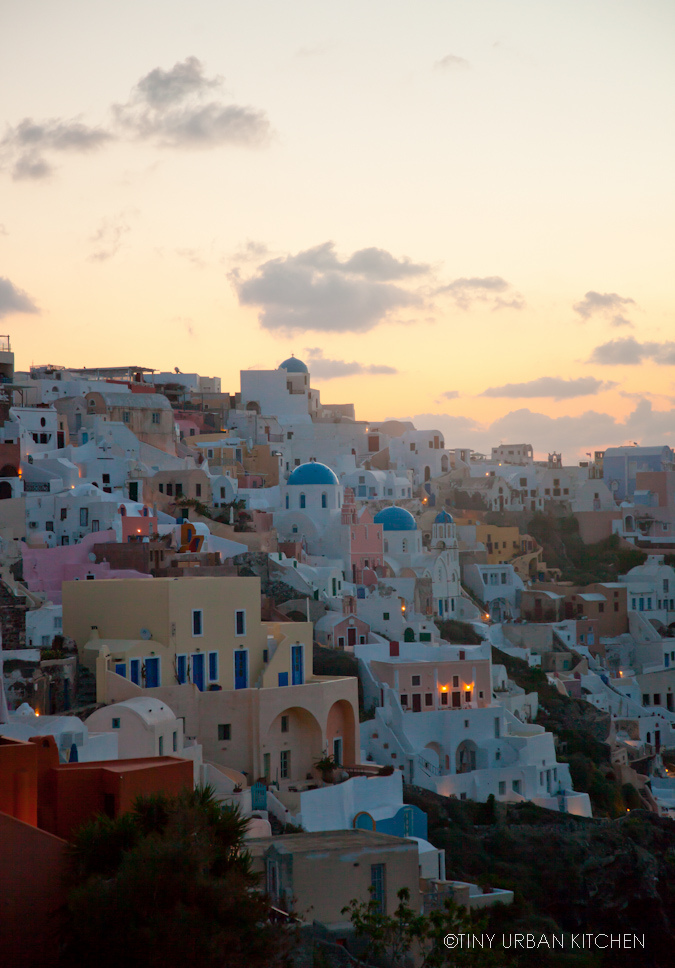
    Oia Greece
    Sweets in Greece
    Tavernas
    Gyros, Souvlakis, and Pitas, Oh My
    Eating in the Greek Isles - Santorini
    Papa Galos (Santorini)

    FINLAND
    Olo Helskinki

    NORWAY
    Cruise of Copenhagen and the Norwegian Fjords
    Pulpit Rock, Stavanger, Norway
    Bergen Norway
    Alesund Norway
    Geirangerfjorden
    Kristiansand

    DENMARK
    Restaurant Karla Copenhagen
    Restaurant Relae

    SWITZERLAND
    Greetings from Switzerland

    CANADA
    MONTREAL
    New Series! Montreal Jazz Festival Weekend
    L'Express Montreal
    A Tour of Montreal Bakeries and Bagel Shops
    Lawrence
    Market Jean-Talon and Mont Royal, Patati Patata
    Hotel Herman
    Au Pied de Cochon
    chez L'Epicier
    Joe Beef
    Schwartz's Smoked Meats
    Le Bremner
    St. Viateur Bagels
    Van Horne
    La Porte

    TORONTO
    Ding Tai Fung (fake)

    CANADIAN ROCKIES
    My Recent Trip to the Canadian Rockies

    ARGENTINA
    La Cabrera (steak)
    Cabanas Las Lilas (steak)
    La Rambla (cafe)
    Empanadas, Tamales, and Beer, Oh My!
    Three Most Famous Ice Cream Shops
    Chila (modern Argentinian)
    Elena (steak, modern Argentinian)
    Oviedo
    Foto Ruta
    My Last Full Day in Argentina (including Choripan and Cafe Tortoni)

    AUSTRALIA/NEW ZEALAND
    SYDNEY
    Fix St. James
    Bentley Restaurant & Bar
    Chef's Gallery (Chinese)
    Din Tai Fung, Sydney (Chinese)
    Harry's Cafe de Wheels
    Pie Face
    Australian Coffee ("Flat Whites")

    NEW ZEALAND
    Saggio di Vino, Christchurch

    CAIRNES
    Coming soon!

    ULURU
    Coming soon!

    Michelin Stars OLD

     THREE MICHELIN STARS ***Sukiyabashi Jiro (sushi)

    Sushi Sawada (sushi)

    Ryugin (modern kaiseki)

    Taian (grill)

    Nakamura (traditional kaiseki)

    Per Se
    Daniel Per Se
    Le Bernardin The French Laundry
    Joel Robuchon
    Joel Robuchon Gastronomy Fiesta (Basque Region 3-Star Michelin Chef Tasting Menu)

      Mizutani-San

    Eleven Madison Park                                Sushi Mizutani

    TWO MICHELIN STARS **

    Joel Robuchon
    Picasso
    Melisse
    Picasso
    Sushi Kanesaka


    Sushi Kanesaka
    Marea
    Sushi Kanesaka


    Momofuku Ko Tempura Kondo

    Untitled

    Coi                                                                          Kajitsu

    ONE MICHELIN STAR*

    Redd
    Din Tai Fung
    Redd
    Din Tai Fung

    *links to Din Tai Fung in China. The star has been awarded to the Din Tai Fung in Hong Kong
    Kyubey
    Tapas Molecular Bar
    Kyubey (*2008 - lost it in 2009)
    Tapas Molecular Bar
    Mesa Grill
    Tapas Molecular Bar
    Mesa Grill  (*2008 - lost it in 2009) Peter Luger

    Aureole (Las Vegas)

    L'Atelier de Joel Robuchon (Las Vegas)

    Kitchen W8 (London)

    L'Autre Pied (London)

    Etoile (Napa Valley, California)

    Terra (Napa Valley, California)

    Luce (San Francisco, California)

    Il Convivio (Rome, Italy)

    Torrisi Italian Specialties (New York)

    Mikawa Zezankyo (Tokyo)

    Kikunoi Akasaka (Tokyo)

    Sushi Iwa (Tokyo)

    A Summer Weekend in Portland, Maine

    August 1, 2014 by Jennifer Che

    DSC00662.jpg
    I always feel like summer goes by so quickly here in Boston. It takes forever for the weather to get warm, and when it's finally warm, it's a mad dash to take advantage, as much as possible, of the beautiful weather.June was a blur to me. After intensely plowing through my 31 posts in 31 days in May, I took a break the first half of the month before heading off to the Canadian Rockies for a week with Bryan's family (Highly recommended. I think still it's one of my favorite places on earth). In July, the weather finally  became truly warm. Just two weeks ago, we found ourselves surprisingly free one weekend. Sort of at the last minute, we decided to spend a weekend in Portland, Maine, one of the few nearby cities that we'd never visited (and everyone kept telling us we had to go if we loved food, craft beer, and the ocean.)After finding some last minute hotel rooms in Portland with Bryan's numerous hotel points, we tentatively made plans to drive there Friday night. As soon as I finished volunteering at the Boston Rescue Mission Friday evening, we left Boston at 9PM sharp and arrived in Portland right around 10:30PM.Yep, when you leave that late, there's no traffic!

    We had less than 48 hours in Portland. We knew we had to make the most of our time there.
    _DSC7839.jpg
    Our first stop after arriving in Portland at 10:30PM was, not surprisingly, food. I had not eaten dinner yet and was famished. We ended up visiting Pai Men Miyaki, a trendy, casual Japanese-fusion restaurant that seemed very Momofuku-esque, complete with pork belly buns, ramen, sushi, gyoza, and various salads.
    _DSC7837.jpg
    I love small plates and snacks, and this menu had so many small bites (buns! gyoza! unusual salads!) that I was tempted to order everything. Unfortunately, Bryan wasn't hungry, which meant I was eating alone. It's hard to try many different small dishes when you're the only one eating.

    So instead I ordered what they call the staff favorite, Tokyo Abura, a soup-less ramen dish that consisted of chili oil, spicy garlic paste, Miyake Farm egg yolk,  charred cabbage and carrots, ginger, menma, wakame, scallions, and nori. The texture of the noodles was great and overall the dish was very satisfying and delicious. Bryan, who loves noodles and wasn't even hungry, ended up eating quite a bit of mine even though he wasn't planning on eating.

    Bryan also enjoyed trying some excellent local beer on draft, a delicious Allagash Tripel.
    DSC00666.jpg
    The next morning, we headed out to Portland Head Light at Cape Elizabeth, which is about 6 miles away from downtown Portland. It's quaint, picturesque, and a lovely way to spend a morning.
    DSC00654.jpg
    The weather was beautiful, and I was perfectly content just exploring the rocky coast and taking in the breathtaking scenery.
    DSC00652.jpg
    There are a few historic buildings (and forts!) nearby that you can visit too, which is pretty fun.
    _DSC7855.jpg
    For lunch, we headed to Eventide Oyster Company.

    I immediately fell in love with this place when I walked in. The atmosphere, the food, the menu, everything. It's no wonder the lines are so long. We showed up at around 1:30PM and still had to wait around 45 minutes before getting a seat. (!)
    _DSC7860.jpg
    I'll do a complete write up for this restaurant in a future post. For now, I'll share with you a photo of their unusual lobster "roll", which is really more like a lobster bun.

    Sooo good.
    _DSC7882.jpg
    After walking around downtown Portland for a bit, we drove over to Allagash Brewing Company for one of their free tours.
    _DSC7885.jpg
    The tours book out fast, so definitely reserve a spot online before showing up. By the time we actually showed up for our tour, all of the tours for the day had been "sold out." You can still taste the same beers in their tasting room / shop, but the pours are tiny compared to the pours you get on the tour!
    DSC00677.jpg
    The tour takes about an hour and is really fun. Our tour guide was animated, really funny, and very knowledgeable. On weekends the factory isn't actually running, so unfortunately we couldn't see the production in action. However, because things weren't running, we were able to get much closer to a lot of the machinery compared to if we had come on a weekday.
    DSC00678.jpg _DSC7886.jpg
    It was fun to learn about their process as well as some of the cool experimental things they are doing, such as these fun barrel aged (very limited edition) beers.
    DSC00681.jpg
    The tour ends with a tasting of four beers. That day we tried the White (their flagship), the Saison, the Dubbel, and the Confluence. The pours were so generous that I ended up asking him to just pour me a small amount at the end. I can't drink four beers in one sitting!
    _DSC7931.jpg
    After dinner we visited the one place that had been highly recommended to me by multiple people.

    "Best sushi in New England" one friend said.

    "You have to try Miyaki Sushi" another acquaintance told me. "It's an amazing deal, with a crazy omakase that only costs $65."
    _DSC7922.jpg
    I'll also write up a separate post where I share with you the details of that omakase. Here's a teaser photo to show you just one of many, many courses in our omakase. (we were so stuffed)!
    DSC00685.jpg_DSC7842.jpg
    The following day, we drove 20 minutes to Freeport, a neighboring town that houses the huge L.L. Bean store as well as many outlet shops. It was a fun (and productive!) morning where I was able to pick up end-of-season flip flops, T-shirts, and even a travel handbag.

    _DSC7947.jpgFor lunch, we headed back to Portland to try another famous institution, Duck Fat, which is known for its fries cooked in duck fat as well as its poutine (with a duck egg!). Duck Fat is conveniently located on the same street as Eventide Oyster Co., so if the line at one place is too long, you could always try the other one. They are among the most famous and popular restaurants in Portland.
    _DSC7942.jpg
    We grabbed some berry pie (made with local Maine blueberries!) from one of Portland's most well loved bakeries, Two Fat Cats.
    _DSC7960.jpg
    In the afternoon, we walked along the Eastern Promenade, a lovely paved trails that runs along the ocean on the eastern side of the city. You can bike, run, rollerblade, or walk along this trail while enjoying relaxing ocean views.

    All in all, we had a great time in Portland. It's a perfect destination for a short one or two day trip. Because it's so close to Boston, it's pretty easy to make a day trip out of it. The food is fabulous, and I still can't stop thinking about Eventide Oyster Company, which was our favorite restaurant of the trip.

    We feel like there's still so much more to explore. We didn't have a chance to visit any of the numerous islands right off the coast of Portland, nor did we come even close to trying all of the local beers. I'm sure there are still many restaurants to explore, as well as other off-the-beaten-path places I don't even know yet.

    Only four more weeks left before Labor Day! It's time to get cranking to squeeze the most out of what's left of summer!

    ©2009-2014 Tiny Urban Kitchen
    All Rights Reserved

    Phew I did it! 31 Posts in 31 Days Reflections

    June 1, 2014 by Jennifer Che

    _X1C7877
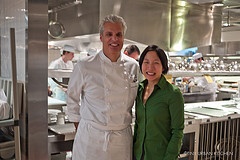
    Eric Ripert and Jen at Le Bernardin kitchen
    _X1C3569
    _DSC6235
    DSC00389
    _DSC4983-2
    _X1C3020-2
    _DSC7137
    _DSC5839
    _DSC5038
    _X1C2818_DSC6705
    _DSC7099
    _X1C7797
    Chila2_DSC5772
    _DSC7248_DSC7271
    Magnolia Kitchen
    _DSC6437
    _DSC5075
    _DSC5666
    _DSC6836
    Easter breakfast @crispbakeshop in Sonoma. This cakes spills out eggs when cut - hee hee
    _DSC6605
    _DSC3506
    _DSC5183
    _X1C2718
    _DSC7067
    _DSC4848
    _DSC7289

    The photos say it all.

    Each photo above represents one of the posts I wrote this past month. Click on any image to lead to the post. In the month of May, I wrote 31 posts. Contrast that with the months of January through April, where I only wrote 41 posts in total. Clearly this past month was a crazy whirlwind of activity.

    Happily, I have finally started making a sizeable dent in my backlog of food photos I've taken over the last couple years, though I'm nowhere near finished.

    In this month, I've written about restaurants in Boston, New York, Philadelphia, Napa / Sonoma Valley, Las Vegas, Sydney (Australia), Buenos Aires (Argentina), Tokyo (Japan), and Montreal (Canada) plus a handful of recipes.  I haven't even started on the rest of Canada or New Zealand.

    Still so much more to write.

    What was it like?
    My original goal in trying publish 31 posts in 31 days was to see if I still "had it". Did I still have the same drive, passion, and pure energy to "pump" out high quality, detailed posts like I used to when I was first ramping up Tiny Urban Kitchen?

    This is no surprise to me, but the experience reaffirmed to me that I am a very goal-oriented person. Give me a goal, challenge, or contest, and my motivation skyrockets. Pending deadlines are good for me. They force me to execute at my highest, most efficient level.

    Sure, there were a few nights where this challenge caused me sleep deprivation.  There were times when I felt like kicking myself for setting such an unreasonable goal. It would happen on those days when an evening activity would occupy most of my night and I wouldn't get home until closer to 10:30 PM. Church stuff would take up a couple more hours, and then I would begin writing the next day's blog post . . . . at 12:30AM.

    Thankfully, those days were few, and by and large, I managed to front load photo editing on weekends and just focus on writing during the weeknights, which wouldn't take more than 1-2 hours.

    What's next?
    Jen Collage 

    Will I continue publishing a new post everyday?

    Ha ha, depends. I still have A LOT of backlog content to post (e.g. recipes like quick Taiwanese beef noodle soup in a pressure cooker (!), Boston restaurants I've visited lately, plus many other travel photos).

    But I don't want to overwhelm the blog either.

    I would love your feedback.

    Please comment below and tell me what you think. I am extremely motivated by what others want, and since this blog is totally for you, my readers, I want to do what you all prefer. Below are some things I've been wondering, and I would love to hear your thoughts.

    And to those who have emailed me personally supporting me in this challenge and telling me how much you love it, THANK YOU. It means so much to me and it really keeps me motivated to work even harder to make this blog as enjoyable and useful as possible.

    OK . . here are some questions for thought!

    Questions
    Did you like how I skipped around between travel series or would you prefer to have each series be serial?

    Do you wish for more Boston and recipe posts? Or do you like the heavy emphasis on travel?

    Was a post every day too much to keep up with?

    Would you prefer less frequent long, detailed posts or more frequent shorter, "snapshot" type posts? (Of course, I can do a mix of both, though I think currently most of my posts are on the long side)

    Any other general feedback?

    Thanks everyone!

    I'm not sure what I'll do next month. I may still continue to increase my posting frequency compared to before. However, I just may give myself a break on weekends.

    🙂

    Thanks everyone for joining me in this fun little challenge!

    Jen

    ©2009-2014 Tiny Urban Kitchen
    All Rights Reserved

    Nakamura (3-Michelin star Kaiseki in Kyoto)

    February 20, 2014 by Jennifer Che

    Nakamura kaiseki wtih ayu
    _DSC3946
    This is the tenth post in the Tokyo - Kyoto - Osaka series. Other posts in this series include the intro post: Tokyo, Kyoto, and Osaka, Matsugen (soba), Sushi Iwa, Ramen Honda (Tokyo Ramen Street), Ryugin, Omen (udon), Shouraian (tofu), Dotonbori in Osaka (street food), Taian (3-star Michelin), and Sushi Sho/Shou (Chef Keiji Nakazawa)

    There are very, very few restaurants in the world where virtually every single course of a long tasting menu is outstanding. Most good restaurants will have a few dishes they do exceptionally well, and then some dishes that are good, but don't necessarily stand out.And then there are the jewels - the rare restaurant where every single course catches you by surprise. You are constantly and continually delighted by each course's complexity, thoughtfulness, and sheer extraordinary deliciousness (for lack of a better word) of the food. You are never bored.
    NakamuraSign

    Bryan and I almost never experience such perfection, despite the numerous well-rated and well-known restaurants we've visited.

    However, for just one night in Kyoto (Bryan's birthday), we got to experience a new level of Japanese haute cuisine - everything from the food to the service and the artistry - that took our breaths away. We had a traditional kaiseki in the heart of a city famous for this exact style of imperial, high-end, traditional Japanese multi-course dining.


    What is Kaiseki?
    Kaiseki meals typically involve the use of fresh, seasonal ingredients prepared in such a way as to emphasize their flavors. The entire experience is a big part of kaiseki cuisine, and therefore the ambiance of the surroundings as well as the artistic presentation of the food are all very, very important.

    Kaiseki has been around for over 500 years, starting back in the 1600's when Sen no Rikyu, a tea master in Kyoto, felt that the powdered green tea used during tea ceremonies was too strong for an empty stomach, and needed some food to accompany it.

    The original kaiseki meals consisted of just miso soup with three sides, but over the years they have evolved significantly, turning into one of Japan's most elaborate and high-end cuisines. Naturally, Kyoto is famous for its kaiseki cuisine, and houses some of the most famous restaurants.
    _DSC3950
    Service is a huge part of the kaiseki experience, and the service at Nakamura is unparalleled. We almost felt a bit embarrassed with the level of reverence we felt we received. For example, when we first arrived, four ladies dressed in traditional kimonos came in, one by one, bowing to us before serving us our first drink.
    _DSC3951
    Each group gets its own private tatami room decorated with traditional Japanese art. Though a truly traditional tatami room involves sitting on the floor, these days many rooms (like this one), have spaces underneath the table for your feet, so you can sit a bit more comfortably.

    There is no menu at a place like this. Essentially, the chef just cooks for you. They ask about dietary restrictions and drinks. Other than that, the entire evening is in their hands.

    Once our servers gave us our first course, one lady stayed behind and knelt about 4 feet away from our table watching us eat.

    We were a little confused, wondering if she would just be kneeling there the entire meal. As we took our first bites, we all said, "mmmm, very delicious." Once she was satisfied that we were happy with our food, she quietly stepped out. We breathed a sigh of relief, not sure what we would have done had she stayed and watched us eat the entire meal.
    _DSC3952
    Our first course looked simple enough: a light bite that consisted of ikura (salmon roe) and fresh chunks of crab meat tossed together with possibly a bit of yamaimo (mountain yam). On top was a daikon puree and some spring onions. Despite the simplicity, the flavor combination was out of this world. The quality of each ingredient was top notch - the sweet crab meat, the rich juicy goodness inside the ikura, and the fragrant daikon came together beautifully.

    Wow.
    Nakamura_mochi   _DSC3960
    The second course, Shiromiso Zoni, is one of his signature dishes. It's an unusual miso soup that's actually made without any sort of stock. Most miso soups are made with some sort of bonito  dashi based broth to add umami. Chef Nakamura's version depends solely on his extremely flavorful white miso and a sizeable portion of wasabi for flavor.

    The resulting thick, creamy soup is intense, exploding with umami, and unlike any miso soup I've ever had. A large piece of pan seared mochi inside adds a lovely, chewy complement to the creamy soup.

    It was simply amazing.
    _DSC3961
    Our next course consisted of an artfully plated bowl of seasonal components, including kuri (chestnut), myoga (Japanese ginger), amadai (tilefish), ebi (shrimp), seaweed, and wasabi (mustard). All the components were extremely fresh and beautifully presented.
    Nakamura_fish
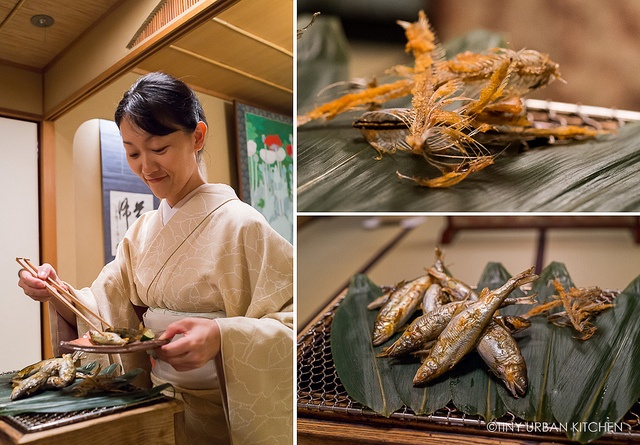
    This next course, the Grilled Ayu Fish, appears to be a traditional dish that commonly appears at kaiseki meals. I had almost the same dish at Kikunoi Akasaka in Tokyo, the only other traditional kaiseki I've ever experienced.

    Ayu, or sweetfish, is native to the rivers in Hokkaido as well as several other Asian countries. The ayu here, although it looks like a whole fish, has actually had its organs removed and instead is stuffed with more ayu eggs.

    The bones are removed and deep fried into crispy snacks that can be eaten whole.
    _DSC3968
    These fish can be eaten whole. The body portion is rich due to the unusually high egg content. The head is much crunchier and definitely not as rich. Frankly, I did not really enjoy the head very much. The taste was very bitter compared to the body. Furthermore, since I'm not used to eating heads normally, it was still a bit weird for me to bite into one. I ate one head, and after deciding I didn't love the flavor, left the other one behind.
    _DSC3972
    Our next course was a piece of eel (anago) fried in a traditional Japanese rice covering. This was accompanied by tamagodofu, an egg tofu custard, shimeji mushrooms, and yuzu essence. It was a lovely, harmonious blend of subtle yet balanced flavors.
    _DSC3973
    Kaiseki meals focus heavily on local, seasonal ingredients. It was October at the time, and thus autumn ingredients were heavily featured. In this next course, we had marron glacé (sugar glazed chestnuts), grilled anago (sea eel), grilled ginkgo nuts and these tiny potatoes (artfully skewered with a pine needle), a beautiful little salad of greens (in the lime), and pickled ginger.
    _DSC3976
    I love gingko nuts, especially grilled. They are one of my favorite autumn items.
    _DSC3980
    Our next course was another traditional kaiseki component: a gorgeously flavored consomme made from a rich assortment of components including matsutake mushrooms (another autumn specialty), kamasu (whiting fish), samma (mackerel pike), kurumi (walnut), crab, tofu, and greens.
    _DSC3983
    The resultant clear broth, which you drink like tea, is stunning. It's earthy from the fragrant matsutake mushrooms, richly flavorful from all the seafood that's inside, yet clean and restorative at the same time. A splash of lime perfects and brings together all these flavors.

    It's the perfect cold weather broth.

    I could drink this forever.
    Nakamura_fish2
    Our next course was another soup, this time one made from Grilled Tilefish. The presentation was interesting. First, they brought the grilled tilefish on its own. After we finished eating it (leaving the bones behind), the server came to each of our sides and poured hot, flavorful broth into our dishes.
    _DSC3990
    The broth was exquisitely flavored. I'm not sure our leftover bones contributed that much flavor at that moment to the delicious broth. However, it was an interesting touch and perhaps symbolized something I didn't quite understand.

    I still happily drank the flavorful broth.
    _DSC3992
    Although it had gone by quickly, several hours had actually passed by the time we got to dessert. We enjoyed a clean and refreshing dessert that included fresh pear (nashi), huge grapes, persimmons, grapefruit, and pomegranate seeds artfully plated (I can't really call this "tossed together") with a beautiful vanilla custard and jelly.
    DSC00115
    It had been an extraordinary meal and we really felt like kings, or at least Japanese imperial royalty. The beautiful space, the exquisite service, and the extraordinary food made this an experience we would soon not forget.
    _DSC3993
    As we stepped out of our private tatami room back into the main hallway, we saw our shoes all neatly lined up for us.
    _DSC3997
    The staff carefully followed us out, bowing, smiling, and thanking us even as we drove off.
    _DSC3949
    What a night to remember.

    *       *       *       *       *

    This restaurant truly deserves it's 3-Michelin star status. The entire staff goes above and beyond to make each diner's experience as special as possible. It's a great place to make someone feel really, really honored and treated like royalty. The place also feels special because of the sheer history behind the restaurant. Chef Motokazu Nakamura is a 6th generation chef in the family, carrying on a centuries-old family tradition and craft.

    Reservations are a must. They are not usually open on Sundays unless if they have critical mass (at least six diners). Bryan's birthday was on a Sunday and I was having difficulty trying to book a special restaurant for him. I was thrilled when Nakamura decided he could open on Sunday in order to accommodate us. Considering the amount of staff needed to open, this was not a small feat.

    This restaurant is very expensive. We only had one bottle of sake yet our total came to $365 per person. It was our most expensive meal in Japan. However, you do have to keep in mind how many people are being employed just to serve you this one meal. We had at least four servers plus probably an entire kitchen staff to pull off that meal.

    All in all, it was definitely one of our most unusual, unique, and special meals in Kyoto. It was fascinating to get a glimpse of what a true kaiseki was all about, with all the bells and whistles. It's most certainly not the type of meal I would eat on any sort of regular basis. However, it was definitely worth trying once. The food was incredible and the experience definitely memorable.

    ©2009-2014 Tiny Urban Kitchen
    All Rights Reserved

    Taian (3 Star Michelin grill)

    January 20, 2014 by Jennifer Che

    _X1C6415This is the eighth post in the Tokyo - Kyoto - Osaka series. Other posts in this series include the intro post: Tokyo, Kyoto, and Osaka, Matsugen (soba), Sushi Iwa, Ramen Honda (Tokyo Ramen Street), Ryugin, Omen (udon), Shouraian (tofu), and Dotonbori in Osaka (street food).

    Osaka is a food lover's paradise. 

    The city itself boasts 120 Michelin Stars: four three-star Michelin restaurants, eight two-star Michelin restaurants, and a whopping seventy-six one-star Michelin restaurants. Even the normal casual restaurants are at another level, and the street food is fantastic.We visited Osaka twice during our short stay in Kyoto (yes, we actually took the train out to Osaka just for dinner!).

    Our two meals were completely different. One night, we immersed ourselves in the bright lights and crazy crowds of Dotonbori, waiting in line for world famous okonomiyaki and chowing down on takoyaki in the street.The second night we visited Taian, a recently minted (2011) three-star Michelin restaurant that specializes in grilled food.
    _X1C6416_X1C6412
    Everything from the zen garden outside the window, the impeccable service, and spectacular food (not to mention very, very reasonable prices), made this one of the best "bang-for-buck" three-star Michelin experiences I've ever had.

    Taian_FallInLove
    I started out by ordering the most unusual of teas. I didn't quite feel like alcohol, so I ordered one of their specialty teas called "Fall In Love". It was a "royal blue tea", something I had never heard of before. The tea arrived served like a cocktail, with a huge spherical ice ball. The bottle from which it was poured looked like a wine bottle.

    It turns out that Royal Blue Tea comes from the Kanagawa Prefecture in Japan and is cold brewed for three to six days before being bottled. The plants are carefully cultivated by hand, fermented under tightly controlled conditions, and brewed with the same level of obsession that Westerners typically see in winemaking.

    The tea was indeed beautiful and I was sad that my ice ball was so large - it meant I actually didn't have that much tea! Alas, I sipped slowly and carefully, savoring each and every golden drop. I loved how floral, fragrant, and smooth the tea was - strong, yet without a single hint of bitterness.
    _DSC3911
    The menu at Taian is pretty straightforward. It's a set tasting menu but you do get to pick which grilled protein you want as your main dish. The basic price is 10,500 yen ($105 USD), with certain entrees (such as the Wagyu beef) costing extra (13650 yen, about $136.50 USD).

    For the sake of variety, our table of four decided to order four different main dishes.
    _DSC3885
    I loved this first set of mini dishes that we all got, each one unique in its own way. The focus is most certainly on local and seasonal vegetables, many of which are very different from what we see in the West. We were pleasantly surprised that the server spoke English and she took care to explain everything in English to us as well as she could.
    _DSC3890
    This Japanese Potato Soup was filled with some sort of white fish sashimi. It was beautifully velvety and smooth, and the flavors were beautiful, full of deep umami from the fish._DSC3889
    In this second dish, oyster mushrooms were topped with tonburi and toasted pine nuts. Tonburi is a seed that is often used in Japan as a food garnish. The texture sort of reminded me of quinoa. The server was so kind as to bring over a book with a picture of the plant (from which the seeds come) in order to explain to us what we were eating.
    _DSC3886
    This next dish consisted of slices of barely seared raw fish topped with pickled "kiku" flower and freshly grated wasabi. Kiku is the Japanese word for chrysanthamum. This was delicious as well.
    _DSC3887
    This next dish consisted of sea cucumber and mountain yam. If you've never had mountain yam (yamaimo) before, it's sort of an acquired texture. It's sticky and gooey, kind of like the inside of okra. Here it's paired with sea cucumber, another gelatinous sea creature that's unusual for the Western palate. I happen to like both sea cucumber and mountain yam, so I was able to enjoy the lovely flavors of the dish without being distracted by the textures.
    _DSC3888
    And finally the eggs of the Ayu, or sweetfish, came mixed together with salt duck eggs to form an extremely flavorful, umami-laden bite. This was yet another very locally inspired dish, since ayu is predominantly only eaten in Asia.
    _DSC3893
    Our next course was a soup, and it was beautiful. It was full of matsutake mushrooms, which are always in season during the fall. The fragrant mushrooms gave the soup a beautiful earthy yet clean flavor that I love. There was one ginkgo egg dumpling with a bit of ginger.

    Although I loved the soup, I felt a bit torn about this dish. I'm not positive if I heard the server right (since she did struggle sometimes with English), but I could have sworn she said it was a snapping turtle broth.
    I grew up with a pet turtle (he's actually still alive - I think they live crazy long lives!), and I've never had the heart to eat turtle before, even though I'm a reasonably adventurous eater. I know it's not exactly rational, but it felt a bit sad and weird to think that I might be drinking turtle soup.

    On the other hand, it's quite possible she said snapper, in which case I'd be totally fine.

    Aside from my personal "issues", I actually objectively loved the soup and thought that the flavors were extremely sophisticated and perfectly balanced.
    _DSC3896
    Next came a simple dish of sashimi. We had Bonito (skipjack tuna, one of my favorites), which we were supposed to dip in bonito flavored soy sauce. We also enjoyed Tai (red snapper), and Kobashira (scallops).

    The quality of the fish was excellent and on par with high end sushi places.
    _DSC3906
    I mentioned earlier that we each ordered a different grilled item. The reason (of course) is that we all wanted to try as much as we could. It was fun to sample everyone else's grilled dishes.
    _DSC3909
    Hee hee, here's a plate full of a small bite of everyone's food. All of the grilled items were fantastic and simply served with an endive leaf filled with a sweet soybean paste sauce, a cucumber slice, a few slices of pickled daikon, and citrus.
    _DSC3902
    The Miso Fish was smoked with (I think) fermented tea leaves. The fish itself was super soft and tender yet had tons of flavor from both the miso and the smoked tea leaves.
    _DSC3901
    The Anago, or sea eel, was served rolled up to resemble whimsical cinnamon rolls. Although this was also very good, it did not stand out the way the other dishes did.
    _DSC3899
    The locally sourced Wagyu Beef (I wish I could remember the region, but I cannot) was phenomenal. The steak was served with a honey sauce and Japanese pepper. Bryan happily ate the remaining pieces (after sharing one piece with each of us), stating that this was up there with the best steak he's ever had in his life.
    _DSC3905
    Their signature dish is the Red Wine Braised Pork Ribs, and it's worth the hype. These ribs were sweet, gorgeously fragrant, and so soft and tender we "cut" them with our chopsticks.

    Once the grilled items came, we thought that the meal was pretty much over. I remember thinking that I was glad it was already over, since I was feeling perfectly satisfied but not stuffed yet (which is rare in a multi-course tasting menu).

    Alas, we were very wrong about the fact that the tasting was over.
    _DSC3915
    The next dish reminded me of Greek pastries such as baklava and the like. I thought, "is this dessert?"
    _DSC3916
    Nope.

    The inside of the deep fried pastry shell was an ayu (sweetfish) full of eggs. We ate this with salt and lemon, which was the perfect, bright balance to the strong umami from the fish. The combination worked very well.
    _DSC3918We then enjoyed a delicious, balanced flower petal soup filled with uni, tofu, and wasabi.
    Taian_rice
    Many meals in Japan end with soup, rice, and pickles. In this case, our rice was interspersed with chestnuts. Our soup was a hot miso-based soup filled with a very herbal tasting vegetable. The pickles included daikon and this other black disc that I could not identify. It was very salty and reminded me a bit of olives.
    _DSC3925
    Finally, dessert was simple but refreshing. We each received a stem glass filled with gelatin and other unusual ingredients you may not associate with dessert, such as peas, tomato, large grapes, and black beans. All of the ingredients were excellent quality and overall the dessert was quite nice, though perhaps not particularly groundbreaking.
    _X1C6418
    All in all, we had an extremely pleasant meal at Taian. The atmosphere is warm and pleasant, and not at all stuffy. In fact, it felt pretty laid back, which was nice. The service was great, and they really took great efforts to make us feel comfortable.

    Overall the food was excellent. I really enjoyed all the unusual and locally inspired bites at the beginning of the meal. Everything from the seafood to the grilled meats were top notch, and soups were complex, balanced, and excellent as well. Honestly, it's really hard to get a three-star Michelin meal for just a hair over $100 USD these days. There are A LOT of mediocre restaurants that charge in this range, if not more. If nothing else, this is by far the best 3-star Michelin value I have ever seen. Most 3-star Michelin meals run closer to the range of $200-$300 a person. $105 is really a steal, especially considering the quality and variety of unusual and expensive ingredients they use.

    Chef Hitoshi Takahata, who opened this restaurant in 2000, is still excelling at what he originally set out to do:
    "prepared dishes that leave an impression."

    He has undoubtedly done that for us.

    ©2009-2014 Tiny Urban Kitchen
    All Rights Reserved

    Dotonbori in Osaka (Mizuno okonomiyaki and takoyaki)

    January 12, 2014 by Jennifer Che

    DSC00132
    This is the seventh post in the Tokyo - Kyoto - Osaka series. Other posts in this series include the intro post: Tokyo, Kyoto, and Osaka, Matsugen (soba), Sushi Iwa, Ramen Honda (Tokyo Ramen Street), Ryugin, Omen, and Shouraian (tofu).

    There is a well known Japanese proverb that goes like this: "dress (in kimonos) till you drop in Kyoto, eat till you drop in Osaka."

    It pretty much sums up the way people think of Osaka, a gastronomic destination for both Japanese and foreign tourists alike. The word kuidaore (食い倒れ) is often used to describe the city, which literally means "to eat oneself bankrupt."

    Clearly Osaka is all about food.

    We traveled to Osaka for dinner two out of the three nights we were staying in the neighboring city, Kyoto. After all, Osaka is only a 14 minute ride on the Shinkansen (bullet train), or a 30 minute local train ride away.

    One of those nights, we went to the most popular street food destination in Osaka: Dotonbori.

    _DSC4098
    Dotonbori is a bustling area along the Dotonbori-canal in Osaka. It's a well known food destination, and both sides of the canal are filled with all sorts of tasty options. The neighborhood is also a sight to behold.

    "I've never seen anything like this" remarked Bryan as we meandered around the crowded streets.
    DSC00130
    Well-known colorful, almost gaudy, icons line the streets, such as a huge 6-meter wide crab whose claws actually move (see photo at the top of the post), larger-than-life gyoza, and huge, eccentric statues of clowns, a running man from Glico, and much, much more. There are neon lights, music, friendly vendors, and jam-packed crowds.

    Dotonbori is also one of the best places to enjoy Osaka street food, especially two of the city's most famous dishes: okonomiyaki and takoyaki.

    1. Okonomiyaki
    _DSC4056
    Our first stop was the famous family-owned okonomiyaki place called Mizuno. The lines out the door attest to the popularity of the place. Okonomiyaki is a Japanese pancake made from a batter of flour, shredded nagaimo (a Japanese yam), egg, and dashi broth. You can fill it with all sorts of meat, vegetables, or seafood according to your preference. In fact, "okonomi" means "as you like it".

    The traditional Osaka-style okonomiyaki includes shredded cabbage, pork belly, and seafood. The pancake is then topped with bonito flakes, okonomiyaki sauce (a brown, tangy sauce), mayonnaise, and scallions.
    _DSC4057
    Mizuno is not a big restaurant, and thus it can't seat many at once. Thankfully, the lines moves pretty quickly. People don't loiter or hang around. They come in, eat their okonomiyaki, and then head on their way. We initially thought the restaurant only had 8 bar seats. In fact, there is a second floor which has tables for larger parties like ours.
    _DSC4058
    If you've never had okonomiyaki before, the menu can be a bit overwhelming. There are all these different options for toppings, sauces, fillings, and even whether to add noodles or not. I can tell you I definitely felt overwhelmed.

    Thankfully, the menu does point to some suggested "most popular" items. Furthermore, the wall right at the entrance has a nice collection of photographs showing the most popular ones.
    _DSC4065
    We ordered the classic "mazeyaki", which translates to "mixed grill" and includes shredded cabbage along with squid, pork belly, octopus, and shrimp. Once it's cooked tableside, the chef tops the okonomiyaki with Mizuno's signature seaweed powder, brown sauce, and mayonnaise. This one was listed as the second most popular dish on the menu.
    _DSC4059
    The pork belly and leek okonomiyaki is third most popular on the menu and is much simpler, less gooey, and less rich than the mazeyaki. There's hardly any sauce on top. Instead, the drier pancake is topped with a simple sprinkling of baby sprouts.
    _DSC4070
    Finally we got the number one most popular one, a version made with mountain yam flour as well as a mixed variety of seafood which included shrimp, scallops, and pork.

    All three were pretty tasty and most certainly satisfying as the utmost comfort food. A part of me wished I could read the menu better so I could create okonomiyakis more suited to my personal preference, which is less meat and more vegetables. Of course, most people aren't like me and probably think the ratio of meat/seafood to vegetable is just perfect. That would explain the crazy lines at this 65 year old family owned establishment.

    Service is pretty fast. They take your order before you even sit down (while you're waiting in line), so soon after you sit down, they come to your table and begin cooking the okonomiyaki table-side. All the tables have a flat griddle down the middle, so everything is made to order right in front of your eyes.

    2. Takoyaki
    _DSC4085
    Takoyaki is another well known Osaka street treat. "Tako" means octopus and "yaki" means fried or grilled.
    _DSC4091
    Takoyaki are bite-sized balls made from a flour and egg based batter (sort of like a pancake) filled with pieces of octopus, ginger, and scallions. They are frequently topped with mayonnaise, bonito flakes, and takoyaki sauce. They were invented in Osaka around 1935 and have since spread to the rest of Japan.
    _DSC4095
    Four of us hit a takoyaki stand after polishing off three okonomiyakis from Mizuno. It was a little past 9PM at that point, and we were surprised to see that some of the takoyaki stands had closed. It's so weird that a place with so much "nightlife"-like activity has food stalls that close early. 

    Nevertheless, we did find one stand that was open and the four of us got a small order of six to try.
    Topped with bonito, takoyaki sauce (a brown, tangy sauce) and mayonnaise, these sort of remind me of okonomiyaki but with a fluffier batter and with a different filling. They are soft and gooey inside, best enjoyed hot.

    3. Fugu
    _DSC4105
    We saw many other sorts of unusual restaurants, such as this place that specialized in fugu, or puffer fish sashimi. They had a tank full of live puffer fish displayed on the window, as well as plastic versions of the various sashimi packages they offered.
    _DSC4104
    It is supposedly very safe these days to eat puffer fish in Japan. However, there's a part of me that's still a bit nervous about it, and thus I haven't tried it yet (though Bryan has!).
    _DSC4106
    After a long evening wandering around Dotonbori, we caught one of the last trains back to Osaka. At that point, the bullet trains weren't running anymore, so we just hopped on a local train, which still only takes 30 minutes or so.

    I'm sure there's still so much of Dotonbori that we missed, but we'll have to save that for another time. I think the next time I go to Japan, I should seriously set aside a few days to devote specifically to Osaka!

    ©2009-2014 Tiny Urban Kitchen
    All Rights Reserved

    Shoraian (Syourian) Tofu Restaurant (Kyoto)

    January 6, 2014 by Jennifer Che

    _DSC4032This is the sixth post in the Tokyo - Kyoto - Osaka series. Other posts in this series include the intro post: Tokyo, Kyoto, and Osaka, Matsugen (soba), Sushi Iwa, Ramen Honda (Tokyo Ramen Street), Ryugin, and Omen.


    When in Kyoto, you have to try the tofu.

    Tofu is one of Kyoto's specialties, perfected by Buddhist vegetarian monks over the centuries. The tofu artisans in Kyoto are passionate and extremely serious about their craft.They use century old techniques to create perfect blocks of fresh, silky, and surprisingly flavorful tofu that's nothing like the bland bricks found in the industrial mass-produced variety.
    _DSC4027
    Kyoto's tofu is widely regarded as the best in Japan, and Shoraian's is considered the best. It was in the quest for this magical, ethereal tofu that I took my friends on a forty-five minute walk, including a hike through a mountain path and up numerous stone steps, in order to reach this special place.
    _X1C6535
    Shoraian is not your typical Japanese restaurant.

    It's located in Arashiyama, a popular recreational area in Western Kyoto well known for its beautiful fall foliage, spring cherry blossoms, and stunning bamboo forests.

    Not only is it on the western edge of Kyoto, you also can't get to the restaurant by car. Or by any wheeled vehicle, in fact. Shouraian is perched on the edge of a mountain overlooking the beautiful Oi River. You must take a short hike along a dirt path before climbing several flights of stone steps to reach this little oasis tucked away in the trees.

    _X1C6543
    If you're already at the bamboo forest, there are many ways to get to the restaurant. The most direct way involves hiking through various winding trails towards the restaurant. We had read enough warnings from other travelers saying they got lost this way, so we chose not to risk it.
    _X1C6541
    Instead, we walked along the river (very straightforward!) until the paved path ended. We continued following a dirt path until we reached a dead end where we saw a sign leading up to the restaurant (see Bryan pointing above). At this point, there are many signs which lead you towards the entrance.
    ShoraianPath
    Go up a series of steps, and then another. After a few more steps, hang a left into this gravel pathway. It's useful to know the Japanese characters for the restaurant, since none of the signs are written in English. It took us about 45 minutes to walk from the bamboo forest to the restaurant because we took the longer, more circuitous but easier route.
    _D4C2593
    Upon entering, we immediate noticed a lot of hanging brushstroke art. The owner of the restaurant is also an artist, and really enjoys Japanese calligraphy.

    And then they showed us our table.
    _X1C6546
    I almost gasped.

    Our own private tatami room? I later found out that every table has a view of the scenic river. It's serene, peaceful, and very relaxing.

    We had an option of three different types of tasting menus. The Shoyo is the least expensive, costing 3800 JPY (about $38 USD), and includes an appetizer, a smaller assorted specialties plate, "yudofu" (tofu hot pot), agedashi tofu, rice and pickles, and dessert.

    The Shorai costs 4600 JPY (about $46 USD), and includes everything from the Shoyo plus an additional special item and a "Kyo-ryori seasonal selection".

    The Shofu costs 5800 JPY (about $58 USD), and includes everything from the Shorai plus toyuba tempura, tofu gratin with namafu, and a mini-steak of wagyu beef. Additionally, it includes unlimited refills for the yudofu.

    Since we had a party of four, we though it would be fun to order all three sets just to see exactly how they differed.
    _DSC4004
    I loved our appetizer, a delicate, creamy tofu "burrata". It was soft, silky, and custard-like, so light and delicate it could be easily eaten with a spoon. This came with all three set menus.
    _DSC4008
    The next course was the "Assorted Specialties Plate", and included several artfully presented tiny bites. Pictured above is the platter from the 3800 JPY Shoyo menu: a boiled Japanese sweet potato slice, boiled shrimp, a leaf-shaped wheat gluten (namafu), Japanese mountain yam (yamaimo) topped with white miso, fresh fig slice topped with prosciutto, kabocha squash, boiled fresh soy beans (edamame), and a cake made from a mixture of wheat gluten and tofu.
    _DSC4011
    The same "Assorted Specialties Plate" from the mid-priced Shorai and higher priced Shofu menus included many of the same pieces served in the Shoyo menu, but also added other special items, such as a black sesame mochi skewer topped with white miso, a piece of cooked salmon, another piece of fish, a small vegetable salad tossed in a sesame paste dressing, and a grilled Shisito pepper.

    The sheer variety of food so artfully presented on the plate was impressive. Though some items (like the salmon, shrimp, and edamame) were relatively unexciting, other items (like the wheat guten, tofu, or mochi-based little bites) were unusual and fun to try. I think the wheat-gluten tofu block was one of my favorites.
    _DSC4017
    The next course, called Sunrise, was the "Kyo-ryori Seasonal Selection", which basically translates to Kyoto Cuisine Seasonal Selection. It was served alongside a postcard with the poem which inspired the dish. The poem, written in calligraphy by the restaurant's owner, is about the sun, and the dish represents the sun with its various components.
    ShoraianEgg
    This was one of my favorite dishes. I loved the dense, gelatinous orange egg yolk combined with the intense red pepper sauce. I'm not sure what they did to the egg yolk, but the resulting texture was really unique. It was dense and thick, almost jamlike in texture but savory in flavor. It sort of reminded me of the gooey orange-yolked eggs you find in Japanese ramen. The red components were topped with a white foam and tiny little gingko shaped chips.
    _DSC4022


    I also loved the next course, Toyuba Tempura, which is only available as part of the most expensive Shofu tasting (5800 JPY). Yuba is made by harvesting the thin film that forms at the top of a a boiling pot of soy milk. These skins are collected and dried to form yuba, which can then be deep fried into tempura. The toyuba tempura was served alongside a couple pieces of vegetable tempura.

    These were delicate and crispy. We dipped them into a tiny bowl filled with matcha powder and salt.

    _DSC4023
    The next dish, Tofu Gratin with Namafu, is also only available as part of the most expensive Shofu tasting (5800 JPY). It's unlike anything Japanese I'd ever had before. Essentially, it's a ramekin filled with a cheese and soy cream custard filled with eggplant and a sesame mochi namafu (wheat gluten). I was surprised but the cheesy, soy cream flavor combination worked. It was very rich and creamy, but not too salty, which I liked. The wheat gluten inside added a nice, chewy texture.
    ShoraianTofuPot
    And then it was time for what they call "Yudofu", or tofu hot pot. It's actually a really simple dish. I believe the simple preparation allows you to actually taste the inherent flavors of the tofu. You taste the fresh, soy flavors.

    Our server came by to light our individual tofu pots.
    _DSC4032
    Once the tofu blocks were hot, we just ate them with a small amount of soy sauce and thinly sliced scallions. The tofu was excellent. It was luxuriously silken soft and light. The Shofu tasting includes unlimited refills of this delicious tofu.

    _DSC4034

    But most definitely save room, because the next course, also only part of the Shofu tasting, is the Mini Steak of Wagyu Beef. The breed of the Wagyu beef we had was Hida beef, which comes from black haired Japanese cattle raised in the Gifu prefecture for at least 14 months. All Hida beef needs to be certified with a yield score of grade A or B and firmness levels 3, 4, or 5 (see my brief aside about Japanese beef grading in my Le Cirque post for more details).

    This beef was simply grilled to a perfect medium rare and served over grilled eggplant and topped with spring onions. It was beautiful marbled, juicy and rich. In short it was excellent.
    _DSC4036
    The Agedashi Tofu, deep fried tofu served in a dashi-based brothi, is part of all three tasting menus. I thought this was pretty good, though it did not necessarily blow me away. I may even dare say I've enjoyed this specific dish more in other restaurants. It was still perfectly enjoyable, though, and since I love this dish in general, I still happily ate it up.
    ShoraianPickles
    Finally, the meal ended with Rice + Pickles, which is a part of every tasting menu. We also all received a small bowl full of tiny fish tossed in Sichuan peppercorn powder.
    _DSC4044
    For dessert, we had a phenomenal Tofu Ice Cream topped with a tiny sheet of cinnamon flavored mochi. Wow. I absolutely loved this course too, and I longed for more than just a tiny scoop (which is all we got). I loved the strong soy flavor. It reminded me of the perfect, intensely flavored soy milk made into an ice cream.
    Shoraian1
    All in all, it was a very excellent meal. I liked how it was largely vegetarian, but still incorporated just enough meat to make it very filling. After trying all three, I would recommend the Shofu, which comes with the most interesting variety of tofu prepared in many, many ways. I was afraid of ordering the Shofu mostly because I was afraid it would be too much food. In reality, I think it's probably OK.

    A sad aside, but Bryan actually got sick during out trip and had a really bad stomachache during this meal, so he ended up not eating at all. However, we felt bad taking up a seat, so we ordered four tasting menus (Two Shofus, one Shorai, and one Shoyo). Even though Bryan didn't eat, the three of us managed to almost finish all of the food. Yes, we were stuffed, but that also tells me that their normal portion size may be something I could actually handle.

    I highly recommend this restaurant. I think it's the best bang for buck when it comes to everything. Where else can you get such a beautiful and authentic Japanese "kaiseki" experience with multiple, artfully decorated courses, a private tatami room, gorgeous views of the river, and really excellent food all for between $38-$58 a person? Keep in mind that really high-end kaiseki experiences usually run in the $100-$300 range. Compared to that, this is a steal.
    _DSC4040

    Other Tips
    You can make reservations and you should. There are a limited number of tatami rooms and they book up reasonably quickly. I think I booked mine a little less than a month before arriving in Kyoto.

    I've mentioned this earlier in the post, but please note that you do need to sort of hike to this location. It's not particularly difficult (equivalent to a few flights of stairs), but it's definitely not wheelchair friendly or anything like that. If you take a cab close to the entrance, you probably don't need to walk more than 5-10 minutes to get to the restaurant. We walked 45 minutes because we had been visiting the bamboo forests earlier in the day.

    At least one person should order the Shofu. Except for the silken tofu appetizer and the actual Yudofu (hot pot), I found most of the courses from the Shoyo to be more ordinary. My favorite, more interesting dishes came from the Shofu, such as the Toyuba tempura, the "Sunrise" egg dish, and the Wagyu beef. I think it's worth the extra $20 USD for at least one person at the table to get the Shofu.
    _D4C2590
    Here are the menus written out for your reference.

    Enjoy!

    Shoyo [3800]
    Appetizer
    Assorted specialties plate
    Yudofu
    Agedashi tofu
    Rice and pickles
    Dessert

    Shorai [4600]
    Appetizer
    Assorted specialties plate
    Special Item
    Kyo-ryori seasonal selection
    Yudofu
    Agedashi tofu
    Rice and pickles
    Dessert

    Shofu [5800]
    Appetizer
    Assorted specialties plate
    Special Item
    Kyo-ryori seasonal selection
    Toyuba tempura
    Tofu gratin with namafu
    Mini-steak of wagyu beef
    Yudofu (Refills available)
    Agedashi tofu
    Rice and pickles
    Dessert

    ©2009-2014 Tiny Urban Kitchen
    All Rights Reserved

    Happy New Year! Reflecting on 2013

    January 1, 2014 by Jennifer Che

    _DSC5392-2UntitledUntitled
    Happy New Year!
    I can't believe it's 2014. To be honest, sometimes I can't believe we're so far into this decade. Time has been whizzing by ever since I graduated from law school (and started this food blog!), and sometimes I can't believe the blog is that old.
    Anyway, it's been quite a whirlwind of a year here at Tiny Urban Kitchen. Bryan and I traveled quite a bit this past year, and most of it is summarized in great detail on the blog.
    I spent quite a bit of time this New Years Day looking back at 2013. and I'm kind of shocked at how much happened. Though time felt like it flew by, I'm also stunned at how much stuff we did.
    Clearly when you're busy, you don't notice it all whizzing by you.
    Here's my attempt at summarizing this crazy year.
    Enjoy!

    Traveling Eats

    1. Japan
    We rang in the new year halfway through my Japan series. It's hard to pick a favorite (food is so amazing in Japan, in general), but some of the more memorable posts would include the beautiful "best steak I've had in my life - Bryan Che" Wagyu steak at Ukai-Tei, homemade soba from our favorite authentic Japanese soba spot, and sushi at the difficult-to-book 2-Star Michelin restaurant Sushi Sawada.Sukiyabashi Jiro Collage w Bryan Jen Flat High Res
    Of course, the culmination of that entire trip had to be our visit to Sukiyabashi Jiro - we finally had an opportunity to be served by the revered sushi master himself. The experience was surreal, to say the least. It felt like we were living the movie, familiar yet completely foreign.

    The sushi was as good as you might expect, though we didn't necessarily think it was better than our other favorite, Sushi Mizutani (Jiro's protege who also makes appearances in the movie).

    2. Las Vegas
    Truffle Cotton CandyTruffle Cotton Candy
    We took our annual trip to Las Vegas to attend the Consumer Electronic Show. It was a memorable Las Vegas trip, to say the least. We managed to get reservations at the whimsical and fun e by Jose Andres, where we enjoyed one of our favorite meals of the trip. We also had a delightful dinner at Le Cirque, where we probably had our first tasting of A5 Wagyu beef ever in the U.S.

    But the craziest clincher? We randomly ran into President Clinton at Bobby Flay's Mesa Grill at Caesar's Palace. No joke. We were as shocked as anybody. We had gone early (11:30am) since my friends were bringing their newborn along. Clinton walked in (with about 8 other people), said hi to us, and proceeded to sit at the table not too far from us.  It was unbelievable.

    Here's a fuzzy picture to prove it.

    3. Thailand
    _X1C4301.jpg
    In March I traveled to Thailand for the first time in my life and I absolutely loved it. The people are super friendly, the city of Bangkok itself is fascinating, and the food is phenomenal.
    _DSC1229.jpg
    We tried some incredible street food, such as the most famous pad Thai in the country, the best drunken noodles I've ever had in my life, and seriously tasty street food that was different from anything I'd ever had before.
    CookingSomphong.jpg

    In Bangkok I took a couple cooking classes where I learned so much about Thai cooking. It was super fun (and not too expensive at all!). I've shared every single recipe from those courses on this blog. To see all the recipes, click here and scroll down to the Thailand section.
    _DSC1252.jpg

    Finally, I wrote a series of posts on some of the excellent "fancier" restaurants we tried in Thailand, such as the crazy high SkyBar (world's largest open air bar) where you can enjoy cocktails while looking out on Bangkok, or Nahm, number 32 on S. Pellegrino's 50 Best Restaurants in the world; Number 3 on the Asia's 50 Best Restaurants list).

    4. London
    Hibiscus

    April was a bittersweet month. Though I was fortunate enough to visit (and eat) in London with Bryan (and even meet up with another friend), our trip was most certainly clouded by the Boston bombings that occurred while we were there. It was an eerie reminder of 9/11 for me over a decade ago, when I was also in Europe, helplessly watching the devastation unfold in the U.S.

    I responded by not only sharing my own feelings about the bombings, but also writing a tribute post to Boston, highlighting my favorite restaurants there. It has since become one of the most shared posts.

    5. Vermont

    NorwichVT

    After returning to Boston, I took a short trip to beautiful Vermont, where I spent two days learning how to bake at King Arthur Flour's Baking Education Center. I'm working on eventually sharing with you all the wonderful tips I learned. For now, I've written just one post - how to make the perfect whole wheat scone.

    6. Utah & Yellowstone National Park
    BryanOldFaithful
    In June we met up with Bryan's parents to visit Utah (his parents' old stomping grounds) before heading to Yellowstone National Park. I was mesmerized by the bubbling sulfurous lakes, plethora of shooting geysers, vast wildlife, and sweeping majestic mountains. It's utterly unreal how much beauty is packed into such a "small" area. A week wasn't enough, and I can't wait to go back and explore some more.

    7. Seattle
    _DSC2679.jpg

    Summer was a season for weddings, and we traveled quite a bit for these out-of-town weddings. At the end of June we did a weekend jaunt to Seattle, where we managed to slip in a fantastic dinner at How to Cook a Wolf (not to mention bring home an entire Copper River King salmon from Pike Place Market!).

    8. Washington D.C.
    MinibarEntrance
    In July we visited Washington D.C., where we did classic touristy things like watch the fireworks at the National Mall and visit the various free museums (though I must say, I prefer Boston's fireworks!). Our favorite meal by far was the magical experience at minibar (another by Jose Andres!).

    9. Cape Cod
    _X1C6158
    On a last minute whim (after finding out we were not scheduled to play in the music team at church), we decided to head down to Cape Cod for a weekend, somewhere Bryan had never visited. We covered much of the island by bicycle, my favorite bike trail being the Shining Sea bikepath which connects Falmouth to Woods Hole. We devoured the best oysters we'd ever tasted right in Wellfleet, had incredible fried seafood at Mac's Shack, and took tons of photos of the beautiful cape.

    10. Sonoma Valley
    _DSC3410

    In early September we took an unforgettable anniversary trip to Sonoma Valley. We cycled throughout the vineyards, tasted dozens of seriously incredible wines at Sonoma County Wine Weekend, and enjoyed some fantastic food. On our actual anniversary day, we met the owner of Kamen Winery, who took us on a stunning personal sunset tour of his vineyard. It was breathtakingly beautiful, a once-in-a-lifetime experience I will never forget.

    11. Martha's Vineyard
    MVFoodWineCollage
    In October we visited Martha's Vineyard off-season. It was not only beautiful, peaceful, and quiet, we had a chance to also enjoy the Martha's Vineyard Food and Wine Festival, where we tried a bunch of great wines as well as sample delicious little bites from O Ya, Craigie on Main, and Tremont 647.

    12. Tokyo, Kyoto, Osaka
    _DSC3825

    In October we also visited Tokyo, Kyoto, and Osaka, a blog series I've just begun and still have a ways to go! For the first time, we did not go alone. Instead, we went with two of our friends who had never been to Japan.  We brought them to all of our favorite places (plus many, many new places - everything from ramen to 3-star Michelin kaiseki cuisine).

    13. New York City
    _X1C6775

    In November we visited New York City over Thanksgiving, where we watched the Macy's Parade (boy was it cold standing outside for 3 hours!), enjoyed a lovely Thanksgiving meal at Daniel Boulud's flagship restaurant, and had what Bryan calls "the best fried chicken I've ever had in my life" from David Chang's Momofuku Ma Peche. Those posts will hopefully be coming sometime in 2014!

    14. Los Angeles
    _DSC5502
    And then, just like that, December was upon us. We traveled to Los Angeles (Bryan's hometown) where I of course had my Din Tai Fung fix, my potsticker & handmade noodles fix, plus a visit to Little Tokyo.

    In some ways the year felt like it flew by. Yet as I look back, I realize that a lot of stuff happened. I guess when you're busy you don't even notice the time flying by.

    I need to remember to sit back and just soak it all in.

    It's most certainly been one a heck of a year.

    Before I sign off, I did want to share with you some of my favorite cooking/baking posts, as well as some of my favorite Boston restaurants that I discovered this year.

    Cooking + Baking
    _DSC0215  _DSC2342
    I had tons of fun making these Chili Chocolate Domos (so cute!) and the extremely popular (not to mention easy and addictively delicious) matcha mochi cupcakes.
    _DSC2489
    Spring was a great time to make all sorts of seasonal-inspired dishes, such as ramps pesto, garlic scapes pesto, as well as anything with asparagus and peas. Summer was the perfect time to experiment with my farm share, where I ended up making lots of healthy veggie stew with my pressure cooker. Winter I often turn to my pressure cooker, where I've made hearty and comfort type dishes such as this lamb osso buco or this delicious French Lentil Soup. We also often just pan fry Copper River King salmon (see above), grill Costco prime steak, or make noodles. I roasted a lot of farm share veggies this past year!

    Favorite New Boston Restaurants Discoveries
    Though I do travel a fair amount, most of my time is still spent here in my hometown of Cambridge, MA. We discovered lots of fantastic restaurants this year.
    David Punch and Jennifer Che

    We were sad to see David Punch leave Ten Tables Cambridge last year, However, we were super impressed with his new restaurant Sycamore in Newton, which is certainly a valuable addition to the neighborhood. We had a delightful meal at Lumiere, thanks to a gift certificate from Bryan's co-worker. My friends and I also loved our girls night out where we sat at the chef's counter at 80 Thoreau.
    _DSC0913
    I was pleasantly surprised by the level of talent that exists in the pop-up world. Bryan and I enjoyed a creative, whimsical, and sophisticated tasting menu at Whisk at 351 as well as an impressive blow-you-away 9-course tasting menu at the Dining Alternative.

    We checked out the highly anticipated Kirkland Tap & Trotter, which most certainly lives up to the hype. Other new restaurants, such as Tavern Road and the soon-to-be-open Alden & Harlow, have solid offerings from experienced chef-owners who really care about the food they produce.

    A few good-bys
    Untitled    Radius3
    We bid farewell to some longtime Boston institutions, such as Radius (and their famous burger!) as well as Upstairs on the Square, one of our longtime favorite outdoor dining spots in the summer. We will really miss these places, and look forward to what they might be bringing next.

    All in all, it's been a crazy year, but I'm loving every moment of it.

    Here's to a great 2014.

    Happy New Year to you all!

    _DSC5338-2
    ©2009-2014 Tiny Urban Kitchen
    All Rights Reserved

    Omen (udon)

    December 31, 2013 by Jennifer Che

    _DSC3939
    OmenBar
    This is the sixth post in the Tokyo - Kyoto - Osaka series. Other posts in this series include the intro post: Tokyo, Kyoto, and Osaka, Matsugen (soba), Sushi Iwa, and Ramen Honda (Tokyo Ramen Street), and Ryugin.

    The first time I ever visited Kyoto was in high school with my mom and my sister. I don't remember too much from that trip except for a few things.

    1. It cost a lot of money to visit each of the temples, so we limited ourselves to just a handful
    2. There was a cool looking temple covered in gold that was worth the 500 yen entrance fee
    3. We dressed up in yukata (Japanese robes) and stayed in a ryokan (Japanese traditional inn)

    I had absolutely no recollection of the food.

    Obviously I had to rectify that on this second trip.

    _X1C6432
    In a lot of ways, Kyoto feels like a completely different world than Tokyo. Instead of the bright lights, crowded streets, and ultra-modern technology that define Tokyo, stunning Japanese gardens and beautiful temples are heart and soul of Kyoto.
    _X1C6457
    It's a zen oasis away from the hustle and bustle of city life.
    _X1C6434
    This ancient city was the capital of imperial Japan for over a thousand years. It is richly full of the history that made it what it is today.
    _X1C6453 _X1C6461
    There are countless temples, shrines, and gardens to visit in Kyoto. The Japanese are meticulous about keeping these historic buildings and the surrounding grounds immaculate.
    _X1C6462
    It is a pleasure to visit these beautiful, extremely well-kept grounds.
    _X1C6451
    One of the most famous sites in Kyoto is Ginkaku-ji, or Temple of the Silver Pavilion. Originally built as a place for the Shogun to rest, this Zen temple is most famous for its elaborate sand gardens (pictured above) and the famous two-story temple._D4C2520
    Silver Pavillion

    Yoshimasa, the shogun who built this temple, had intended for it to be covered in silver foil. However, due to various delays in construction (partly due to a war, among other things), Yoshimasa died without ever seeing it completed. The temple still stands today in that unfinished state.
    _X1C6442
    A popular place to have lunch while visiting Ginkaku-ji is Omen, a fantastic, reasonably priced udon restaurant that is a super short walk away from the zen temple. I would recommend making a reservation, since lines can get very long during lunchtime (see photo above!).

    We made reservations through our hotel. Although there was a bit of a mix-up when we first arrived (we were told after showing up that the restaurant did not take reservations), we eventually found someone who spoke better English who also was able to confirm our reservation.
    _DSC3928
    Omen has all sorts of udon as well as appetizers on the menu.
    _DSC3931
    We decided to start with a fun mochi appetizer, which consisted of three different kinds of mochi on a stick. My memory is starting to escape me, but I believe the one on the left was black sesame was a savory, red miso paste; the middle one was topped with white miso, and the right one was a green tea mochi with the same red miso.

    We also enjoyed tiny, tiny potatoes on a toothpick as well as a maple leaf shaped rice cake.
    _DSC3939
    Of course, the star of the show is the udon. You can choose warm or cold noodles, depending on the weather outside and what you feel like.  All the components of an udon dish are served separately.
    _DSC3935
    Separating the noodles from the soup is an especially good idea because the noodles don't get soggy too quickly.
    _DSC3937
    Roasted sesame seeds are provided along with a mortar & pestle, allowing you to grind them and add them to your soup as you like.
    _DSC3936
    Their signature dish, the Omen Udon, is actually a vegetarian dish that consists of udon (warm or cold), a soy-based dipping broth, and an assortment of local, seasonal Kyoto vegetables that are either boiled or pickled. On my plate, I had boiled eggplant, scallions, Japanese ginger, ginger, cabbage, daikon, and burdock (gobo).
    _DSC3934
    Bryan ordered a Roasted Duck Udon, which came with three slices of perfectly cooked duck as well as a hot soy based broth filled with scallions (see above picture). The flavors were fine, though this one did not particularly stand out.
    _DSC3938
    My personal favorite broth of the night came with an autumn special, Matsutake, a gorgeously fragrant mushroom that is only available in the fall. Because matsutake mushrooms are so expensive, this bowl was significantly more expensive than all the other dishes (closer to $30 versus the others, which were in the $12 - $15 range).

    Oh but it was so worth it.

    Looking back at all the ways in which I enjoyed matsutake mushrooms during our trip, I think this particular preparation was one of my favorites. It really brought out the umami and richness of the matsutake mushroom flavors into the broth. I felt like I was making the most of the mushrooms by enjoying their delicious flavors continually with each spoonful of soup.
    _DSC3941
    My friend ordered the Tempura Udon which came with a side of vegetable and shrimp tempura. It was good, but again nothing particularly over the top compared to top tempura places. Of course, the noodles themselves were still fantastic.
    _X1C6443
    All in all, we had a fantastic meal at Omen and the total bill was quite reasonable. I think we spent around $85 for a party of four, which isn't too bad considering the quality of the food, the fun ambiance, and the proximity to one of the biggest tourist sites in Kyoto.

    It's not a surprise at all that this place is so popular.

    ©2009-2014 Tiny Urban Kitchen
    All Rights Reserved

    Merry Christmas!

    December 25, 2013 by Jennifer Che

    _DSC5496_DSC5502
    Merry Christmas!

    I hope you all are having a wonderfully blessed day. I'm trying my best to appreciate and remember everything around me - laughter with family, the magical lights decorating the city, and everyone's general good cheer.  Sometimes in the busyness of it all, we forget to soak it all in.
    _DSC5290-2
    Bryan and I have been enjoying the warm sunshine in Bryan's hometown in Southern California. After an exhausting (but totally fun) day in Disneyland (we stayed from 9AM to midnight right after arriving from the East Coast - talk about jetlag!), we've been seeing lots of family, friends, and also enjoying some good eats.
    _DSC5338-2
    Like a stop at my favorite dumpling restaurant in L.A.
    _DSC5392-2
    Or some fantastic seafood from Rowland Heights.
    _DSC5401
    Sushi from Little Tokyo.
    _DSC5414
    And my first time trying shaved "snow"!
    _DSC5369-2
    Mochi egg tarts, anyone? (from one of Taiwan's most popular bakeries which transplated to California).
    _DSC5292-2
    Hope you all have a wonderful holiday.
    _DSC5294-2 _DSC5505 _DSC5497

    ©2009-2014 Tiny Urban Kitchen
    All Rights Reserved

    Ryugin

    December 16, 2013 by Jennifer Che

    Ryugin pear dessert

    _DSC3714
    This is the fifth post in the Tokyo - Kyoto - Osaka series. Other posts in this series include the intro post: Tokyo, Kyoto, and Osaka, Matsugen (soba), Sushi Iwa, and Ramen Honda (Tokyo Ramen Street).

    There are some restaurants that are so universally well-known, so full of accolades, so full of respect from other people that I already respect - they are bound to make it onto the "bucket list."

    I believe Ryugin falls into that category.

    This restaurant is bursting at the seams with top awards. It holds the number two spot on S. Pellegrino's "Fifty Best Restaurants in Asia" list and number 22 on the "50 Best Restaurants in the World" list. The restaurant boasts three Michelin stars - the highest honor - and the chef, Seiji Yamamoto, is well respected by some of the most famous chefs in the world.
    Ryugin1
    Chef Yamamoto is trained in the traditional art of Japanese kaiseki yet possesses a fervent passion and skill for modern "molecular" techniques. He wowed the likes of Ferran Adrià, Joel Robuchon, and Wylie Dufresne in 2012 at Madrid Fusion, an annual chefs' conference showcasing the newest technology in food, where he silkscreened QRC codes onto plates using squid ink and demonstrated how he made "liquid ice."

    Ferran Adrià calls Yamamoto "one of the most important chefs in Japan", an extreme honor coming from someone who himself experiments at the far edge of innovative food technology._DSC3773
    I sometimes wonder at the timing of this meal for me. You see, up to this point I had never tried a real traditional Japanese kaiseki meal. I had most certainly had my fair share of meals that made use of modern technology, such as at Tapas Molecular Bar and at the various Jose Andres restaurants. However, I'd never experienced it in the form of a kaiseki.

    Nevertheless, this was our first serious meal in Japan after our soba adventure straight off the plane and our first sushi lunch. I was definitely intrigued and curious to see what a meal at such a well respected place would be like.
    _DSC3717
    The restaurant has just one tasting menu, called the "Autumn Gastronomy Menu" while I was there. There are about 10-12 seasonally-inspired courses as well as a few signature favorites. They have recently added an a la carte option (a great way to sample the food without getting the entire tasting menu!). You can only make same day reservations, and reservations runs between 9PM and 10:30PM.

    Service was pleasant and the space is warm and cozy. The theme of the decor is clearly dragons (and almost feels a bit Chinese). The name "Ryugin" is inspired by a Zen poem that describes a powerful dragon. There were dragon paintings on the wall and dragon designs on the plates and coasters. Our server was (surprise!) a woman who had just moved from France about two years ago. Her husband was a pastry chef in Japan (there are phenomenal bakeries in Japan), and she spoke fluent Japanese and English.
    _DSC3719
    The food is meant to evoke and touch multiple senses, not just the tongue. The menu titles reflect this philosophy, with language that is whimsical and dream-like, evoking a general sense of fantasy.

    Beginning with a variety of Sensations - Seasonality, Aroma, Temperature, Texture, and Assemblage
    _DSC3720
    We started with a salad made from a variety of very local seasonal vegetables. All ingredients are first cooked separately and then mixed together to ensure a good mix of textures and flavors. This salad consisted of water chestnuts, Shitake mushrooms, blanched greens, bean sprouts, spongy bamboo hearts, vegetables pickled in red wine vinegar, and crispy chips all tossed together in a beautifully fragrant pine nut dressing.

    I loved the unusual ingredients, textural contrast, and fantastic flavors. It was a great way to begin the meal.
    RyuginAbalone
    We then move onto Swimming Crab and Steamed Abalone, a delicate stack of extremely fresh crab meat and abalone topped with an apple vinegar jelly and finely grated ginger. This "stack" was presented dramatically inside of a huge shell. All the ingredients were top notch - sweet, tender crab meat and fresh, chewy abalone, though I found the flavor combination to be a bit underwhelming. It just didn't quite work for me.
    _DSC3728
    The final course in this series was called Egg Custard with Savory Fried Milt. It was a piece of warm, creamy fish roe deep fried and served in a delicate egg custard. The flavors and texture were excellent, though they did not necessarily blow me away.

     ~ Philosophy on the Ichiban Dashi ~ Taste of the Wind that Captures a Moment.  
    _DSC3733
    The next course consisted of a charboiled Kinki Fish (also known as thornyhead rockfish) and grilled eggplant in a clear broth. I loved the deep, smoky flavors from the grilled eggplant and the fish, and the crisp, fresh, young Japanese ginger shaved on top offered the perfect contrast to the rich umami of the rest of the dish.

    ~ A Message From the Coast of Japan ~ Richness of the Sea, Tidal Current
    _DSC3736
    We gasped when the next course came - it was so artfully and meticulously plated. This is a signature dish at Ryugin and varies each day depending on that day's available fresh ingredients from the ocean. Here they are in detail:
    RyuginCoast1
    A perfect slice of fresh hirame (flounder) came topped with yuzu paste and thinly sliced green onions.
    RyuginCoast2
    Kinmadai (Golden Eye Snapper) came with daikon and wasabi while the Ika (squid) was cut into thin slivers and served with a yuzu sauce. The squid was chewy and almost crunchy in texture.
    RyuginCoast3
    Ebodai (butterfish) came topped with a delicately flavored soy jelly which worked together beautifully. A generous piece of Ankimo (monkfish liver) was topped with chrysanthamum flowers.
    RyuginCoast4
    One of my favorite fish, Bonito (skipjack tuna) was gorgeously smoked and richly full of flavor. Finally, a small little cup in the middle was filled with abalone cream and topped with Ikura (salmon roe).

    ~ Binchotan ~ A Power Scent of Charcoal Grill
    RyuginMatsutake
    I love the smoky fragrance that comes from food that has been cooked on a nice, hot charcoal grill. This excellent dish consisted of  charcoal grilled sea perch topped with a roasted rice and black vinegar layer. It's meant to be a playful variation on sushi, where the rice is usually underneath the fish. Here the rice is crispy and laid on top. Off to the side, an avocado slice is topped with some pickled vegetables. A grilled Matsutake mushroom slice (an autumn seasonal specialty) and chestnut "snow" plus a gingko nut complete the autumn-inspired dish.

    I'm a huge fan of Matsutake mushrooms so it was easy for me to love this dish. I also really enjoyed the crispy rice and the textural "crunch" it offered to counter the soft perch.

    ~ A Sealed Dedication under the Lid ~ Exquisiteness, Sincerity of Japan
    Ryugindumpling
    I loved this next dish: a single dumpling made out of Kuruma ebi (Japanese imperial prawn) sat in a daikon and yuzu flavored broth. Although the flavors were subtle, they were beautifully rich, complex, and balanced at the same time. It was one of my favorites.

    ~ Diverse History of Wagyu ~ Grassfed Free-Range Akage Beef from Tosa
    RyuginBeef
    The next several dishes were served at the same time: the season's "new rice", red miso soup made with shrimp stock, and house made pickles which were subtly flavored - not at all tart or too salty.

    The grass-fed free range Akage, one of the four breeds of Wagyu known as Japanese Brown, was cooked "Charcoal Sukiyaki style" and took center spotlight. "Sukiyaki" is typically cooked as a hot pot in a soup flavored with soy sauce, sugar, and mirin. Here, I'm guessing the beef was marinated in those flavors before being chargrilled.

    On top was a crispy poached egg . .  .
    _DSC3760
    . . . which broke open to reveal runny yolk that you could mix together with the rest of the dish.
    _DSC3762
    After we finished the decadent beef, our server stopped by and asked us "are you still hungry? Would you like extra courses?"

    Frankly, I was stuffed, but my friend agreed to add on another course. A few moments later, the most vivid and colorful fried rice I've ever seen came out. Purple cabbage, seasonal greens, sancho peppers (Sichuan peppers), and small bits of some sort of meat (it reminded me of Chinese pork sung, actually) were the main ingredients in this fancy fried rice.

    We all tasted a bit. We agreed it was pretty good, though nothing particularly special. Compared to the previous dishes, it was rather simple in both flavor and preparation.

    ~ Lusciousness ~ Coolness, Warmth, Playful Spirits, Nostalgia, and Temptation
    _DSC3765
    This dessert is one of Ryugin's signature dishes, and it's not hard to see why. A tiny "candy pear"- which looks like a delicate ornament or piece of art - is placed right in front of you.
    _DSC3768
    The server than places a spoonful of compressed pear and watermelon cubes.

    I tap at the pear a few times with my spoon, and it breaks open, exploding pear powder all around. It's a fascinating (and delicious) dessert to experience - everything from the intense pear flavored cubes to the cold crunchy candied shell and the dry powder - it's really unusual and probably unlike any dessert you've ever had before.
    _DSC3771
    The second dessert was equally delicious, though perhaps not as dramatic. A study of the flavors of sake both hot and cold, we enjoyed two different interpretations of Japanese sake.

    On the left we had Sake Ice Cream. It's hard to describe it except to say that it really tasted like sake without being at all "boozy" or alcoholic. It captured the wheat flavors of sake perfectly. I loved it.

    On the right we had a Sake Souffle with mochi and red bean at the bottom of the box-like container.
    RyuginDessert
    The souffle itself was fantastic - it was warm, super soft (almost creamy!) and had a lovely sake flavor as well. I enjoyed both immensely.

    Sincerely for you . . . 
    RyuginMatcha
    Finally, at the end of the meal, we all had a bowl of matcha made the traditional way. This involves using a special match whisk to blend matcha powder together with hot water to make the creamy, foamy matcha you see pictured above.
    _DSC3782
    A final finishing "popcorn" ginseng oolong tea from Taiwan was a perfect, clean finish to an excellent meal.

    The Details
    The restaurant is open daily from 6PM to 1AM, and you can only make reservations within the same month as the date on which you want to dine (e.g., book on October 1st if you want to eat in the month of October). For foreigners, they request that you make reservations through your hotel concierge. There is a steep cancellation fee of 20,000 yen ($200 USD!) per person if you don't show up.

    There is only one menu, the tasting menu, which costs 23,000 yen per person (about $230). A nice way to access just a taste of Ryugin's dishes without breaking the bank is to try to reserve dinner after 9PM. At this time, the a la carte menu is available, which means you don't have to order the entire tasting menu. A la carte reservations can only be made same-day, or you can try walking in as well.
    _DSC3774Overall Thoughts
    This was our first nice meal (and first ever kaiseki) in Japan, so in some ways we weren't sure what expect. Ryugin does incorporate many aspects of a traditional kaiseki meal, such as the inclusion of sashimi and hot dishes as well as the meticulous focus on artistry, seasonality, and locality of ingredients. However, Ryugin veers quite a bit from a traditional kaiseki in its use of modern cooking techniques (liquid nitrogen, "snow" made from chestnuts) as well is its other European style influences (runny egg yolks, European-style desserts, and wine pairings).

    Our server was actually a woman from France, and the overall ambiance and experience felt more Western than Japanese. We sat at regular tables (no tatami mats!), spoke English, and found ourselves surrounded mostly by foreigners.

    Overall the food was very good, though there were several restaurants that we liked better than this one from this trip. My favorite dishes here were the Seasonal Vegetable Salad (at the beginning), the Kuruma Ebi soup, the Chargrilled Perch & Matsutake Mushroom, and the Sake Desserts (though the Candy Pear dessert comes a close second!). I'd consider returning again during A La Carte hours to have a dessert or maybe sample one or two of the dishes. It may be a long time before I come back for another full-fledged tasting, however.

    Sources: Food and Wine and Food Sake Tokyo

    ©2009-2014 Tiny Urban Kitchen
    All Rights Reserved

    Is it December already? Where I ate in Boston in November

    December 7, 2013 by Jennifer Che

    _DSC4656 Happy December!

    Time surely does fly, doesn't it? Can you believe 2013 is almost over?

    I feel like I've been neglecting Boston for awhile, between all my Japan posts, Sonoma posts, and then the recent nod to New York. It almost appears as if I'm never at home . . . which is so not true.

    In fact, I've actually eaten at a lot of really cool places this past month. I've also had some fun here and there cooking. I've pretty much stayed anchored in Boston this whole month.

    So what were some of my more memorable or interesting meals?
    _DSC4474
    Puritan & Co recently celebrated its first birthday. This restaurant is such a part of the Boston dining scene now, it's hard to imagine that it did not exist a year ago. Kudos to Chef Will Gilson and his team for their amazing success. I visited in early November (after almost half a year!) and had great fun trying some fall-inspired dishes, such as the lovely colorful beets pictured above as well as some of my favorites, such as Chef Gilson's swordfish pastrami.
    _DSC4536
    I used to eat at Cafe Sushi in Cambridge all the time. They had this great $1 sushi deal on Sundays, and since it was only a 3-4 minute walk from our home, we went all the time. They got rid of that deal in June of 2011 and we moved out of the neighborhood in August 2011, so I stopped going there.

    Just recently I returned and I was pleasantly surprised at how good it was. The specials board had a nice variety of interesting fish to try (many from Japan!). They also offered more interesting nigiri pieces with additional elements such as yuzu kosho, basil oil, smoked salt, or shiso.  Yes, the prices have gone up since the $1 sushi days, but I think the quality and creativity has improved as well. My friends and I went twice in one week, and we all unanimously agreed that we liked it better than our recent visit to Oishii, which used to be one of our favorites.
    _DSC4543-2
    When Bryan's away on business, my friends and I take the opportunity to visit restaurants that Bryan wouldn't normally want to visit (such as Indian or Korean cuisine - notice the dearth of those types of restaurants on this blog? There's a reason). Ironically, we ended up eating at a Korean restaurant (Koreana in Central Square, Cambridge) while Bryan was eating authentic Korean food in Korea. The food was solid at Koreana, and (as always) I loved the banchan.

    Why can't other cuisine adopt this wonderful practice of giving free little bites at the beginning of the meal?
    _DSC4595
    I met several other food bloggers at a fantastic media dinner at Foundry on Elm where we tried out the new fall menu. Full post to follow!
    _DSC4606
    Bryan's workplace is only 4 miles away from Gene's Chinese Flatbread Cafe. I always try to get him to bring back noodles for me on his way home from work. Sadly, I have yet to see any noodles come home.

    Hmph.

    However, a few weekends ago Bryan had to go to work to pick up something, so we ended up visiting Gene's for dinner. The place was packed at 5PM. I swear, that place is never empty.

    Though I was super disappointed that my favorite dish, the cold noodles, were sold out, we did get to try a new menu item - the lamb hand pulled noodles, which were very good. Of course, we ordered the spicy hand pulled noodles as well as the lamb stew, classic favorites of mine.
    _DSC4692
    My birthday is halfway through the month of November. Bryan had gone on a long business trip to Asia but made sure to come back in time for my birthday. We had a phenomenal dinner at Uni Sashimi Bar thanks to Chef Tony Messina, who came on as executive chef just a little over a year ago.
    _DSC4697
    We were blown away by Tony's mastery of flavors as well as artistry on a plate.
    _DSC4744_DSC4804
    One of my friends has a birthday just a week after mine, so we did a joint celebration at Menton, where we finally got to try Kristen Kish's new menu (as well as meet her briefly). Our friends had tried her food just a month earlier and loved it, and thus wanted to take us there. It was a lovely meal - definitely look out for a post in the not-so-distant future.
    _D4C2638
    For my birthday, I decided it would be fun to have a character inspired meal full of some of my favorite Japanese characters. You can see a Domokun cake, Domokun Taiwanese meat sauce, Totoro soba noodles, and a Totoro carrot with a Domokun kohlrabi.
    _DSC4818
    Finally, on all those nights I wasn't eating out (I never eat out alone, which means I cook at home a lot when Bryan's away on business), I made lots and lots of veggie soup. I had received so much root vegetables in my farm share from Siena Farms, it was the easiest (and super tasty!) way to use them up.

    The best part? The vegetable soup (with barley and bacon!) tasted fantastic and only took 10 minutes to cook in the pressure cooker (did I tell you I'm in love with my pressure cooker?).

    Perfect on a cold, autumn night.

    To finish off this Boston-focused post, here are two more lists that I made for Foodie.com.

    Enjoy!


    Disclaimer: I received compensation for creating these lists. The contents of the lists are completely my own opinion.

    ©2009-2014 Tiny Urban Kitchen
    All Rights Reserved

    Matsugen

    November 15, 2013 by Jennifer Che

    Matusgen1
    This is the second post in the Tokyo - Kyoto - Osaka series. Other posts in this series include the intro post: Tokyo, Kyoto, and Osaka.

    It's funny how soba hasn't really caught on here in the U.S., (unlike the insane ramen craze going on right now), even though it's a huge deal in Japan.

    The Japanese love their noodles.

    They have dedicated noodles houses that specialize in just one type of noodle. Of course there are the ramen shops (the Japanese are obsessed about ramen too!), but there are also specialty udon restaurants, soba places, and even yakisoba houses.

    I was surprised at the relatively large number of soba restaurants with Michelin stars (Tokyo alone has eight such restaurants), and the paucity (or shall I say absence) of Michelin starred ramen or udon restaurants (yep, not a single one). Even though in America we view all of these Japanese noodles as reasonably casual, clearly it's not that way in Japan - at least when it comes to the art of really good soba.
    _DSC3636
    We decided to seek out Matsugen for a number of reasons.

    First of all, it was close to our hotel in Ebisu. We knew we would be arriving at around 7PM after a long 14-hour flight from the U.S. We figured we would be tired, jet-lagged, and likely wouldn't want to travel far for food (or spend a long time eating it).

    Second, this restaurant became famous when Jean George Vongerichten, the three-Michelin star French chef with numerous restaurants around the world, declared Matsugen as his favorite soba restaurant in the world.
    _DSC3633
    "These fresh noodles are the best I've ever had" he proclaimed.

    He was so impressed after trying it in Japan, he somehow managed to convince the owners, the Matsushita brothers, to open one in New York.

    Sadly, the soba craze never completely caught on in New York, and the newly opened Matsugen closed in March of 2011 after being open for only three years. The brothers moved back to Tokyo, where they continue to run their other restaurants in Japan.

    Without good soba anywhere near me (yep, Boston does not have a single soba restaurant), I was insanely curious about this highly revered place that first peaked Jean George's interest.
    _DSC3622
    Matsugen in Tokyo is very foreigner friendly. They have menus written in English and the staff try hard to work with you. Furthermore, the brothers speak excellent English, probably due to the fact that they spent close to three years in New York.

    I absolutely loved our first appetizer, Kumiage Yuba, a creamy, soft tofu skin that reminded me of luscious buratta, but with a rich, sweet soy flavor. This delectable, smooth custard was served with freshly grated wasabi and soy milk. It was fantastic.
    _DSC3624
    We had originally ordered grilled fava beans.

    The server came back, profusely apologized, and told us that they were out of fava beans.

    "Is edamame OK?"

    Inside, I groaned a bit. Edamame is so boring. We can get that anywhere in the U.S. - even at your local supermarket in the frozen section.

    However, I agreed, not knowing what else to do.

    Can I tell you how utterly surprised and pleasantly blown away I was by how good this dish was? Wow. Grilled edamame is nothing like the boiled variety. It's got this char-grilled smokiness that is incredibly good and hopelessly addictive. Add just a dash of salt and you have the perfect pre-dinner snack. I could not get enough of it.
    MatsugenSobaDumpling
    For fun we ordered Soba Daki, which they translated to soba "gnocchi." It was essentially a dumpling made out of ground soba flour that was boiled and served in the water in which it was boiled. It was surprisingly light and not really seasoned at all.

    I think the point was to enjoy the subtle flavors of the soba. No one at the table really loved it, seeing it instead as this dense, slightly gummy, heavy blob of not-so-flavorful carbohydrates that would make us too full for the rest of our meal.
    _DSC3627
    My friend ordered a tempura hot soba noodle soup, which came with the crispy fried tempura on the side. This is a nice touch, as it preserves the crispiness of the tempura and allows you to add it at your own pace throughout the meal.
    _DSC3628
    All of their soba flour is ground at the restaurant and the soba is freshly made each day. Soba tends to get soft quickly, so it's important to eat it fast if you're having the soup version. We definitely noticed a difference in texture, and preferred the cold noodles because they stayed nice and al dente throughout the entire meal.
    _DSC3630
    I ordered the houe special, called Matsugen Soba, which included a variety of vegetables, nori, bonito flakes, fresh wasabi, scallions, and Japanese ginger, all topped with a perfectly cooked quail egg. It was refreshingly, healthy, and quite flavorful. The texture of the cold noodles was excellent - nice and chewy.
    _DSC3632
    Bryan ordered his favorite - Uni Soba. The uni was fresh and sweet - none of that "stink" that you get with uni in the U.S. Overall the dish was very good, though Bryan still longed for the super thick cut soba that we had enjoyed at another excellent soba restaurant in Ebisu.
    _DSC3635
    On a whim, right at the end of the meal (after still feeling like he was missing out on really good soba texture), Bryan asked about ordering thicker soba. The server recommended their Inaka Soba, which is soba made from flour that has been ground up with the husks. The resulting noodle has little specs of husk throughout as well as a deeper, earthier flavor.

    I loved it.

    I am so glad that Bryan decided to order it. It turned out to be my favorite dish of the entire evening (well, maybe it's a tie between that, the edamame, and the tofu). This special type of soba had superior texture to all the other sobas that we had eaten earlier. Why hadn't we just ordered this one instead?

    This soba is meant to be enjoyed on its own. You just eat it with a simple soy-based soba dipping sauce.

    Honestly, I think that's the best way to go.
    _DSC3620
    I loved this restaurant. It was small, cozy, and felt really authentically Japanese yet was foreigner friendly at the same time. The food is excellent. I would totally go back, order a few appetizers, and just get that simple inaka soba.

    We chatted a bit with one of the brothers on our way out. When he found out we were from Boston, he said, "oh yes, Boston. I lived in New York for a couple years. We had a restaurant there."

    Although I'm sad that Matsugen is now gone from New York, I'm happy that the brothers were able to return to their home country, which is where they really wanted to be. I think there's still one open in Hawaii, so if you really want to stay in America but still experience their soba, you can try the Honolulu one.

    Of course, I'd much rather just go to Japan.

    Hiroo 1-3-1, Hagiwara Bldg. 1F.
    [on the left side of Meiji-dori going towards Hiroo]
    Open 11:30am-3, 5pm-midnight daily.

    ©2009-2014 Tiny Urban Kitchen
    All Rights Reserved

    15 East (NYC)

    June 7, 2013 by Jennifer Che

    _X1C2566
    This is the fourth post in the series A Casual Weekend in New York. Other posts include Frank Pepe's Pizza, Salumeria Rossi Parmacotto,and Szechuan Gourmet. 

    There's a curse that accompanies exposure to really, really good food.

    It takes awhile before you can adjust back to normal food.

    It's always hard for us to eat sushi after coming back from Japan. I really think it's true. The best fish goes to Japan, and then the rest is doled out to the world.

    This particular trip was difficult because we had just come back from a mind-blowing meal at Sukiyabashi Jiro with sushi master Jiro Ono, arguably one of the most famous and revered sushi masters alive.

    So it was with slight trepidation that we ventured into 15 East, the first Japanese restaurant we would visit in the States after having many insanely good sushi meals in Japan.
    _X1C2569
    15 East boasts one Michelin Star and is located, as its name indicates, on 15 East 15th Street in Union Square in Manhattan. Owners Marco Moreira and Jo-Ann Makovitzky hired Chef Masato Shimizu to take the helm at this restaurant. Shimizu has an impressive background, training for seven years in Tokyo under sushi master Rikio Kugo, who studied under Yoshino Suekichi, the famous Jiro Ono's teacher (!).

    Yes, his sushi master and Jiro learned from the same guy!
    _X1C2557
    Prices aren't cheap here. If you order individual nigiri, they cost between $5 and 12 a piece. That can add up very quickly. We instead went with a chef's omakase lunch for $32, which included seven pieces of nigiri and half a roll (yes, still quite expensive, but the quality is definitely top notch).

    In our set menu, we got zuke (tuna), hamachi (snapper), Sama (needle fish), ika (squid), ebi (sweet shrimp), and two others I can't remember (maybe some sort of mackerel?).
    _X1C2556
    Bryan decided to also try the "oh-toro" (fatty tuna) $12 and Hokkaido uni ($12) a la carte.
    _X1C2562To round out the meal, we ordered some non-sushi items, such as these Seared Scallops, ($36) which were served over squid ink risotto along with spinach, Shitake mushrooms, and a soba flour cracker all mixed together in a flavorful sea urchin butter. Overall the dish was quite tasty, though we felt the scallops were just a tad overcooked beyond our liking.  For the price, the portion size seemed quite small, which is why we were glad we also ordered the soba._X1C2565We both loved the cold Soba Noodles ($15), a dish that was simple but very well executed. Fresh handmade and handcut soba noodles were tossed with ikura (salmon roe), caviar, uni (sea urchin), fresh wasabi, seaweed, scallions, and soy sauce.  _X1C2567And I discovered a new dessert that I've totally fallen for - Mineoka Tofu. Have you heard of it? It's thick and creamy, with a texture sort of like creamy panna cotta or burrata cheese. It has a distinct soy flavor, which I love. It was served with this intensely deep and rich caramel sauce. It was heavenly and I savored each bite. I walked away thinking that was my favorite part of the meal.

    Initial Thoughts
    15 East is a very nice restaurant overall. The ambiance is very airy, bright, and pleasant. The service is excellent. The prices are high for the quantity of the food, but then this is a high-end Japanese restaurant in a prime section of New York. It's perfect for a business lunch, when someone else is paying.

    Because we just came for lunch and only sampled a tiny bit of the entire menu, I feel like I haven't really had a chance to fully experience the creativity of Chef Shimizu's work. However, I can say that Chef Shimizu serves impeccably made sushi and high quality dishes overall. I like how the menu reserves a dedicated section for fresh handmade soba. I also loved the dessert. Though not quite Tokyo, it's still a perfectly pleasant experience.

    15 East
    15 E 15th St
    New York, NY
    15 East on Urbanspoon

    ©2009-2014 Tiny Urban Kitchen
    All Rights Reserved

    Sukiyabashi Jiro

    February 5, 2013 by Jennifer Che

    Sukiyabashi Jiro
    Sukiyabashi Jiro
    This is the eleventh and final post in the series titled Tasting Tour of Tokyo detailing my recent trip to Japan. Other posts include Kikunoi Akasaka, Rokurinsha, Mikawa Zezankyo, Kaoriya, Sushi Sawada, Sushi Aoki, Street Food in Tokyo, Omotesando Koffee,Ukai-tei, and Japan's Underground "Depachika" Markets

    Dreaming of Sushi
    How often does one get to personally taste the handiwork of a man who has been obsessively honing his craft for over seventy-five years?

    Meet Jiro Ono, one of the most famous sushi masters in the world. The Japanese government considers him a "national treasure." The Michelin Guide has awarded him its highest honor, three Michelin stars. Many world famous chefs, such as Eric Ripert and Joel Robuchon, consider him one of the best sushi chefs in the world. Anyone who has seen the movie Jiro Dreams of Sushi understands the devotion, dedication, and near-obsession this eighty-six year old man has for the art of creating perfect sushi.His perfectionism is evident in the way he runs his restaurant. Apprentices begin by learning how to wring out hot towels for guests. For months, all they do is wash dishes and clean, only saying "yes, yes" and never talking back. Eventually, they are "promoted" to other tasks, such as making rice and massaging octopus (for up to 45 minutes to make it soft!). Somewhere in the middle of all this, they finally get the chance to touch fish, make tamago, and eventually - the holy grail - work the front counter with Jiro.
    _X1C2274
    Jiro's restaurant, Sukiyabashi Jiro, has been called one of the most difficult reservations to get in the world. This tiny sushi bar is hidden in the basement of a subway station and only has ten seats. Rumor has it that they only speak Japanese and thus won't even talk to foreigners who try to reserve in English. You may need to book up to a year in advance. Forget modern conveniences like email or credit cards at this old establishment.I'd heard about this place years ago when I started researching restaurants to try in Tokyo. However, it wasn't until recently that I more deeply appreciated the back story of this little place."Jen, you have to watch Jiro Dreams of Sushi. I think you'll love it."My friends had purchased the Blu-ray disc after seeing the movie because they loved it so much. Soon after we watched it, Bryan declared that he wanted to go to Jiro. Unfortunately, it was just about a month before our Tokyo trip. The likelihood of booking anything so late into the game looked extremely grim. Nevertheless, Bryan's pretty relentless when he really wants something, and will pursue as hard as he can until he gets what he wants.

    First Attempt

    "Ring . . . . Ring . . ."

    "Moshi moshi?"

    [in my broken Japanese] "May I make a reservation for dinner?"

    [still in Japanese - this is a paraphrase since I'm really not sure I understood everything he said]
    "We are sorry. We cannot take the reservation. Please call your hotel concierge and have them make the reservation for you."

    I turned to Bryan.

    "I'm really sorry, but I tried. They said we need to have the hotel concierge call."

    Minor problem: we didn't have a hotel booked yet, which meant there was no concierge.

    Second Attempt
    Did I mentioned Bryan was motivated? Within a day Bryan informed me, "OK, I've booked a hotel for the trip. Can you email the concierge?"

    Soon after, yet another disheartening email:

    "Sukiyabashi Jiro is very specific traditional sushi restaurant, having very strict reservation policy. They only take reservation for foreigner who has Japanese friend or who live in Japan. Do you have any Japanese friends or colleague who live in Japan?"

    Defeated, yet again.

    Third Attempt
    Relentless, Bryan contacted his Japanese colleague in Tokyo. The Japanese colleague asked his assistant to call Sukiyabashi Jiro to make the reservation. The restaurant sent an email which included the price of a meal, the cancellation policy, along with other slightly unusual requests, such as "please refrain from wearing a lot of perfume." To confirm the reservation, the assistant hand delivered 20,000 yen cash to Jiro, which Bryan's colleague graciously lent us.

    Wow. Crazy.

    We couldn't believe it, but we finally had a real, solid - ahem financially backed - reservation to the most sought after sushi restaurant in the world.

    Finding Jiro
    _X1C2280
    I know I keep saying this, but it's absolutely true. Restaurants are really hard to find in Tokyo. Even though we are holding really detailed instructions from Bryan's Japanese colleague's assistant (who is truly sweet in trying her hardest to take care of us), we still get lost.

    Pictured above is the corridor at the Ginza Subway Station into which you need to turn (C6).
    _X1C2279
    We blindly walk past these glass doors the first few times, heading instead straight up the steps out into the street.

    Finally, after asking a store clerk (who chuckles and says, "actually, Jiro is right underneath this store"), we head back down the stairs and notice (for the first time) a set of bright gleaming doors.

    If you don't read kanji, it's easy to miss the sign that says "Sukiyabashi Jiro." One easy way is to note that Jiro is right next to Birdland (a very well known yakitori place), whose sign is written in English.
    _X1C2273
    Once you enter the doors, you'll see Birdland on your left and the humble sliding doors of Jiro straight ahead. It is surreal seeing the restaurant for real after seeing it so many times in the movie.
    _X1C2243
    As we enter, we see both Jiro and his elder son, Yoshikazu, who is also a key character in the movie. It is so weirdly familiar, even though we've never stepped foot into this place.
    Sake at Sukiyabashi Jiro
    Bryan starts with cold beer, and then we also order a bottle of sake to go with the meal. I am tickled by the cute little gold flower that lazily drifts to the bottom of my cup.
    _X1C2208
    We sit right at the end of the bar. This is good and bad, I guess. Bad because we are sort of far away from Jiro, which means we can't really see his magical sushi-making skills up close. Good, because we feel a bit removed from his serious probing stare, which often makes diners nervous because they feel pressured to eat quickly. Sitting a bit "away" from the rest of the diners gives me a chance to relax, take my photos, and  enjoy my bites at my own pace.

    The Sushi
    Jiro's restaurant only serves sushi. No sashimi, no appetizers, no side dishes. They ask you your drink order, present you with the list of sushi being served that day, and then ask if you have any allergies. The menu is translated into English, which makes things a lot easier.

    It's been widely reported that a meal at Jiro flies by, with sushi being thrown at you almost a piece per minute. Diners lament about feeling "rushed", pressured to finish a meal in 20 minutes under the watchful eye of Jiro. One article sums it up quite bluntly, calculating that a meal at Jiro will cost you about $20/minute. Our experience is not quite so rushed; however for fun, I wrote down the times so you could get a sense of the pace of our meal.

    I will confess that photographing probably slowed me down a tad, though I pretty much kept up the pace. There was one point where Bryan started beating me and Jiro began giving pieces to Bryan only (!!!). I quickly fixed that, and I believe at the end we both received equal amounts of sushi.
    Karei7:01
    karei (sole fish)

    We start with a gorgeous piece of karei. Immediately, the fantastic rice texture jumps out at me. This is among the best sushi rice I've ever had. Eric Ripert has called Jiro's rice "a cloud that just explodes in your mouth". Jiro sources his rice from a very particular rice purveyor, a person who saves his best rice for Jiro and refuses to sell to anyone who cannot give the rice its proper glory (including the Grand Hyatt in Tokyo!).

    Jiro's rice is slightly warm (like body temperature) and soft, yet you can still taste each individual grain. I haven't had such good rice since my meal at Mizutani, whose chef is one of Jiro's proteges.
    sumi-ika7:03 Sumi-ika (Squid)
    In the movie, we learn that Jiro's apprentices massage octopus for 45-50 minutes in the morning before cooking it. Jiro has learned that octopus needs to be massaged this long, not the 30 minutes he was taught. I regret that the octopus does not appear on our menu. However, the sumi-ika (squid) is one of the best I've ever had. It is insanely soft (not a tad bit of rubbery-ness), yet has a distinct "bite" to it. It's hard to explain, but it goes perfectly with the special rice. It makes me seriously wonder whether he massages his squid too.
    inada7:05 Inada (Yellowtail)

    At Sukiyabashi Jiro, as it is with many other high-end sushi restaurants, you don't dip the sushi into any soy sauce or wasabi. Jiro tailors the flavor exactly as it should taste, and you just eat it. For many pieces, including the one pictured above, Jiro brushes just the right amount of soy sauce on top. The wasabi is already inside, so the bite is already perfect as is.

    Bryan quickly notices that Jiro's wasabi is a lot stronger than ones he's tasted at other sushi establishments in Japan. Up to this point, I had pretty much conceded that freshly made wasabi in Japan is sweeter and more flavorful, but definitely packs less of a punch. Jiro shows us otherwise.
    akami7:06 Akami (tuna)
    We move onto a mini-tasting of tuna, beginning with a simple akami (red tuna) and ending with a couple pieces of chutoro (tuna belly).

    Tuna in Japan is completely different from most tuna in America. Before I tried tuna in Japan, I used to dislike tuna sushi because I thought it was bland and flavorless. There is nothing further from the truth. Tuna in Japan has beautifully complex flavors. In fact, it is probably one of my favorite sushi fish in Japan.
    chutoro7:08 Chutoro (semi-fatty tuna)

    Jiro sources his tuna from one very particular tuna dealer at Tsukiji Fish Market who possesses similar levels of obsession about tuna quality. Jiro ages his tuna for ten days, which results in a much more flavorful piece of tuna. The resultant fish stands up well to the strongly vinegared rice, another very signature (and polarizing) aspect of Jiro's sushi.

    A lot of Japanese cuisine is defined by subtle flavors. Jiro's sushi definitely pushes the bolder edge of the envelope with its stronger flavors. The rice is more strongly vinegared and the wasabi has a bigger punch. Not everyone prefers his strongly vinegared rice, but it definitely holds up well to many of the stronger flavored sushi pieces. Bryan has always loved strong flavors, and thus prefers Jiro's sushi to most others he's ever had.
    chu-otoro7:09 Chutoro (semi-fatty tuna)
    I can't get over the intricate "veins" of fat distributed throughout this piece of fish. Jiro has truly procured some of the best tuna belly from the fish market. I find it interesting that there is no otoro (the fattiest tuna belly) on the menu. I can only conclude that there wasn't a piece that was good enough for Jiro's standards that morning.
    Jen at Sushi Jiro
    It's quite alright, actually. I am quite content enjoying my pieces of akami and chutoro.
    kohada7:11 kohada (gizzard shad)
    Jiro makes sushi in the Edomae tradition. Edomae (often just called "Edo" style sushi) refers to a style of sushi that emerged in the late 1800's in Japan. Edomae literally means "in front of Edo", and the style uses only fish and seafood available during the Edo period when Tokyo was a shogun capital.
    mushi awabi7:14 Mushi-awabi (abalone)
    Those that stay true to the style only use seafood from Tokyo Bay. Typically, they cure or marinate the fish, using techniques that were common back in the Edo days prior to the invention of refrigeration. This means that some pieces may taste saltier or more preserved. Even Jiro's strongly vinegared rice is sort of a nod to the Edomae tradition.
    aji 7:15 Aji (Jack Mackerel)
    Aji, another one of my favorite fish, is fabulous. I am loving the perfection of his rice along with the insanely high quality of the fish. Yes, I've only been here for 15 minutes, but it already feels like I've been here for quite some time.
    hamaguri7:17 Hamaguri (Clam shell)
    Typically I'm less of a shellfish type of person and prefer raw fish sushi over most types of shellfish. For some reason I don't notice this while I'm at Jiro, even though over half the menu is not fish. He's somehow crafted the tasting menu in a way that keeps me interested.
    iwashi 7:19 Iwashi (Sardine)
    One way in which he does this is to intersperse pieces of fish between every few pieces of shellfish.
    kuruma ebi7:21 Kurumaebi (Prawn)
    The fresh prawn is served in two pieces. Though it is juicy and sweet, I actually think that it's still not as good as the "super fresh" one I've had Kyubey, which, admittedly, was killed in front of my eyes just minutes before I ate it.
    akagi7:26 Akagi (Ark Shell)
    Though most pieces have been coming out every 1-2 minutes, there is a five minute gap between the previous piece and this next piece of akagai (ark shell). It turns out Jiro has left the sushi bar temporarily in order to take a photo with a guest who is leaving. We take a mental note to remember to ask him for a photo at the end.

    We do love the akagai, which has a unique, almost crunchy, texture that sort of "pops" as you bite into it. It is surprisingly good, and becomes one of our favorite shellfish pieces.
    katsuo 7:28 Katsuo (Bonito)
    Katsuo, or skipjack tuna, has always been one of my favorites. Here's it is just slightly cured (or salted?) and tastes phenomenal.
    shako 7:31 Shako (Squilla)
    The shako is probably the only one I don't really like. The texture is unlike any sushi I've ever had. It sort of reminds me of dried shrimp - mealy and a bit crumbly. Bryan enjoys it, saying that the deep umami flavors remind him of unagi (freshwater eel). I can sort of see where he gets that, although the texture is so different from unagi that I can't seem to quite agree 100%.
    uni7:32 - Uni (Sea Urchin)
    The uni is fantastic, just like most of the uni I've tried in Japan. It's sweet, creamy, and has absolutely no hint of the funky "stinkiness" that I associate with most of the uni I've tried in the US.
    Jiro_Uni
    I'm hesitant that it will fit in my mouth in one bite, but Bryan insists it's the only way to truly enjoy it. He's right. I love how the uni just dissolves and incorporates itself all around the perfect rice. Quite a heavenly bite, I must say.
    kobashira7:37 - Kobashira (Baby Scallops)
    Kobashira (baby scallops) are piled on top of a gunkan (warship) roll, a style first invented at Kyubey. These scallops are super sweet and also very oishii (delicious).
    ikura 7:40 Ikura (Salmon roe)
    Ikura (salmon roe) is bursting with its fragrant, flavorful, briny juices. Again, underlying all of these pieces, it's the perfect temperature of every component plus the texture of the special rice that creates each ethereal mouthwatering bite.
    anago 7:42 Anago (Sea Eel)
    The anago is melt-in-your-mouth soft. This is the type of bite that makes me close my eyes and just revel in its perfection. I love the slightly sweet sauce that's brushed on top.
    tamago 7:46

    And then - the signal that things are about to end - the perfect tamago.

    Getting the tamago (egg omelet) right appears to be a near-impossible goal for young apprentices at Sukiyabashi Jiro. In the movie, one of the senior apprentices, Daisuke Nakazawa, describes how he made over 200 tamago - all rejected by Jiro - before finally achieving spongy, custard-like perfection. When Jiro finally indicated his approval, Nakazawa wept like a baby.

    The tamago here is awesome. Blended somehow with fish paste and sugar (among other ingredients), the tamago is sweet yet definitely has underlying tones of subtle umami. The razor-thin edge is gorgeously browned, and the entire piece is luxuriously spongy, moist, and soft. It almost tastes more like a delicate sponge cake than a traditional omelet.

    We slowly take small bites out of it, savoring each small piece.

    It has been exactly 45 minutes since we tasted our first bite.
    _X1C2258
    At the end of the meal, Jiro comes and asks whether we want any extra pieces. I am seriously stuffed at this point, and I tell Bryan I can't do it.

    Bryan's rationale?

    We may never, ever get the chance to try this man's sushi again. If there are ones we want to try again, we should do it.

    Bryan orders three extra: akami, chutoro, and tamago. That's right - the egg omelet was that good.
    _X1C2266
    When we finally finish all the sushi, we are whisked off to a side table for "dessert".
    _X1C2262
    8:04  melon
    One of the apprentices hands us each a simple slice of melon accompanied by hot tea. The melon is ripe, super juicy and sweet. It's actually a refreshing end to a clean meal, and I feel energized.

    We take our time here. There's less pressure to eat quickly since we are at the end of the meal.
    _X1C2270
    8:30 
    At this point, Jiro seems much more relaxed as well. The restaurant has virtually cleared out at this point, and he seems to be chatting up a storm with one of his Japanese customers - perhaps a regular?
    _X1C2278I'm surprised that there are no more customers. Soon afterwards, Jiro retires from the sushi bar and sits down near the front, taking a nice, deserved break after a marathon of sushi making (which probably started early in the wee hours of the morning).

    As we pay our bill, the apprentice asks us if we want a photo with Jiro.

    "Yes, of course, please."

    Jiro dutifully stops what he's doing and walks out with us. We don't really know what to say. All my dumbfounded brain can think of at the moment is, "oishii desu, oishii . ." (that was really delicious). I feel stupid that I can't express more than that, considering the life-altering meal we've just experienced.

    We take a few photos, and then Jiro walks back into the restaurant as the assistant escorts us outside.
    _X1C2268

    Epilogue
    It's interesting to me to see that the restaurant actually was not completely full the night we dined there. Some think that, because Jiro hands out sushi at a rate of a piece a minute, he can really rake in the dough in a night. Just imagine - $400 USD per person, every 20 minutes. You could make a killing each night.

    But Jiro doesn't seem to do that. He seems to be quite selective about his customers. My guess is that he tries to leave open some seats for loyal regulars or (perhaps?) even walk-ins? I'm not sure. I was just really surprised that the place wasn't packed. It's nice to think he isn't in it just for the money but instead wants to offer the best, most personalized experience for his diners. That just may mean making only a certain number of pieces of sushi a night.

    The night we went, virtually every diner was a foreigner. Most of the diners were snapping photos of the sushi, and I most definitely heard several languages being spoken around the table. It was clear that the fame from the movie had driven even more tourists to seek out his sushi. In some ways, it was weird being one of those tourists in the dining room that night.
    SukiyabashiJiroCollageJPG-2

    Does it live up to its hype?
    I think so. Jiro's sushi is incredible and definitely ranks up there as one of the best sushi meals I've ever had. Several things really stand out: the top notch quality of the fish; the incredible sushi rice; and that delicious tamago.

    In my mind, Jiro and Mizutani have provided the two best sushi experiences I've ever had in my life. My dinner at Sushi Mizutani felt a bit more personal partly because I was there with mostly local Japanese people (it was right after the earthquake when foreigners were avoiding Japan) and because I had extended heartfelt conversation with Mizutani (though to be fair, he was pretty shy in the beginning of the meal too).

    The atmosphere at Jiro felt a bit more serious. There was definitely an air of reverence by all for the grand sushi master. I didn't exchange a single word with Jiro aside from my half-hearted "oishii" at the end of the meal. All the apprentices were courteous and respectful, but they were also quiet and possibly a bit nervous under the great Jiro?

    Jiro believes the key to success is to devote one's life to mastering a skill. Interestingly, despite his accolades, he still says, “even at my age in my work …. I haven’t reached perfection.” Jiro continues to strive to improve this craft he started learning at the age of nine.

    "I will continue to climb, trying to reach the top, but no one knows where the top is."
    It's hard to imagine that sushi can get better than this, but I'm certainly happy to come back again (if I ever get the opportunity), to find out.

    Additional Facts
    The restaurant is located right inside Ginza subway station at C6. Look for the Birdland sign. The two restaurants are right next to each other.

    Sukiyabashi Jiro
    Tsukamoto Sogyo Building Basement 1st Floor 2-15, Ginza 4-chome Chuo-ku, Tokyo, Japan
    Phone: 03-3535-3600 (+81-3-3535-3600 from abroad)

    Reservations: According to their website, you can either call their international phone number or arrange for a reservation through your hotel concierge. However, as you know from my post above, those two avenues don't always work. From what I can tell, foreigners need to have a local Japanese person hand-deliver a 20,000 yen deposit before the reservation is confirmed.

    Cancellation Policy: Cancellations can be made up to 1 day before your reservation. If you cancel the same-day, you will be charged 15,000 yen per person.

    Cost: There is only one menu (Chef's Tasting), and it costs ~30,000 yen per person. Payment is CASH ONLY. UPDATE! Their website now says they accept most major credit cards. Our meal came out to a total cost of 74,550 yen (71,000 + 3550 tax). We did order a beer, a bottle of sake, and three additional pieces.

    ©2009-2014 Tiny Urban Kitchen
    All Rights Reserved

    Japan's underground "depachika" markets

    February 4, 2013 by Jennifer Che

    _1090218
    This is the tenth post in the series titled Tasting Tour of Tokyo detailing my recent trip to Japan. Other posts include Kikunoi Akasaka, Rokurinsha, Mikawa Zezankyo, Kaoriya, Sushi Sawada, Sushi Aoki, Street Food in Tokyo, Omotesando Koffee, and Ukai-tei.

    I don't think I'll ever tire of visiting local supermarkets regardless of which country I am visiting.

    There's something about a country's supermarket that really speaks volumes about the country's culture. I love roaming the produce aisle to see what's in season locally. I'm intrigued by the junk food that local residents enjoy. Heck, I even like paying with the local cash just so I get a sense of the currency. One of my favorite things to do when I lived in Japan over the summer in college was to shop at the local market and cook in my apartment. For some reason, I felt much less like a foreigner and much more like a local.

    It was so fun.

    I haven't lived in another country again since that 3-month stint in Japan, but I still love roaming supermarkets whenever I travel.

    Here's a fun and surprising look at what I found as I roamed a fancy supermarket underneath a Japanese department store called Isetan, part of a larger underground food hall (the "depachika" - literally underneath the department store).
    _1050669
    Japan's underground markets are full of fun places to pick up a quick snack or lunch. Here's a simple set of sashimi that I picked up one evening for a simple dinner.
    _1090213
    Produce can feel extremely expensive, especially if it's stuff that's not local to Japan. Here, a single zucchini costs close to $3 USD (238 yen), while two medium sized tomatoes will run you $5 USD (479 yen).
    _X1C2523
    Matsutake mushrooms appear in the fall and are very expensive. Am I reading the package right? Does each package really cost 52,500 yen ($600 USD)??!!!
    Untitled
    Fresh wasabi root is a luxury that is hard to find in the US, especially in a US supermarket!
    _1120702
    Can you imagine paying over USD $10 for an apple? (1050yen each)
    _1120703
    Here's the kicker - 31,500yen (whaaat? $340 USD?) for a set of two gift cantaloupes. I seriously wonder who buys this stuff, and really, how good is that cantaloupe??
    _X1C2527
    It's also fascinating to look at the beef offerings at the market. Here we have Wagyu black beef selling for 5250yen per 100g. Whoaaaa . . . . that's like $500 a pound!!!
    _X1C2526
    This is grade A-5 Matsuzaka Wagyu, arguably the highest quality steak the world. A-5 is the highest rating possible, and many would argue that Matsuzaka beef is even better than Kobe beef (though most say that cows from the two areas are just different, but equal). This one goes for 10,500yen for 100g. Yep, we're talking $1000 a pound. This kind of explains the ridiculous prices we paid for Wagyu the two times we've had it in Japan.
    _X1C2525
    There are also many cuts of gorgeously marbled otoro (fatty tuna belly) for around 5000 yen (gulp, over $50 USD) and maguro (tuna) for about $20.

    I could go on and on about the wonderful variety of bentos, prepared foods, and seafood that are available at these markets. It can be expensive, but it's still super fun to explore. I would highly recommend checking out a depachika while you're in Japan. The one at Isetan in Shijuku is awesome if you want to see crazy stuff like the ones I've posted above. They also have some of the best bakeries in the world selling beautiful pastries and lovely boxes cookies and such to bring back home.

    Even if you can't get to Isetan, there are many department stores in Tokyo that have underground food halls in which you can roam. I often visited ones in Shibuya, Ginza, and Ikebukuro.

    I personally find them to be super fun.

    Just remember, Japanese people don't eat while walking, so definitely plan on finding a place to eat all your goodies once you pick them up. I actually just ate my sashimi back in my hotel room while waiting for Bryan to finish a work dinner, which was perfectly fine by me.

    Tomorrow: Sukiyabashi Jiro - the final post of this series!

    ©2009-2014 Tiny Urban Kitchen
    All Rights Reserved

    Ukai-tei (teppanyaki)

    January 31, 2013 by Jennifer Che

    Ukai-Tei
    This is the ninth post in the series titled Tasting Tour of Tokyo detailing my recent trip to Japan. Other posts include Kikunoi Akasaka, Rokurinsha, Mikawa Zezankyo, Kaoriya, Sushi Sawada, Sushi Aoki, Street Food in Tokyo, and Omotesando Koffee.

    I originally was really, really tempted not to write a single word for this post.

    There's something beautiful and surreal about going to Ukai-tei, a Michelin starred teppanyaki place in Omotesando in Tokyo. Pictures speak a thousand words, and you almost don't need text to complete the story. A huge part of the experience is the private "show" from the chefs preparing each course in front of you. Yes, it's teppanyaki, but it's not what you might imagine. There's no silly tricks where the chef throws food into people's mouths. Gone are the dramatic flames and other flashy displays done purely for entertainment.

    This is refined, classy teppanyaki. It's all about the food and how to best prepare it with limited tools - namely, just a huge flat grill and two metal spatulas. The ritual is intriguing, almost mesmerizing to watch.

    So I wanted to try to recreate some of that magic for you here.
    Ukai-Tei
    However, Bryan convinced me that my readers would walk away from this post knowing absolutely nothing about the restaurant, which - in the long run - is not that helpful.

    So I'm willing to compromise. There will be less words than normal so you can soak up the experience visually as much as possible. This will be a photo-driven post. However, I'll try to insert a few words here and there so you know what's going on.

    Enjoy the show.
    Ukai-Tei
    Take the elevator to the top floor of the "Chanel" building in Omotesando.
    _X1C2458-2
    Enter what feels like a cross between an imperial Japanese home and a European museum.
    Ukai-Tei
    And emerge into to a bright sunlit room.
    Ukai-Tei
    Every diner enjoys front-row seats to the action.
    Ukai-Tei fish We start with the Marinated Red Sea Bream, (3150 yen) which is refreshing and light, but just cannot compare to the highest grade sashimi we have been enjoying at sushi places earlier in the week.

    _X1C2380
    The Steamed Abalone (for two) (9450 yen) is a signature dish. However, we opt to order the famous steak instead ("Best Quality" black beef). I've read that the preparation of the abalone is half the excitement, and some say the taste is a bit underwhelming, so we choose taste over presentation.
    Ukai-tei_abalone
    We still get to see the fascinating presentation. To our right, our "neighbors" have ordered the steamed abalone. The chef whips out a pair of live abalone, dumps salt all over them, and then steams everything for quite awhile under that copper dome before serving it, shell and all, to the surprised guests.
    Beef consomme
    We continue with this gorgeous Consomme Soup (2100 yen), clear yet packed with deep, intense beef flavor. We learn that it is made from the bones of the premium black cows (also the source of the super expensive steaks here).
    Ukai-Tei matsutake mushrooms
    Matsutake Mushroom is in season during the fall, and it's one of my favorite mushrooms.
    Uaki-tei_Matsutake
    The preparation is simple, though mesmerizing to watch nonetheless.
    Ukai-Tei matsutake mushrooms
    Served simply with salt and lime, it is divine.
    Uaki-tei Fried Garlic
    I am fascinated just watching the teppanyaki chef in action, especially the deft way in which he is able to do so much with just two simple tools.
    Ukai-Tei garlic
    Garlic chips paired with steak is a revelation. I need to try this at home someday.
    Ukai-Tei beef
    And then, the moment. Our chef brings out the Ukai "Best Quality" beef, the highest grade beef they sell in the entire restaurant. This small piece of steak - believe it or not - costs 34,650 yen.

    Check out that marbling.
    Ukai-Tei beef
    There are four breeds of Wagyu in Japan: black, brown, polled, and shorthorn. 90% of "fattened" cows are black cows, which typically comes from one of three regions, Kagoshima, Matsuzaka or Kobe. Even though Kobe is the most famous, all three regions produce premium quality beef and it's hard to say which one is the best. The restaurant usually chooses its cuts based on the quality of the meat on a particular day, not based on which of three regions it originates.
    Ukai-Tei Steak
    They recommend "medium rare" so that some of the fat would render.
    Ukai-Tei beef
    This steak is pure decadence - buttery, luxuriously soft, and full of flavor.
    Ukai-Tei beef
    Bryan immediately proclaims it's the best steak he's ever had (sorry previous front runner).

    I can see why they recommend not ordering a huge steak. Frankly, it's quite rich and you very well may not be able to finish.

    Bryan disagrees. He is ecstatic I only have room for 2-3 pieces. He happily savors the remaining 8-9 pieces, slowly piece by piece.
    Ukai-Tei Fried Rice2

    Each set menu ends with what they call "meal", which is some form of starch served at the end.
    _X1C2454
    We loved the fragrant Garlic Fried Rice (1580 yen), which takes on the lovely char ("wok hei") from the heat of the teppanyaki grill. It is fantastic.

    I think we are too full, but Bryan convinces me to try at least one dessert "for the sake of the blog" .

    We soon find out, we have only experienced half the fun.
    _X1C2460
    Anyone who opts for dessert is whisked away into another gorgeously appointed room. It sort of reminds me of a traditional European tea room.
    _X1C2462
    A dessert cart, probably the most decadent one I've seen since Joel Robuchon, graces the center of the room.
    Ukai-Tei Dessert Cart Next to it, a larger table holds additional sweets that don't fit the cart.
    _X1C2473
    As long as you order one dessert, you have your endless choice of "petit fours" off of the carts. We decide to share the Caramel Pudding (I have a weakness for this velvety dessert), which happens to be the least expensive item on the menu (840 yen). Most other desserts cost either 1260 yen or 1580 yen. The coffee drinks are all 1050 yen, and Bryan opts for a coffee.
    Ukai-Tei desserts
    It's really hard to decide which small bites to try.
    Ukai-Tei desserts
    I settle on a few macarons, a sesame cake of sorts, and a madeleine.
    Ukai-Tei desserts
    Bryan chooses pound cake (maybe lemon flavored?), homemade caramels, and a homemade marshmallow.
    _X1C2463
    You can sit here at your leisure for as long as you want. If you don't feel like steak, you can come straight to this room and enjoy "afternoon tea". One dessert plus unlimited petit fours and coffee or tea costs 3680 yen.
    Ukai-Tei
    Service is exceptional here. The hostess escorts us all the way out to the elevator, bowing as the doors slide shut.
    Ukai-Tei
    Thanks Ukai-tei for a perfectly executed, magical meal.

    The Facts
    For dinner, courses range from 24,150 (Special Course which includes crazy luxurious ingredients like Beluga caviar, fois gras, matsutake mushrooms, the special abalone, and Ukai "Top Quality" sirloin) to 12,600 (appetizer, soup, sole, beef, "meal", and dessert & coffee).  Lunch is even cheaper, with set menus ranging between 6,830 and 12,600.

    All of the set menus come with "Top Quality" beef, which is not the highest grade. If you want the "Best Quality" beef, you will have to order a la carte, like we did.

    Every single set meals comes with dessert, tea, and coffee, which means you get to enjoy that magical sweet experience at the end no matter what.

    This restaurant is not too hard to find. It is on the main road in Omotesando on the 5th floor of the Chanel building, which is pretty easy to spot. If you still have room afterwards, you can head to Omotesando Koffee, which is what we did. It's not a far walk at all.

    There are also other branches of Ukai-tei in Ginza, Yokohama, and several other locations. They also have restaurants devoted to tofu, charcoal grilled chicken, and seasonal Japanese cuisine. I think their steak is the most famous, though.

    Ukai-tei Omotesando
    5-10-1 OMOTESANDO-GYRE 5F
    Jingu-mae, Shibuya-ku, Tokyo
    TEL: 03(5467)5252

    ©2009-2014 Tiny Urban Kitchen
    All Rights Reserved

    Omotesando Koffee

    January 29, 2013 by Jennifer Che

    _X1C2516
    This is the eight post in the series titled Tasting Tour of Tokyo detailing my recent trip to Japan. Other posts include Kikunoi Akasaka, Rokurinsha, Mikawa Zezankyo, Kaoriya, Sushi Sawada, Sushi Aoki, and Street Foods in Tokyo.

    Is there really such thing as a "best kept secret"?

    After all, good secrets in the food world are hard to keep, and hidden gems quickly gain cult status through word-of-mouth, blog posts, and social media.

    But it's hard to keep track of it all. And frankly, even though this tiny coffee shop has gained quite a following in the past year, I had no idea it existed. It's only because of my lunch and subsequent conversation with Shirley of Lovely Lanvin during our ethereal  tempura lunch that I even found out about this place.

    Welcome to Omotesando Koffee, one of the most unusual coffee shops I've ever visited.
    Omotesando Koffee
    Omotesando Koffee is most definitely "hidden". The tiny cube of a shop is quite difficult to find. Bryan and I meandered around this ritzy neighborhood in Omotesando quite a few times before we saw this tiny little sign.

    Omotesando Koffee is probably unlike any coffee shop you've ever seen. Once you get past the traditional Japanese fence, beyond the lush green plants, you stumble upon this old, tatami-style Japanese home.
    Omotesando Koffee
    Except that it's anything but traditional.
    Omotesando Koffee
    The inside of this Japanese "home" is completely empty except for a large, single cube stuck right in the middle of the house. A lone barista stands inside the cube with his La Cimbali coffee machine and a few snacks.
    Omotesando Koffee
    The menu is simple - variations of iced "koffee", hot "koffee", and some snacks.
    Omotesando Koffee
    One of their most well known snacks or "kashi" is the Baked Custard, tiny cubes that remind me of French canelé (which I love).
    OmotesandoKoffee
    I love the Baked Custard, which has a nice, hefty crust yet is gorgeously chewy on the inside. It goes perfectly with my cup of cappuccino. I think it's cute how they serve all of their desserts inside coffee filters. The coffee filters are also printed with the shop name as well as a map of the surrounding area.

    The cappuccino is excellent. It's on par with my favorite coffee shops in Cambridge.
    Omotesando Koffee
    Off to the side you can buy other fun coffee related items, such as metal filters, insulated mugs, and even a "cup of coffee" literally made out of coffee beans. Of course, the cube-esque theme is quite pronounced here as well.
    Omotesando Koffee
    As I look around, I realize that I'm very lucky to be able to even visit this place.

    You see, Omotesando Koffee was intended to just be a temporary pop-up. In fact, the old Japanese house was slated for destruction sometime in 2012. The original lease was only 12-months long. Owner Eichii Kunitomo's went with this box-like design because it could easily be disassembled and reassembled as it "popped up" around the world.

    Things have changed since those original plans. The pop-up became so popular that people didn't really want it to leave the neighborhood. The 12-month lease has since been extended, which means Omotesando Koffee isn't going anywhere anytime soon.

    Who knows how long it will be before the shop is able to go where it dreams of going, reflected by the long list of destinations on its website? When will it get to actually disassemble and reassemble in a new location, the way it was designed to move?

    I guess we'll have to wait and see, though it seems perfectly happy at Omotesando for the moment.

    Omotesando Koffee

    The Facts
    This place is not far at all from all the wonderful places to shop in Omotesando (my favorite being Kiddie Land, which I think has one of the best selections of Ghibli & Totoro themed stuff in Tokyo). You can easily walk from Harajuku (another really fun neighborhood to visit) to Omotesando. They are right next to each other.  If you really like walking, you can do what Bryan and I like to do, which is to walk all the way from Shibuya to Harajuku to Omotesando.

    One of the most famous tonkatsu restaurants in Tokyo, Maisen, is located just around the corner from this coffee shop. You can easily visit both in one day, maybe grab a coffee here after a meal at Maisen?

    This place is cash only. If you need to get cash, there is a 7-11 right around the corner which accepts international debit cards.

    This is a fun place to visit, though if you're short on time, I think it's also OK to skip it, especially if your goal is to experience things that are uniquely Japanese. The coffee is good, but not better than the best artisanal coffee shops in the US. Instead, I like to think that it's offering a wonderful opportunity for the Japanese to experience really good coffee, something we're blessed to have in abundance here on this side of the globe.

    Update December 2022: the original Omotesando Koffee in Omotesando closed in 2016, but the brand has expanded beyond Japan, opening up multiple locations in Hong Kong, Singapore, London, and even the Philippines. Now that I live in Hong Kong, I'm personally thrilled there are TWO Omotesando Koffee shops within my neighborhood (Wan Chai).

    ©Tiny Urban Kitchen
    All Rights Reserved

    "Homemade" Rokurinsha Ramen (Tsukemen)

    January 12, 2013 by Jennifer Che

    Untitled
    When asked by Eater Boston to "describe 2012 in one word" as part of the Friends of Eater interview series, my answer was simple: ramen. 

    Ramen has taken Boston by the storm. Ever since Guchi's Midnight Ramen made its debut just under a year ago, (wow, has it only been a year?), various restaurant have started serving ramen to try to meet the serious hunger for this dish. Yume wo Katare just opened at the end of 2012, and still boasts lines that average an hour or more. Uni Sashimi Bar started serving midnight ramen, as did Myers + Chang, Pigalle, and even Strip T's.

    Though I've been to Japan countless times, I've mostly focused on sushi during my previous visits, and thus am woefully a noob when it comes to ramen.

    My last visit to Japan I finally had a chance to see what the hype was about in Japan (where people have been lining up to eat good ramen for decades). I visited Rokurinsha, one of the most popular ramen places in Tokyo.

    This post is not about Rokurinsha. You can read all about that experience here.

    Instead, this post is about their "ramen kit" that I bought at the store. It's about how that one package of their specialty ramen kit catapulted me onto this crazy cooking journey where I ended up using both a sous vide machine as well as a pressure cooker in order to execute this "packaged" ramen.

    Definitely one of the most time-consuming and elaborate "instant" meals I've ever made.
    Untitled
    Rokurinsha sells ramen kits and vacuum sealed roasted pork right at the restaurant. That way, if you want to make their ramen at home, you can make a pretty good approximation. Since I was bringing this back to the U.S., I knew I couldn't bring the packaged pork. However, I did buy one package of the ramen kit so that Bryan could try it.
    Untitled
    In Japan, it's not unusual to find "half-dried" noodles in the market. They aren't exactly fresh noodles, but they aren't quite completely dried either. I find these noodles to taste more al dente and chewy than traditional fully dried noodles. They typically have a shelf life of about 1-2 months, so you do need to cook them soon after you purchase them. They do dry out.
    Untitled
    The Rokurinsha package came with these half-dried noodles, which I cooked for about 10 minutes in boiling water.
    Untitled
    It's gorgeously al dente, and I would highly recommend that you pick some up if you are in Japan.
    Untitled
    The soup base part of it was pretty straightfoward. Although the instructions were purely in Japanese, I was able to use a combination of the pictures, my crude knowledge of Japanese, and my medium knowledge of Chinese characters in order to figure out what the instructions said.
    Untitled
    But it can't be that easy, can it?

    Of course not! It wouldn't be on this blog if it were that straightforward. In order to bring this "instant" dish up several notches, the first thing I decided to do was to add a sous vide "onsen" egg. Onsen literally means "hot springs" in Japanese, and refers to these barely cooked eggs which still have a slightly gelatinous yolk. They are decadent and easily made in a sous vide machine.
    Untitled
    Just dial the sous vide machine to around 63 °C (146 ° F) and cook for about 45 minutes (in the shell). Crack open the shell (just once using a sharp jab with a fork), and break open, releasing the velvety egg right into the soup.
    Untitled
    I also made chashu pork shoulder using my nifty new pressure cooker, which resulted in beautiful, tender meat after cooking for only about 1-2 hours. Please click here for the recipe.
    Untitled
    Finally, inspired by multiple sources, I decided to make 48-hour sous vide pork belly. According to the Modernist Cuisine at Home, pork belly can be cooked sous vide within a number of different temperature ranges and time (anything from 12 hours to 48 hours!) The resulting pork belly was gorgeously soft and tender, infused with soy, aromatics, and spices. Please click here for the recipe.
    Untitled
    For an "instant" dish, this entire bowl of ramen took me three days to compete. There was a heck of a lot of planning, and (of course), lots of waiting.

    The final product was awesome. Of course, we all know that the broth is the most important part, and in this case, I "cheated" because the broth was provided by one of the most famous ramen shops in Tokyo. However, having insanely tender pork belly, super soft and flavorful pork shoulder, and a luxuriously velvety egg didn't hurt one bit.
    Untitled

    ©2009-2014 Tiny Urban Kitchen
    All Rights Reserved

    Recent Favorite Food Cities + winner of Giveaway

    December 11, 2012 by Jennifer Che

    Untitled
    Thanks everyone so much for your participation in the giveaway. I was thrilled at the response. I really think it's the most popular one I've ever hosted. I guess everyone likes to travel. 🙂

    And the winner is . . . .

    Gee Emm!  This was chosen randomly (using random.org) out of 187 entries. Gee Emm said "I would love to stay at the only North American Club Carlson Radisson Blu... in Chicago!"

    I must say, I was surprised how many people picked Radisson Blu in Chicago. I didn't even know about the hotel, but it must be pretty incredible. That reminds me, I really need to get myself out of Chicago one of these days - go back to my Midwestern roots!

    Anyway, thanks everyone else for playing. It was heartwarming to hear your comments (I hardly get any comments on this blog, so I'm never quite sure what people think about my posts!). It was encouraging to hear what aspects you all liked, and thanks again for some great suggestions!

    For fun, in the spirit of this travel-oriented giveaway, I thought I'd share about some of my recent favorite food cities to visit.
    Tokyo Skyline view from Westin Tokyo

    JAPAN
    Japan is one of my favorite countries to visit. I first got to know the culture when I spent a summer there during college working at a chemical research company. I loved experiencing the simplest parts of everyday life, such as riding my bike to work, shopping for groceries in the market, and cooking in my very Japanese kitchen. I made friends, explored the area, and really fell in love with the culture. It's in Japan that I first learned to enjoy raw fish.

    The food in Japan is phenomenal. You won't find better sushi anywhere else in the world. For high end (and very, very expensive) sushi, check out Sushi Mizutani, Sukiyabashi Jiro (post coming soon), Sushi Sawada, Sushi Kanesaka or Sushi Mitani. My favorites are probably Sushi Mizutani and Sukiyabashi Jiro, but you can't go wrong with any of them.
    Untitled
    If you'd rather not be forced to eat omakase (which was me after one of those days when I had a huge lunch), some places offer a la carte sushi at dinner, such as Sushi Kanesaka, Kyubey, and Sushi Aoki (post coming soon). It's a way to get that Michelin star experience without paying an arm and a leg.

    Another way to save money is to go during lunch. Places like Kyubey have pretty reasonable lunch prices (though be aware - other places, like Sushi Sawada, charge the exact same price for lunch and dinner). Daisan Harumi is a great value, giving you excellent sushi at about half the cost of the highest end places.

    Wagyu Beef from Ukai-tei

    Japan is also know for its beef, the most famous being Kobe (though there are many other just as famous types). You can try Kobe beef as shabu shabu at Seryna, where 6 thin slices of the prized meat will set you back over $100 USD (oh but it's so worth it!). There's also teppanyaki, which we tried at Ukai-tei this past time. (According to Bryan, the best steak he's ever had in his life).

    The Japanese are obsessive about their pork too. Try Butagumi for specialty tonkatsu (pork cutlet), where you can find over 50 different breeds of pork offered. Maisen is more mainstream (there are several locations) and still excellent. On top of pork, they offer other breaded and fried options, such as shrimp.

    For other fried goodness, you must try Tempura Kondo, which is still (to date), the best tempura I've ever had in my life.  Untitled
    Although I've written mostly about high-end food, there's a ton of really good casual food in Japan as well. Just look for long lines at a ramen stall - it's bound to be pretty good. Rokurinsha is one of the most famous, and branches can be found at both Tokyo Station (Ramen Street) as well as at the Tokyo Sky Tree shopping complex called Solamachi. We also loved Suzuran in Shibuya, which is a little off the beaten path and very, very authentic.

    For other fun casual food, try an izakaya (Kago specializes in Kagoshima cuisine) or a fun robatayaki when they grill all these gorgeous seafood and produce right in front of you (Inakaya in Roppongi).

    Finally, if you want a taste of what cutting edge chefs are doing in Tokyo these days, check out Aronia de Takazawa for some really creative, artistic, and whimsical plates, as well as Tapas Molecular Bar for a sampling of molecular gastronomy bites while sitting at the top of the Mandarin Hotel in Tokyo overlooking the city lights.

     
    TAIWAN

    Untitled

    Taiwan will always bring back fond, nostalgic memories because that's where my family originates. I have been to Taiwan a lot as a kid but not as many times as an adult. I guess because Bryan hardly ever has business trips there, I have less opportunity to catch a "free ride" to Taiwan compared to Japan, where I've been visiting almost annually the past few years.

    Of course, my all time favorite place to eat in Taiwan is the original Din Tai Fung for dumplings. The food is excellent at the other locations as well. I just like the ambiance and feel of the original one, which is more traditional, cozy, and less modern & sleek.  For a traditional Taiwanese breakfast, try Yong He Soybean Milk, where you can get all sorts of freshly made goodies such as scallion pancakes, egg pancakes, soy milk, and you tiao (fried crullers) for a mere few dollars. Taiwan actually has excellent food representing many regions of China. Bryan loves Peking duck, so we had excellent traditional (and reasonably priced) Peking duck at Celestial Restaurant. Of course, you can't leave Taiwan without visiting at least one night market. Bryan and I went to Shilin Night Market, one of the most famous ones.

    I can't wait to go back again. There are still so many things I have yet to try!

    CHINA

    Great Wall of China
    China is a vast, vast country and it will be impossible for me to summarize everything in this short paragraph. Check out the China Eating Guide for more details.

    Beijing is well known for its duck, noodles, and dumplings. As a result, we focused largely on those types of food while we were there. If you want to see a cool show of noodle making while you eat, check out Noodle Loft, made even more famous after Anthony Bourdain visited. Of course, there are many other excellent places where hand-pulled noodles are made (e.g., Noodle Bar). In fact, you can even take a class (in English!) and learn how to pull your own noodles and wrap your own dumplings. Frankly for $30 USD, the class was a steal.
    EatingPekingDuck
    We ate tons of Peking duck while we were there. Bryan's favorite is Made in China (he still goes back everytime he goes to Beijing!), while my favorite was Da Dong for their leaner ducks and wide variety of other types of dishes. We sought out several recommended dumplings places and they were all fantastic.  Xian'r Lao Man didn't have any English language menus, so we struggled a bit to understand everything that was offered. Even then, everything we ordered was fantastic. Bao Yuan Dumpling had lots of pretty photos on its menu and some English, which was very, very helpful. Bao Yuan offers different colored dumplings (all naturally dyed with beets, veggies, etc), which is both colorful and fun.

    Finally, for a change of pace, check out Beijing's best snacks at Nine Gates Snack Street, right near the touristy and popular spot called Hou Hai.

    In Shanghai, we mostly spent time at the World Expo. When we weren't visiting all the various pavillions, we had early morning soup dumpling breakfasts at Jia Jia Tang Bao or Yang's Fry Dumpling (both incredible and super cheap) late night dinners at Din Tai Fung and Crystal Jade (fantastic but expensive for China, even though still quite reasonably by US standards).

    ITALYUntitled

    Bryan and I first went to Rome for our honeymoon over 11 years ago. The past year, we took a spontaneous weekend trip back to Rome. It was my first time blogging about it.

    Although high-end dining in Rome was perfectly enjoyable (we had a lovely meal at Il Convivio and Etabli), our favorite meals were actually the simpler ones. We fell in love with Roscioli for their incredible pasta carbonara (among many other things).  We couldn't stop raving about the incredibly thin crust pizza at Pizzeria dal Paino. As always, gelato was fun to get, and I ate it almost everyday. Don't miss the excellent coffee at the numerous cafes, of which Sant'Eustachio Cafe is one of the most famous.

    A note from our sponsors: Consider traveling to Turkey! Though many of us food enthusiasts undoubtedly will be excited at trying the food there, Turkey has something for everyone. Check out the link and consider visiting Turkey for your next vacation.

    I do want to see Turkey some day. The amount of history in that region alone is reason to visit. I've realized from my visits to Greece and Italy that I really love exploring really old cities. Of course, it would be fascinating to sample the cuisine as well. It's so different from Asian food, and frankly, an area at which I'm a complete newbie. My small exposure to Turkish-influenced cuisine in America has been quite positive, so I'm sure I would love it.
    Untitled

    ©2009-2014 Tiny Urban Kitchen
    All Rights Reserved

    Rokurinsha (tsukemen ramen)

    December 9, 2012 by Jennifer Che

    Untitled
    This is the second post in the series titled Tasting Tour of Tokyo detailing my recent trip to Japan. Other posts include Kikunoi Akasaka.

    How do you find a good ramen place in Japan?

    Easy - just look for the place with the longest lines. Japanese people absolutely adore their ramen and are very willing to patiently wait in long, organized lines in order to partake in this soul-satisfying hot bowl of noodles.

    A perfect example would be Rokurinsha, a ramen shop that opened in 2005 in a quiet residential area in the Osaki district of Tokyo. Although it was a bit out of the way, the place was always packed, filled with lines that sometimes reached over 300 people on busy weekends. It was not unusual to show up at 11AM and wait about two hours before getting into the tiny 12-seater dining area.

    Eventually in 2010, under much pressure from angry residential neighbors complaining about the crazy lines, Rokurisha closed its Osaki shop and re-opened elsewhere in the city.

    The location most people talk about is the one inside Tokyo Station on Tokyo Ramen Street, a corridor full of ramen shops all in a row. A second one resides at the shopping complex at the Tokyo Sky Tree, Tokyo's newest attraction (and the tallest tower in the world).
    Untitled
    The Tokyo Sky Tree is very, very tall and opened up to the public on May of 2012. The opening was so highly anticipated that some people waited in line for a week to get first dibs on tickets. Even now, it is quite popular with both tourists and locals alike. In fact, I waited over an hour in line before getting onto the uber fast elevator to the observatory.
    Untitled
    It's quite fun to see Tokyo from such a height. I saw parts of the city I had never seen before (what is that cool area with all that water??)
    Untitled On a clear day, you can see many of the surrounding mountains, including Mt. Fuji.
    Untitled
    If you're not afraid of heights, you can step onto the glass floor area and look all the way down. It's quite something!
    Untitled
    Afterwards, you can head on over to Rokurinsha. Take the elevator back down and head over to the 6th floor of "Solamachi", the new shopping complex that's connected to Tokyo Sky Tree. Yes, there will be a line, of course (it wraps around the entire restaurant). What do you expect?

    At least they have chairs for the people who have waited in line for quite awhile. Once you get to the chairs section, you also get a copy of the menu to peruse.
    Untitled
    You have to purchase your "tickets" for the ramen before you enter the restaurant. The prices are quite reasonable, with most bowls being somewhere around 850-1050 yen range (about $10-$12 US).
    Untitled
    After about an hour, we were finally seated! We had awesome seats at the bar, which was great. It was fun watching the chefs making the ramen right behind the counter.
    Untitled
    They give you bibs because they think it's so messy!

    After all, Rokurinsha specializes in tsukemen, or dipping noodles. You get your noodles and broth separately, and then you just dip the noodles into the soup. This explains why you may sometimes make a mess.
    Untitled
    I'm not sure if the noodles were freshly made on site (perhaps not), but the texture was still excellent. They were super thick, very chewy, and really fun to eat.
    Untitled
    But the star of the show was the gorgeously thick broth. I really think it was one of the best bowls of ramen I'd ever had in my life. The tonkotsu (pork bone) and dried fish based broth is stewed for over 13 hours. This results in a deeply flavorful broth that's brimming with umami. The bonito flakes on top add even more umami, making the entire soup oh-so-satisfying to eat.
    Untitled
    The egg is boiled just the right amount to retain that soft, almost gelatinous center. Here I've dipped some of my noodles into my broth.

    It was a fantastic meal. Because I had waited in multiple lines by lunchtime (both at the Sky Tree and then in the ramen restaurant line), I was famished by the time these noodles were laid in front of me. I was happy about the bib, as I'm sure I splashed some broth around in my attempts at dipping the noodles.

    By the way, it's perfectly OK to making slurping sounds while eating your noodles in Japan. In fact, you should slurp. It shows that you are really enjoying your noodles.  It's almost more rude not to slurp, since the chef may think you don't like the noodles.

    So slurp away!
    Untitled
    I was thrilled to discover that they sold takeaway packs for Rokurinsha ramen at home. Definitely not cheap at around $15 a pack (serves two people I believe), I bought one to take back with me to the US so that Bryan could try it too. Unfortunately, I could not buy the pork that they sold (no meat products!), but I'm really excited to try their packaged noodles + dried soup base to see how good it is!
    Untitled
    In short, I cannot recommend this place highly enough . Granted, I haven't tried that many ramen places in Tokyo (after all, I've been focusing on sushi for quite sometime my past few trips). However, the rest of Tokyo seems to be vouching for this place as well, evidenced by the insane lines at all of its branches. Is it any surprise that the branch of Rokurinsha at Tokyo Ramen Street always has the longest line?

    Definitely check out this place if you're visiting Tokyo. It's worth the wait. I promise.

    Reminder - today's the last day to enter the Radisson Hotel free night's stay Giveaway. Winner will be announced tomorrow.

    ©2009-2014 Tiny Urban Kitchen
    All Rights Reserved
    • « Previous Page
    • 1
    • 2
    • 3
    • 4
    • Next Page »
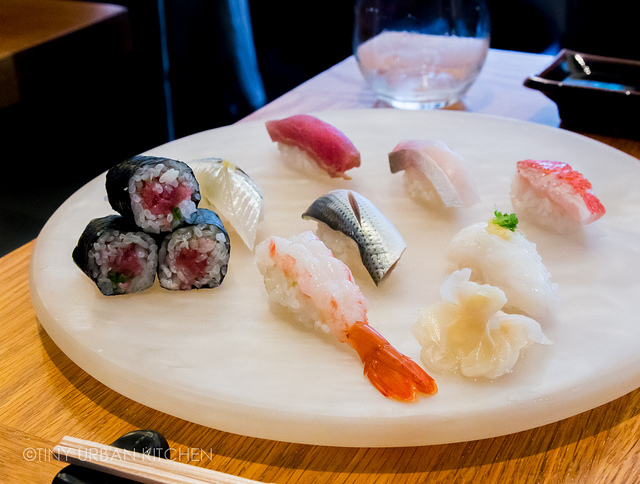
    Jennifer Che Tiny Urban Kitchen

    Hi, my name's Jen and welcome to my cooking, eating, and travel site! I am an expat who moved from Boston to Hong Kong 5 years ago. Born and raised in Ohio to Taiwanese immigrant parents, I am a chemistry nerd, patent attorney by day, blogger by night, church musician on weekends, and food enthusiast always. Feel free to explore away, maybe starting with the Recipe Index or one of the travel pages! I hope you enjoy this site!

    More about me →

    logo
    Food Advertisements by

    Explore

    • Recipe
    • Restaurant
    • US Travel
    • World Travel

    Popular Posts

    • Comfort Kitchen Boston
      Comfort Kitchen - Modern African food in Boston
    • Pammys Cambridge
      Pammy's Cambridge
    • La Padrona Boston
      Jody Adams La Padrona in the Raffles Hotel
    • La Contessa Boston
      Contessa Ristorante - Great Italian in Boston

    Recipes

    • Appetizer
    • Snacks
    • Meat
    • Vegetables
    • Soup
    • Salad
    • Seafood
    • Noodles

    Recently Traveled

    • Hong Kong
    • France
    • Belgium
    • Boston
    • California
    • United Kingdom
    • Germany
    • Spain

    Support Us

    Support Tiny Urban Kitchen by making purchases on Amazon through our affiliate link:

    Recognition


    Featured on the front page
    of the FOOD Section: 2015

    Best Food Blog Awards:
    Restaurant & Dining 2012

    Footer

    ↑ back to top

    About

    • About Me
    • My Equipment
    • In the Press
    • Project Food Blog
    • Privacy Policy

    Eating Guides!

    Eating & Travel Guides
    Trip Reports
    "Kawaii" (Cute Foods)
    Around the World

    • Pinterest
    • Facebook
    • Instagram
    • Twitter
    • LinkedIn
    • YouTube
    • Mail
    • RSS Feed

    As an Amazon Associate I earn from qualifying purchases.

    Shop at Amazon

    Copyright © 2024 Tiny Urban Kitchen