Tiny Urban Kitchen

Exploring Food from Boston to Hong Kong and Beyond

  • About Me
  • Travel
  • Recipes
  • Michelin
  • Subscribe
  • Taiwanese
menu icon
go to homepage
  • About Me
  • Travel
  • Recipes
  • Michelin
  • Subscribe
  • Taiwanese
    • Email
    • Facebook
    • Instagram
    • LinkedIn
    • Pinterest
    • Twitter
    • YouTube
  • subscribe
    search icon
    Homepage link
    • About Me
    • Travel
    • Recipes
    • Michelin
    • Subscribe
    • Taiwanese
    • Email
    • Facebook
    • Instagram
    • LinkedIn
    • Pinterest
    • Twitter
    • YouTube
  • ×
    Home

    Search Results for: tokyo sushi

    Sushi Suzuki Tokyo

    June 21, 2024 by Jennifer Che

    Sushi Suzuki Tokyo
    Sushi Suzuki Tokyo

    I’ve loved things associated with Japan for as long as I remember - whether it be Sanrio characters (hello Keroppi!) and Totoro when I was young*, or deciding to study Japanese language when I went to university - I’ve always been drawn to Japan.

    That also includes Japanese food, which is woven through Taiwanese cuisine due to their tightly tied history. 

    However, Bryan was not the same way, and actually didn’t really like Japanese food when we first met. His only exception was sushi, and only the very best sushi.

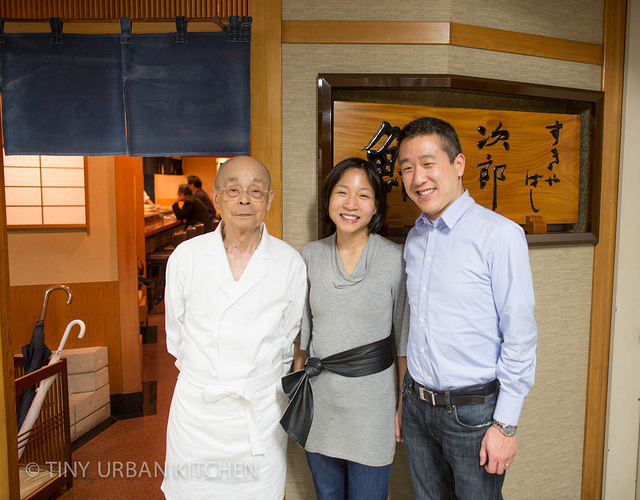
    Sukiyabashi Jiro

    When he started traveling to Japan more frequently for work (starting around 2008), I would tag along on these trips. Each trip, due to his narrow dining preferences, we’d mostly visit famous sushi restaurants. It was a crazy time, dining at Sukiyabashi Jiro, Sushi Mizutani, Sushi Sawada, and other “greats”. However, we only occasionally tried other cuisines, mostly noodles (Bryan loves noodles), and maybe an occasional kaiseki.

    Since Moving to Asia . . .

    In more recent years, Bryan’s palate has broadened a lot. He can actually enjoy curries and coconut milk (something he used to HATE), and he’s more open to a wider variety of Japanese food. This is why our trips (and this blog’s content!) have expanded to include all sorts food types, such as tempura, tonkatsu, yakitori, ramen, soba, udon, kaiseki, shabu shabu, tofuya, sukiyaki, takoyaki, okonomiyaki, teppanyaki, . .  and even wackier things like a hedgehog cafe, maid cafe, dog cafe, and more.

    Sushi Suzuki Tokyo
    Sushi Suzuki Tokyo

    But we still love sushi. And ever since Hong Kong banned seafood from 10 prefectures (including Tokyo) due to Fukushima wastewater issues, it’s hard to know what we can get in Hong Kong now.

    So this trip, I decided not to consult the Michelin guide. Instead, I went to Tabelog, the go-to reference that Japanese people use. Japanese diners are particularly tough critics, and scores on Tabelog tend to be a bit lower than those on sites like Yelp, Google, Travelocity, OpenRice, and Dianping.

    Sushi Suzuki Tokyo

    This is all a very, very long prelude to explaining how I came upon Sushi Suzuki. This restaurant is rated very, very highly on Tabelog. Based on that alone (and availability during the Easter weekend), I decided to book it and give it a try.

    It was our only sushi meal the entire trip!

    Then & Now

    Sushi Aoki
    At Sushi Aoki in 2013
    Sushi Suzuki Tokyo
    Sushi Suzuki in 2024

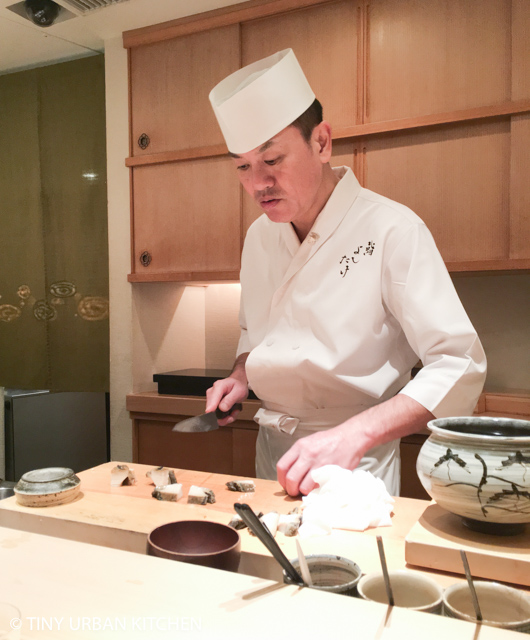
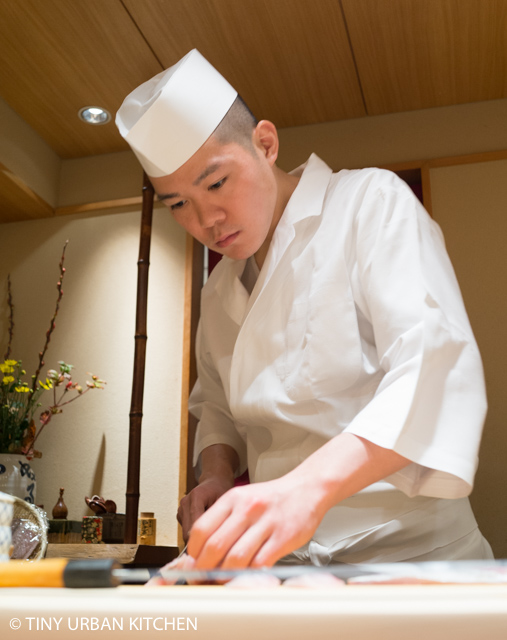
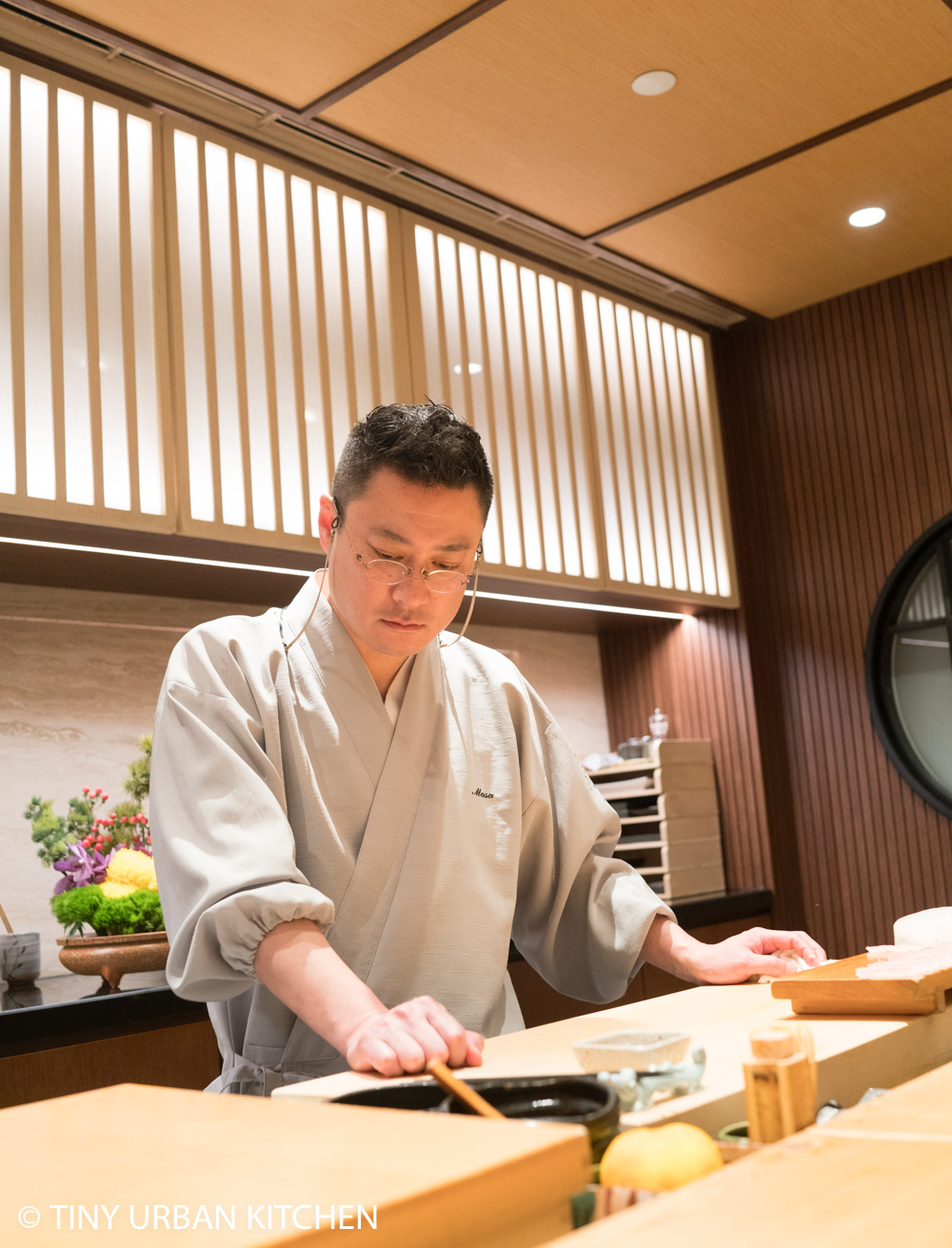
    Suzuki-san opened his own shop in 2015, after working for 12 years at Sushi Aoki. In fact, when I went back to my Sushi Aoki photos (from our visit in 2013), I was tickled to see photos of him. I guess he served us 11 years ago!!

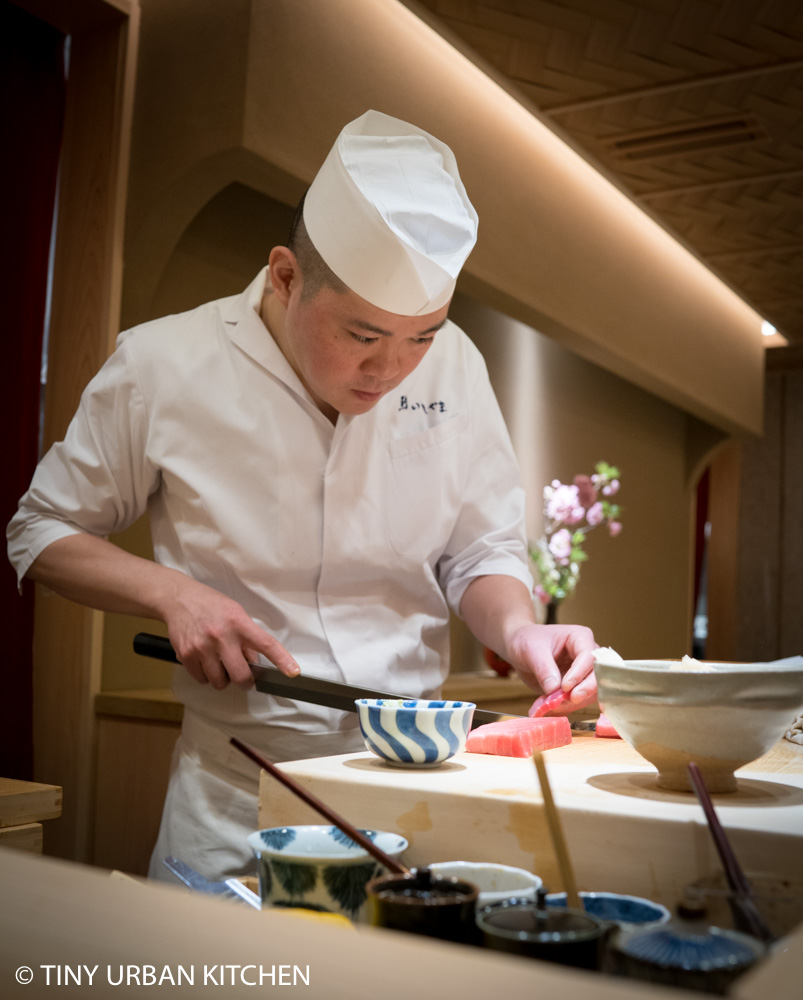
    His own shop is a tiny operation. It appears to be run by just Suzuki-san and his wife. Perhaps there are hidden apprentices in the back? We couldn’t tell.

    Omakase Sushi Dinner at Sushi Suzuki

    Sushi Suzuki Tokyo

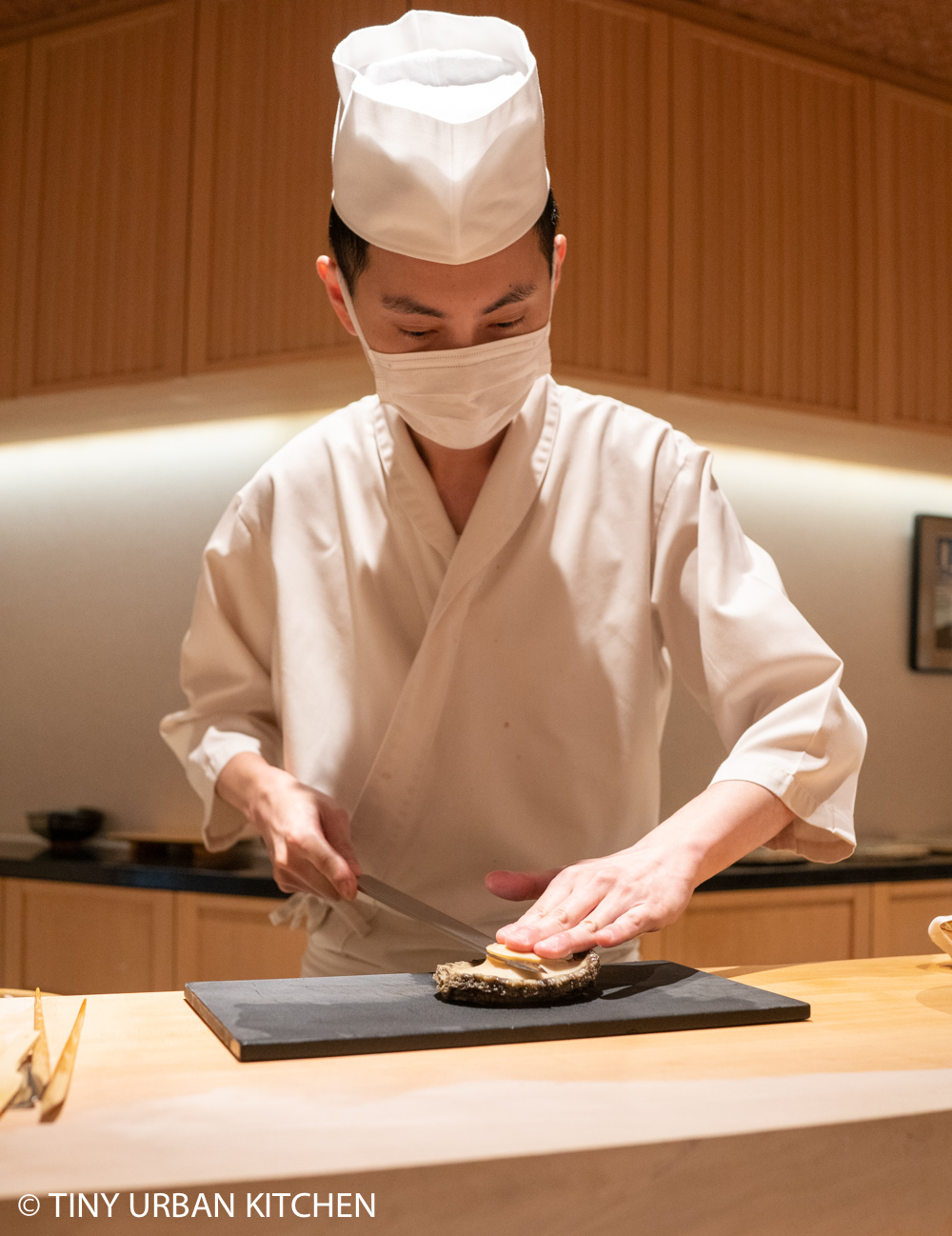
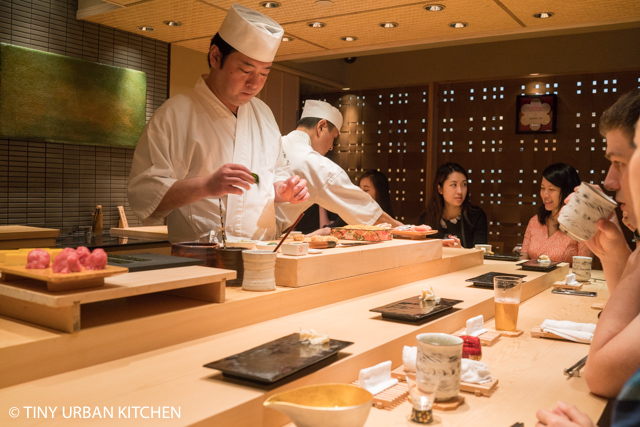
    We entered a small, windowless, blond wood paneled room on the 5th floor of an office building in Ginza (very, very typical). Suzuki-San greeted us with a friendly smile and asked us what we wanted to drink.

    His wife took our coats and attended to our drinks while Suzuki-San began preparing the food.

    Sushi Suzuki Tokyo

    The restaurant only has 8 counter seats. The night we went, there were only two Japanese speakers (a man and a woman, both solo diners). They sat near the middle (near Suzuki-san), presumably because he would be able to chat with them. As it turns out, he chatted mostly with the Japanese lady. The Japanese guy was on his phone most of the night. From time to time, chef Suzuki would try to interact with us and the other foreign visitors. We didn't find out until later, but the other three diners were also from Hong Kong!

    It turned out to be a really great and interesting meal! Suzuki-san definitely threw some unusual surprises into the mix. It may not be for everyone (you‘ll see why).

    Small Appetizers

    Sushi Suzuki Tokyo
    We began with a beautifully tender “baby tuna” served in an onion sauce, which was very very nice. I couldn’t help but wonder whether how young these baby tuna were, and the potential sustainability aspects of this dish.
    Sushi Suzuki Tokyo
    The next course was a simple, single steamed oyster in its own broth. The oyster had a wonderful soft texture and a clean flavor. We drank broth afterwards.
    Sushi Suzuki Tokyo
    Firefly squid skewers came next, and they were fantastic! The squid was incredibly tender and yet possessed an intense, salty umami flavor that had no hint of “stink”.

    Next was Katana (or tachi-uo), a Japanese samurai sword fish that swims vertically. Apparently it swims with its head up while it is "hunting", and when it finds prey will "strike out" and catch its dinner. Chef Suzuki pulled up some photos to show us how the fish swim. It's so interesting!

    The fish was amazing, so incredibly tender and really, really delicious.

    Sushi Suzuki Tokyo

    Next course included steamed squid (filled with roe) and abalone + liver sauce. Both were very good.

    Some unusual "exotic" dishes

    Sushi Suzuki Tokyo

    My mouth almost dropped when he told us what the next dish was: fugu shirako plus rice.

    Hold on, wait . . . shirako is the male gonad of a fish, right? I can eat it, but I’ve never been a huge fan. But fugu is the puffer fish, the potentially poisonous “tingly” (numbing) fish that - if not prepared properly - could kill you.

    ”Mix the shirako with the rice.”

    It felt like a Japanese, “Russian-roulette”, exotic version of a creamy risotto. I was a bit nervous, but what can you do? Honestly, it turned out OK, and I didn't even get a hint of the “numbing feeling” (which I think, means there really wasn’t any poison??).

    It’s not our first time having fugu, but after not being that wow-ed by it the first time, I didn’t really plan on eating it again . . .

    The exotic unusual dishes did not stop there. 

    Sushi Suzuki Tokyo

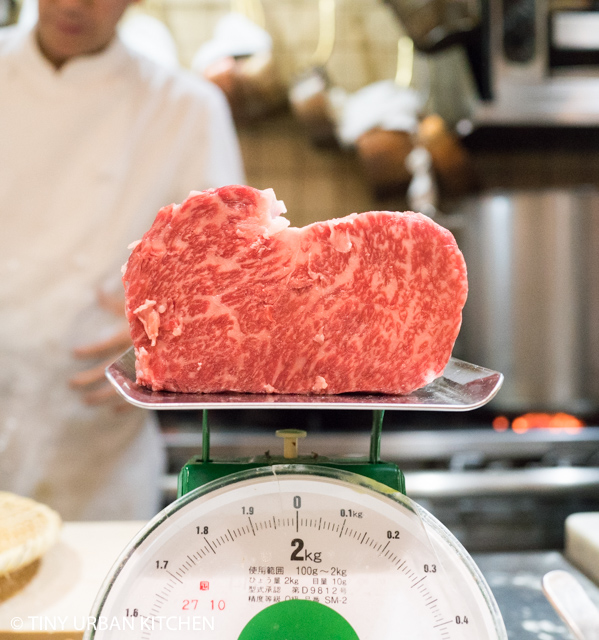
    He handed us a beautifully marbled piece of red meat.

    ”Interesting” I thought, “he’s serving Wagyu beef.”

    ”Whale” Suzuki-San said in a single sentence. 

    Whaaaaa??? I don’t think I’ve ever had whale, although apparently it used to be pretty commonly eaten in the olden days in Japan. 

    How did it taste? It was incredibly tender and very, very well-marbled. It really looked like beef but tasted as soft as tuna belly.

    Crazy.

    Part II: Nigiri Sushi

    Sushi Suzuki Tokyo

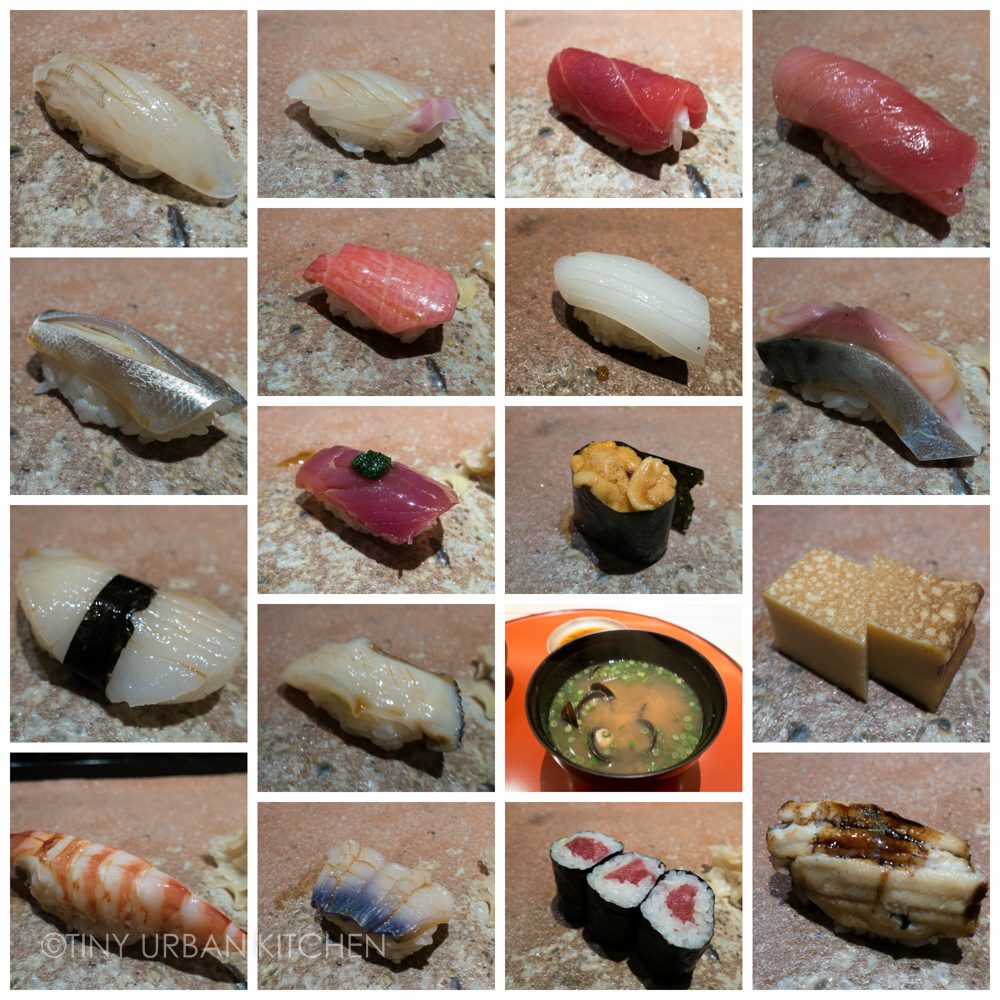
    We started with sumi-ika (squid). This was our first time trying Suzuki-san’s rice. He’s more aggressive in his seasoning (reminds us a bit more of Jiro) with his strong vinegar, generous amount of wasabi, and very “Q” rice. I liked it, a lot.
    Sushi Suzuki Tokyo
    Tai (snapper) also had strong wasabi and stronger flavors in general. We enjoyed the pickled ginger, which was not sweet at all. It was served in bigger chunks (not thin slices), and was decidedly tart, spicy, and crunchy (yum).
    Sushi Suzuki Tokyo
    Kinmedai was really nicely balanced. The rice was warm, the fish (room temperature) was richly flavored and soft. Perfect bite.

    Signature Tuna Trio

    Sushi Suzuki Tokyo
    maguro
    Sushi Suzuki Tokyo
    chutoro
    Sushi Suzuki Tokyo
    otoro

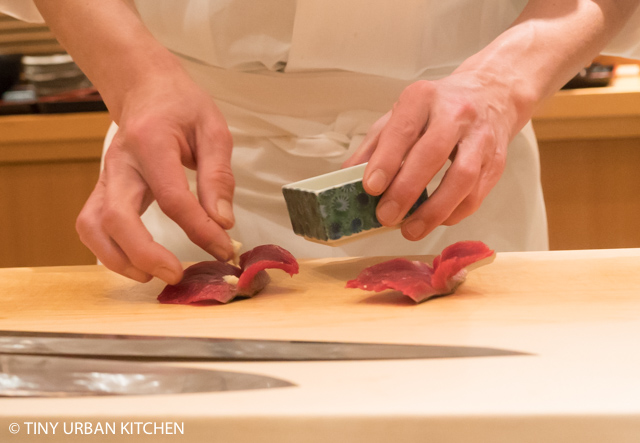
    Next came the tasting of tuna: maguro, chutoro, and otoro (lean, medium-fatty, and fatty). All were very, very good.

    Sushi Suzuki Tokyo
    Kohada (gizzard shad) is seasonal and you see it during the spring. It's a fatty, stronger flavored fish, not unlike sardines.
    Sushi Suzuki Tokyo
    Sayori (needlefish) had a great combination of textures. Although a tad salty for my taste, overall it was very, very good.
    Sushi Suzuki Tokyo
    Akagai (surf clam) was HUGE! I almost couldn’t eat it in one bite. Again, a very strong wasabi game (which Bryan especially loved), and intensely flavored.
    Sushi Suzuki Tokyo
    There’s a theme here. Again, a HUGE slice of scallop. The texture for these huge scallops is quite different compared to the smaller ones we are used to eating. It's "crunchier", denser, and has more muscle.
    Sushi Suzuki Tokyo
    Ebi (prawn) was excellent (though quite filling!).
    Sushi Suzuki Tokyo
    Purple uni (gunkan style!) was creamy, sweet, and very fresh.
    Sushi Suzuki Tokyo
    Anago (sea eel) was soft, tender, and sweet. It's a great sweet & savory bridge to the tamago, the last course.
    Sushi Suzuki Tokyo
    Tamago (egg omelette) is always one of my favorite courses.
    Sushi Suzuki Tokyo
    Suzuki-san's version was excellent.

    Sake

    Sushi Suzuki Tokyo
    Sushi Suzuki Tokyo

    We learned how to describe the sake we were drinking, which had an element of salinity: sweet + salty is “amai” + “shuopai ”. Shuoyu is soy sauce (ha!), so it makes sense.

    Concluding Thoughts: Sushi Suzuki + this Japan Trip

    Sushi Suzuki Tokyo

    It’s been close to 5 years since we’ve had high-end sushi in Japan (due to the pandemic). Not that we’ve been deprived of sushi (Sushi Shikon in Hong Kong is equal to the best in Japan). But it still felt like a homecoming of sorts to finally be back in Japan eating sushi like we used to in our early days traveling to Tokyo.

    The quality of the food at Sushi Suzuki is excellent. You may try some more unusual pieces, which may not be for everyone. Of course it's better if you speak Japanese (he tried, but had a hard time communicating with us). He's certainly friendly. It made me wish I had worked harder to preserve my Japanese language skills from college. (perhaps it's not too late!)

    This trip was special for other reasons. We were thrilled to catch good weather and  the beginning of the cherry blossom season (which was super late this year - so glad we caught it!). We also had a chance to spend time with dear friends from the US, which was precious. Finally, the exchange rate between USD and JPY is ridiculously favorable right now, so we also went shopping!

    Can’t wait until the next time I return!

    Sushi Suzuki Tokyo
    Japan, 〒104-0061 Tokyo
    Chuo City, Ginza, 6 Chome−5−155F

    *OK full confession, I still love all these Japanese characters

    Sushi Zanmai Tsukiji Tokyo

    April 8, 2024 by Jennifer Che

    Sushi Zanmai Tsukiji Tokyo Japan
    Sushi Zanmai Tsukiji Tokyo Japan

    Hello Tokyo! We came to Tokyo in July 2023 to meet up with friends who were visiting the first time with their pre-teen daughter (who is a huge foodie). One purpose of this trip was to introduce her to a variety of foods representing different aspects of Japanese cuisine.

    First stop: Sushi in Tsukiji!

    Sushi Zanmai Tsukiji Tokyo Japan

    Although the famous Tsukiji Fish Market left Tsukiji in 2018 (so glad we had a chance to go in 2017!), the outer market is still thriving, as well as the area sushi restaurants. Sushi Zanmai Tsukiji is a famous restaurant "headquartered" in Tsukiji, where they have several restaurants. In fact, they have over 40 locations around Japan. It's famous, and thus you will see a line, especially during high travel season (yes, we went in July).

    This places is open 24 hours! So you can come at any time . . . great if you're jetlagged!

    Sushi Zanmai Tsukiji Tokyo Japan

    July is HOT in Tokyo! This is why we opted for the iced matcha, which was really refreshing. While we were dining there, a woman actually started suffering from some sort of heat exhaustion (or heat stroke?) inside the restaurant. The staff were really attentive, bring her a cold towel and letting her lie down for as long as she needed.

    Sushi Zanmai Tsukiji Tokyo Japan

    Sushi Zanmai Tsukiji is know for its tuna. The owner is famous for bidding the 150,000,000 JPY in 2013 for a tuna! (USD$1 million in today's dollars, but during the exchange rate at the time, maybe USD $1.5 million!)

    Because of that fame, Bryan and I both decided to get their special tuna focused set, which included various types of maguro, chutoro, otoro, and seared toro.

    Sushi Zanmai Tsukiji Tokyo Japan

    For around JPY4800 (which is only about USD$32), this was a steal. The quality was excellent, and the fish slices were generous!

    Sushi Zanmai Tsukiji Tokyo Japan

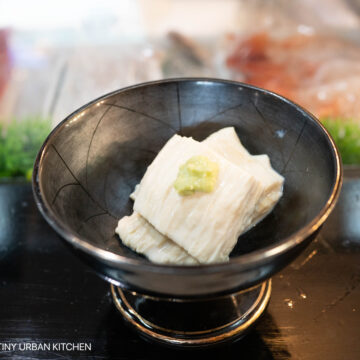
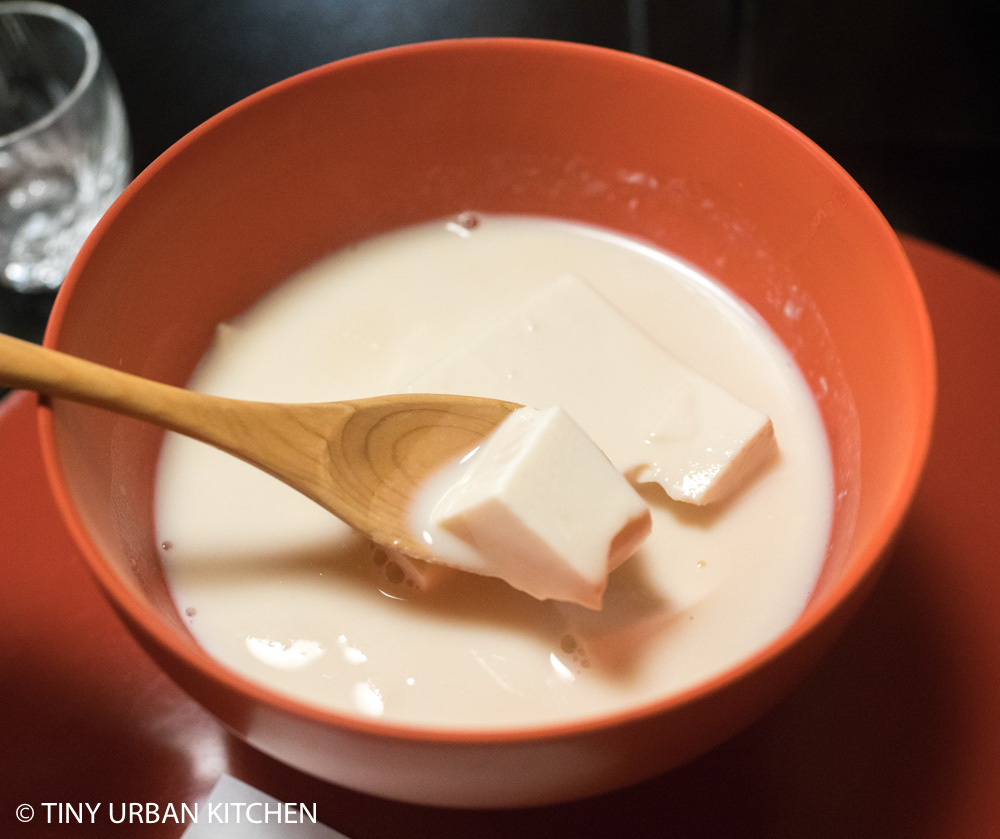
    The tofu "yuba" was fresh and delicious.

    Sushi Zanmai Tsukiji Tokyo Japan

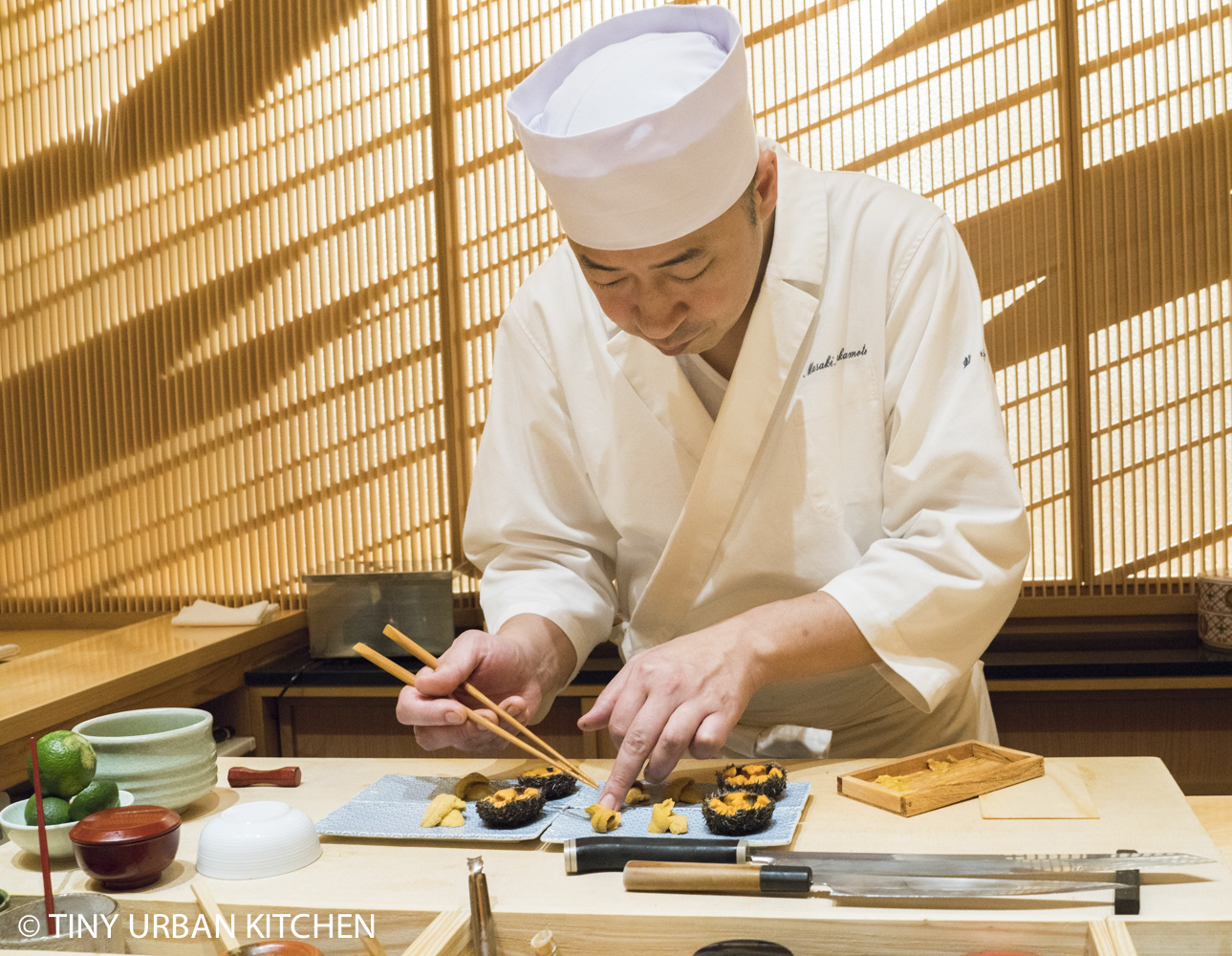
    Bryan loves uni, so he had to get some of that.

    Sushi Zanmai Tsukiji Tokyo Japan

    This is the longest eel nigiri I've ever seen!

    Sushi Zanmai Tsukiji Tokyo Japan

    The place is full of energy. People come in and out fast, there's lots of lively conversation, and overall it's a fun places. Prices are very reasonable for the quality. I can see why people line up!

    It's fun to visit this location because of its location in Tsukiji market. It's fun to explore the market after lunch (or like in our case, before lunch while the guys waited in line!). All in all, we had a great time enjoying good sushi in Tsukiji Market at very reasonable prices.

    Sushi Zanmai Tsukiji
    4-5-12, Tsukiji, Chuo-ku, Tokyo, 104-0045
    Japanese Address
    〒104-0045 東京都中央区築地4-5-12

    Sushi Ya Tokyo (すし家)

    July 13, 2017 by Jennifer Che

    Sushi-Ya-Tokyo-18.jpg
    I’ve encountered Chef Takao Ishyama several times now.

    I first met him when he was working at two-Michelin starred Sushi Kanesaka. Although I was initially disappointed that we did not get Kanesaka-san himself during our visit, I was still very, very impressed with every single course from that meal.

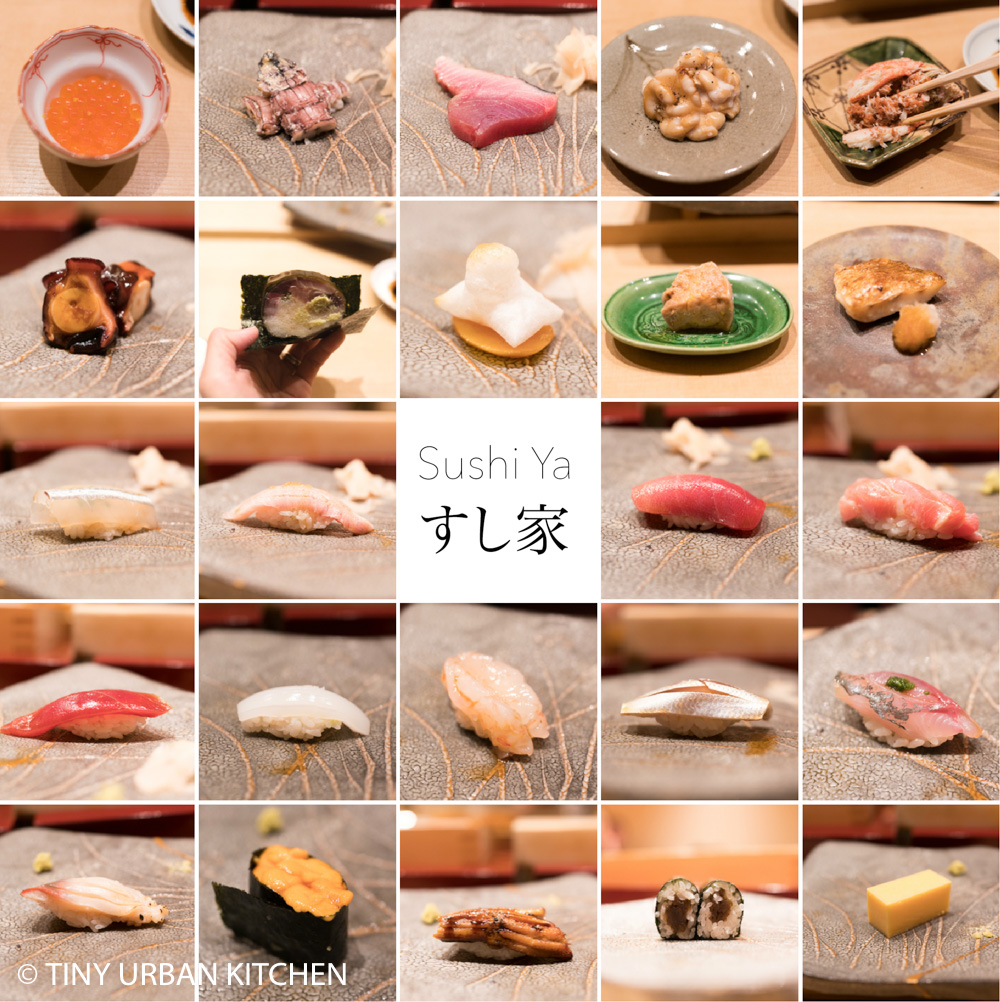
    Fast forward three years. One of our friends who lives in Japan had recommended to us this new sushi restaurant called “Sushi Ya” すし家 (ya means family). The prices at Sushi Ya are a bit more reasonable than other sushi places because the chef does not use certain exotic and more expensive ingredients.

    However, his skills are top notch, and the sushi is excellent.
    Sushi-Ya-Tokyo-31.jpg
    I visited during lunch and fell in love with the place.

    I really, really enjoyed every single piece of sushi. Better yet, our entire meal for two was only $140 USD (including sake, tax, and gratuity), which felt like a steal. In fact, I enjoyed my lunch a lot more than our $400+ dinner the night before at Jiro’s apprentice’s place, 2-Michelin starred Sushi Sushi Harutaka (which I generally found too salty for my tastes).

    I vowed to come back for dinner for the full experience. [update: link to full dinner experience] ...

    Read More »

    Sushi Yoshitake (Tokyo, Michelin 3 Stars)

    November 8, 2016 by Jennifer Che

    Sushi Yoshitake
    This is the thirty-first post in the Around the World Birthday Extravaganza Series. Please scroll to the bottom to see all the other posts in this series.

    It's been two years since Bryan first visited this tiny, 7-seater, 3-Michelin starred sushi restaurant during a business trip to Tokyo. I'll never forget it. He called me from Tokyo raving about this place. In the same call, he used the words "best dish I've ever had in my life" and “we really have to go back to Japan so I can take you there.”

    When we planned the Japan portion of our Around the World trip, Bryan only had one request: Sushi Yoshitake.
    Sushi Yoshitake
    Sushi Yoshitake is special for a lot of reasons. First and foremost, Chef Masahiro Yoshitake does not adhere strictly to the traditional Edomae style. He takes more liberties, injecting all sorts of creativity into his preparations. Yes, there is still plenty of traditional sushi, but he also creates some mind-blowing, non-traditional flavor combinations.

    The Bryan-proclaimed "best dish I've ever had" is one such dish. Fresh abalone served with a decadent sauce from the abalone liver is absolutely divine. A "trio of uni" that uses two-year aged uni is a revelation.

    Masahiro Yoshitake is also very fluent in English, having spent years working in New York city as a sushi chef. He's friendly and talkative, and the atmosphere is relaxing inside his tiny 7-seater sushi bar.

    I absolutely loved my meal there. It totally lived up to Bryan's "hype." I would not hesitate to return again the next time I go to Tokyo.

    He lets you take photos, but only with a phone (no SLRs or even pocket cameras). I'm glad that smartphone cameras are getting better and better, because these photos actually aren't too bad.

    Here's a look at our very memorable meal!...

    Read More »

    Sushi Ya Tokyo (すし家)

    October 27, 2016 by Jennifer Che

    Sushi-Ya-Tokyo-31.jpg
    This is the thirtieth post in the Around the World Birthday Extravaganza Series. Please scroll to the bottom to see all the other posts in this series.

    The name "Sushi Ya" (すし家) translates to "sushi house" or "sushi shop". It is an ironically generic name for a restaurant that is producing some of the best sushi in Tokyo.

    Young chef Takao Ishyama opened Sushi Ya in 2012 after training for years at some of the top sushi spots in Tokyo: Sushi Kanesaka (2-Michelin stars) and impossible-to-reserve Sushi Saito (3 Michelin stars). His technique is excellent, and he has quickly risen in fame over the last several years. Words used to describe him include "genius", "meteoric success", and "darling of bloggers"....

    Read More »

    Sushi Harutaka Tokyo

    October 12, 2016 by Jennifer Che

    Sushi-harutaka-tokyo-20.jpg
    This is the twenty-sixth post in the Around the World Birthday Extravaganza Series. Please scroll to the bottom to see all the other posts in this series.

    Sushi Harutaka consistently ranks as one of the best sushi restaurants in Tokyo, at least among voters of the Japanese online community food site Tabelog. Chef Harutaka Takahashi spent 13 years working for the world famous Jiro Ono before opening up his own place. Diners love Sushi Harutaka because you get the quality and style of the sushi at Sukiyabashi Jiro, but at a much more relaxed and friendly environment. For example, meals at Sukiyabashi Jiro typically take 30-40 minutes, and everyone sits in serious silence. The environment at Sushi Harutaka is much more relaxed, and you can take time with your meal!

    It's also known as the place where Tokyo's top chefs like to eat. Regulars include Yamamoto-san from Ryugin, Saotome-san from Mikawa Zezankyo, and Yoshitake-san from Sushi Yoshitake. We finally had a chance to visit Sushi Harutaka for dinner in November of 2015 after an active day hiking at Mount Takao.
    ...

    Read More »

    Sushi Kanesaka Palace Hotel (Tokyo)

    May 20, 2015 by Jennifer Che

    wpid18916-DSC0785.jpg
    Bryan, my husband, often travels for work. Occasionally, armed with his trusty little Sony camera (affiliate link!), he will take photos and send me his thoughts on some of the more note-worthy restaurants he has visited. Other posts I've written for places he has visited (but I have not!) are Sushi Yoshitake (3-Michelin stars) in Tokyo, Luce in San Francisco, and Olo in Helsinki.  This is also the 14th post of I’ve written in May as part of my #21PostsInMay Challenge where I aim to write a new post every single weekday in the month of May. You can see all posts written in May here.

    The Japanese take their national holidays very seriously.

    Which is why it's a huge bummer if the one day your business trip takes you to Japan, the city is closed because everyone is celebrating the holiday.

    This is exactly what happened to Bryan.

    Well, sort of.

    First of all, it was a rather unexpected surprise that Bryan was even flying through Tokyo. His trip was supposed to take him through a couple Scandinavian countries before heading to Macau for a conference. Originally, he would fly straight back from Hong Kong. Alas, a last minute business meeting came up, which made him have to reroute his flight plan through Tokyo.

    And how can you stop over in Tokyo and not stop by?
    wpid18818-SushiKanesaka-PalaceHotel.jpg
    As visions of sushi floated through his head, Bryan decided to stay just one night in Tokyo. Essentially he would have time for one dinner and one lunch before heading back to Narita for that lovely (newish) direct flight on Japan Airlines back to Boston.

    There was just one problem....

    Read More »

    Sushi Yoshitake (Tokyo, Michelin 3 Stars) - best dish I've ever had

    July 18, 2014 by Jennifer Che

    Yoshitake in Tokyo

    Sushi Yoshitake

    Sushi Yoshitake

    This the second addendum post to the Tokyo - Kyoto - Osaka series. Other posts in this series include the intro post: Tokyo, Kyoto, and Osaka, Matsugen (soba), Sushi Iwa, Ramen Honda (Tokyo Ramen Street), Ryugin, Omen (udon), Shouraian (tofu), Dotonbori in Osaka (street food), Taian (3-star Michelin), and Sushi Sho/Shou (Chef Keiji Nakazawa), Nakamura (3 star Michelin kaiseki), and Sushi Taku (2 star Michelin)

    Bring bring . .  .

    It was close to noon and I was in my office typing furiously away at the computer. The caller ID said it was Bryan.

    It's not unusual for us to chat during this odd time when he's away on a business trip in Asia. Tokyo is exactly 12 hours apart from Boston, which means he was probably about to go to bed. It's lunchtime here, so the timing actually works out pretty well.
    Sushi Yoshitake
    Bryan had just gotten back from his dinner at Sushi Yoshitake, a newly-ish minted (as of 2012) three Michelin starred sushi restaurant in Tokyo. He couldn't stop raving about it.

    "I just got back from dinner. It was really good. I think you'd like it. It wasn't just sushi. They had creative preparations - like what you'd see in a high-end French restaurant - for several of the dishes. They had this abalone liver dish that was amazing. It's the best dish I've ever had in my life."
    Sushi Yoshitake
    Let's pause a moment here.

    Did he just say the best dish in his life?!

    This is the same person who's dined at some of the finest restaurants in the world, like Sukiyabashi Jiro in Tokyo, The French Laundry in Napa Valley, and Joel Robuchon in Las Vegas, not to mention countless other award-winning restaurants through his business trips and travels.

    He couldn't stop talking about this abalone dish (and trust me, he usually doesn't talk a lot). It was like other-worldly, or what my friend Peter would call "transcendent." Perfection in so many different ways.

    best dish ever . . .

    "We really have to go back to Japan so I can take you there."

    awwwww . . .

    Anyway, enough about my conversation with Bryan. Let's learn more about this incredible meal of a lifetime.
    Sushi Yoshitake
    Thankfully, Bryan brought his trusty little Sony point and shoot camera to this meal, so we will all be able to enjoy (at least with our eyes) this life-changing meal. To Bryan's surprise, two other diners had the exact same camera. Keep in mind this sushi restaurant only has seven seats total. I guess high end sushi eaters really like this camera for food photos?!
    Sushi Yoshitake
    As he sat down he noticed that one of the couples sitting at the sushi bar was speaking English.

    "Where are you guys from?" he asked.

    "We are from Singapore."

    "Cool. I'm from Boston."

    "We know."

    "You do?!"

    "We recognize you from your wife's blog."

    Bryan was floored and couldn't wait to share that on the phone with me. I still can't believe that - halfway around the world - somebody actually recognized Bryan from this little blog (hello kpbaby!). How crazy is that??! It was totally mind-blowing to me.
    DSC00408.jpg
    Sushi chef Masahiro Yoshitake is really friendly with foreigners, which is definitely not something you can say about everyone. He has a reasonable command of English and introduced every course in English. He made all sorts of conversation with the guests. For example, he told Bryan that the chef from Nahm in Thailand was coming to eat here the following week.

    Let's start the meal! Please note that since I did not dine there, the descriptions for the dishes will be a bit sparser than general. Enjoy Bryan's photos!
    DSC00405.jpg
    The meal began with a braised turnip appetizer.
    Yoshitake1.jpg
    Next was tender octopus (left) and red snapper (right).
    Yoshitake2.jpg
    The "best dish", Steamed abalone with abalone liver sauce, came early in the tasting. It looks simple from the outside, but it's the beautiful flavors of the abalone liver sauce that elevate this dish beyond . . . well, any other dish in the entire world.

    You start with a few pieces of steamed abalone and this verdant, creamy liver sauce. After you've enjoyed those two together, you are given some rice, which you use to sop up every last golden drop of this phenomenal, deeply flavorful, sauce.

    To this day, Bryan still thinks about (and talks about!) this unforgettable dish.
    Yoshitake3.jpg
    Seared bonito came topped with freshly grated wasabi root in a scallion ginger soy sauce (left). Slow cooked oyster came topped with a flavorful gel.PicMonkey Collage.jpg
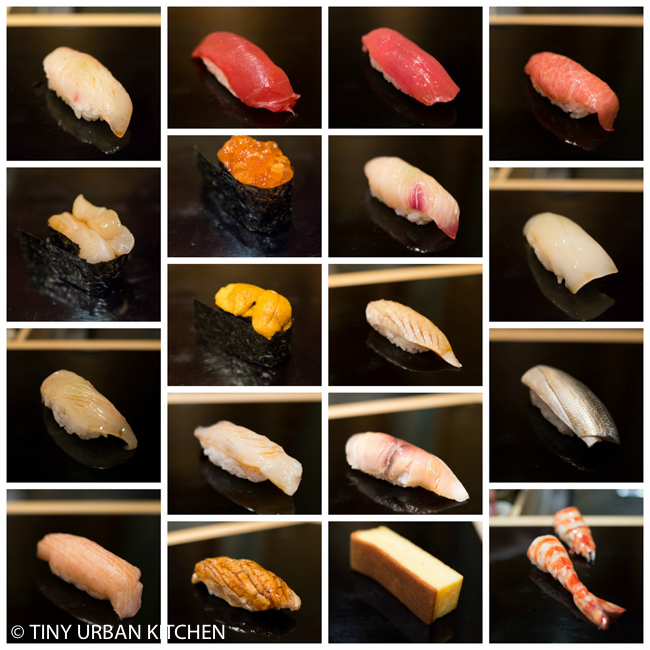
    Yoshitake uses two kinds of red vinegar in his sushi rice, which gives it a brown color. On the left is squid (ika) and on the right is golden eye snapper (kinmedai) nigiri.
    DSC00432.jpg
    Soy marinated bonito (skipjack tuna) sushi
    DSC00418.jpg
    Yoshitake5.jpg
    Different levels of fatty tuna: Chutoro sushi at left (medium fatty tuna) and Otoro sushi at right (fatty tuna).
    Yoshitake6.jpg
    Four types of sushi - from left to right, top to bottom: sardine nigiri, barracuda maki, mackerel nigiri, and giant clam nigiri.
    DSC00444.jpg
    Uni from Hokkaido
    DSC00448.jpg
    Isn't that gorgeous?
    Yoshitake7.jpg
    Uni from Hokkaido, cooked shrimp nigiri, Sea eel (anago) nigiri, and finally for dessert, tamago (sweet egg omelet), which Bryan said had a very creamy texture, almost like a cake.
    DSC00458.jpgSushi Yoshitake
    The meal ended with a simple, clean miso soup.

    There's not too much else to say about this restaurant except that it's excellent and you should go if you have a chance. One thing Bryan really enjoyed about Yoshitake was how he doesn't just serve straight up plain sushi. For a few of the dishes, he incorporated interesting gels and phenomenal sauces (ahem, abalone liver anyone?).

    Typically it's pretty hard to get a reservation here, but since Bryan was a solo diner, he was able to nab the seventh seat without much advance notice (maybe a week?).  He made the reservation through the hotel concierge. Similar to many restaurants of this caliber, he had to fax to them a credit card number to guarantee his reservation.

    Yoshitake is really friendly and can speak quite a bit of English. As I've said before, so much of the omakase experience is your interactions with the sushi chef. Many sushi chefs in Japan hardly speak a word of English, and will only take reservations in Japanese. Even if the food is amazing, you miss out on half the value of an omakase if you can't talk to the chef at all about the food you are eating.

    At Yoshitake, you don't sacrifice the food or the experience.

    I do hope to be able to visit some day. [update! I was able to go! Here's the post about my meal!]

    If you can't make it to Japan, there's a second location in Hong Kong, renamed Sushi Shikon, which just recently got three Michelin stars.

    Sushi Yoshitake (link to Japanese language site)

    Related Posts
    Sukiyabashi Jiro
    Kyubey
    Sushi Mizutani
    Best steak Bryan's ever had in his life
    Japan Eating Guide
    Sushi Shikon Hong Kong

    DSC00404.jpg

    ©2009-2014 Tiny Urban Kitchen
    All Rights Reserved

    Sushi Taku (Tokyo, Michelin)

    May 5, 2014 by Jennifer Che

    SushiTaku
    This an addendum post to the Tokyo - Kyoto - Osaka series. Other posts in this series include the intro post: Tokyo, Kyoto, and Osaka, Matsugen (soba), Sushi Iwa, Ramen Honda (Tokyo Ramen Street), Ryugin, Omen (udon), Shouraian (tofu), Dotonbori in Osaka (street food), Taian (3-star Michelin), and Sushi Sho/Shou (Chef Keiji Nakazawa), and Nakamura (3 star Michelin kaiseki) 
    You thought I was done with the Japan series, didn't you?Well, technically I am done. Nakamura, the last post in my series, was most certainly meant to be the pinnacle post of that series. However, I had sort of forgotten about two very, very nice meals that Bryan enjoyed in Tokyo when he was there solo.

    After rolling off of a 12 hour flight from Boston (arriving at the hotel around 9PM), Bryan asked the hotel concierge for late-night restaurant recommendations.

    "There is an excellent soba place just a 10 minute walk away."

    Bryan had already eaten there, twice, during our last trip to Japan, so he asked for something different.

    "I see you are eating sushi later this week, so maybe something different?"

    Without hesitation, Bryan replied "No, I'm always happy to eat sushi."

    The hotel concierge immediately booked Bryan a last minute (10PM!) reservation at a Michelin two star restaurant, Sushi Taku, in the Nishiazabu neighborhood. Armed with his new snazzy Sony point-and-shoot, Bryan attempted to channel me on this trip, taking photos of every piece of fish, writing down notes, and frankly, doing a pretty good job of providing me plenty of content to use for this post.

    DSC00354 DSC00380
    Sushi Taku is unusual in that its chef owner, Takuya Satosushi, is both a sushi chef and a sommelier. Unlike most traditional sushi restaurants, which more often pair sushi with sake or beer, Sushi Taku is known for pairing sushi with wine.
    DSC00389
    Takuya Sato opened Sushi Taku in 2005 at the ripe age of 30 after having trained at well-known places in Tokyo like Kyubey and Zorokusushi.
    DSC00356

    The meal started out with a delicious crab and crab roe wakame salad (not pictured because the photo was just too blurry!). Because it was autumn, they also served baby potatoes and ginkgo nuts (my favorite!).

    DSC00390
    Below is a rundown of the whole omakase. There won't be as much detail about the flavors of each dish since I wasn't actually there (Bryan took quite a few notes about the details of each fish, he didn't really provide tasting notes!).
    SushiTaku1-3
    1. Red snapper (tai)
    2. Butterfish (ebodai)
    3. Round clam (bakagai) was supposed to be eaten with a bit of salt.
    SushiTaku4-6
    4. Needlefish, or sayori, is also known as the Japanese half beak. This version was cooked and eaten with salt.
    5. Eggplant sashimi
    6. Uni from Hokkaido
    SushiTaku7-9
    7. Spanish mackerel that was lightly cooked
    8. Yellowtail (hamachi) sushi
    9. Sea eel (anago) served grilled on a stick
    DSC00372
    In general the chefs at Sushi Taku were really friendly. If they couldn't explain something in English, they would bring up the book and show you a picture of what you were eating. Bryan took many pictures from book pages, which was invaluable in helping me figure what the heck he ate.
    SushiTaku10-12
    10. Sushi rice cracker
    11. Cooked oyster, eaten with either soy sauce or salt
    12. Steamed lotus roots with shrimp (ebi) and sea eel (anago)
    SushiTaku13-14
    13. This next course was rice topped with salmon roe (ikura) and sea urchin (uni). You use the spoon to mix all the lovely flavors together.
    DSC00375
    14. Daikon paper thin sheets
    Check out those mad knife skills. If you want to see what this looks like in person, I have a pretty cool video of it in my Kyubey post.
    SushiTaku15-18
    15. Tuna (maguro) nigiri sushi
    16. Fatty tuna (toro) nigiri sushi
    17. Gizzard Shad (kohada) nigiri. An interesting fact is that the chef does not make sashimi from kohada. He only uses it for sushi.
    SushiTaku19-21
    19. Gorgeous grilled kamasu (Japanese whiting) served with Japanese yam (reminds me of taro)
    20. Spanish mackerel (sawara) sushi
    21. Shrimp (ebi) sushi

    At this point the chef asked Bryan, "how much more?"

    Even though Bryan had eaten quite a lot, he asked for three more pieces.
    DSC00394
    Before the last three pieces arrived, out came a bowl of baby clam and shellfish soup.
    DSC00395
    This was followed by a gorgeously seared baby snapper (kodai) sushi.
    DSC00397
    Sea eel, or Anago, sushi (also cooked).
    DSC00399
    And finally, a beautiful seared piece of golden eye snapper (kinmedai) with skin.
    DSC00400
    Every sushi meal ends with a sweet egg, tamago, and this meal was no different.
    DSC00402
    What was different were the five (yes, can you believe it?) kinds of ice cream for dessert. I would have loved to try these flavors: soy sauce, ginger, roast tea, brown rice tea, and kinako (roasted soy bean flour).

    Overall, Bryan enjoyed Sushi Taku quite a lot. It turns out, however, that the best dish he's ever had (in his entire life!) would come just a few days later on this same business trip, also in Tokyo, of course.

    Stay tuned!

    ©2009-2014 Tiny Urban Kitchen
    All Rights Reserved

    Wagyumafia District Yakinikumafia Tokyo

    April 12, 2024 by Jennifer Che

    Wagyumafia Yakiniku Tokyo
    Wagyumafia Yakiniku Tokyo

    This is the second post about my Japan Travels in 2023. Other posts in this series include Sushi Zanmai Tsukiji Tokyo.

    Wagyumafia is an elite members-only club that has spawned out a number of restaurants in Tokyo focusing on different aspects of Wagyu beef. For those obsessed with the top beef in the world, Wagyumafia is at the pinnacle. Wagyumafia started out in 2016 as a private supper club in Tokyo. Beef exporters Hisato Hamada and entrepreneur Takafumi Horie held private wagyu-themed pop-up dinners in Tokyo showcasing top cuts of beef from the best producers in Japan.

    Membership was extremely limited, and for as long as we have been aware, there were no more memberships available in Japan.

    Wagyumafia Yakiniku Tokyo

    But then in 2018 they decided to open their first overseas location . . . . in Hong Kong!

    Boom! All of a sudden a whole new batch of new memberships became available in Hong Kong. Better yet, if you got a membership in Hong Kong, you could book any of the restaurants in Japan as well!

    Wagyumafia Yakiniku Tokyo

    Of course, then the pandemic hit and we were sort of stuck (like everyone else), unable to travel for a couple years. It wasn't until this Tokyo trip in 2023 that we finally had the opportunity to take advantage of our membership and book a Wagyumafia restaurant in Tokyo!

    Wagyumafia Yakiniku Tokyo

    Wagyumafia has several different restaurants in Tokyo, focusing on different themes. We decided to try a Yakiniku at Wagyumafia District. Please do note this is different from Yakinikumafia in Hong Kong, which is a more casual, open to the public (no membership required) restaurant at a lower price point serving "affordable cuts" of Wagyu.

    Wagyumafia Yakiniku Tokyo

    The price of a tasting at Yakiniku Wagyumafia is JPY22,000 per person (USD$145). If you want to add on the famous Ozaki sirloin "sando", it's an extra JPY11,000 (USD$72).

    Wagyumafia Yakiniku Tokyo

    いってらっしゃい!itterasshai!

    They showed us all the different cuts of beef we would enjoy later in the yakiniku. Yes, that is a huge beef tongue on the tray.

    But first, Veggies

    Wagyumafia Yakiniku Tokyo

    We enjoyed some lightly grilled cabbage and bean sprouts. The quality was amazing. It may not look like much, but the cabbage was exceptionally sweet, and the bean sprouts were crispy. The vegetables are carefully sourced from (I believe) a dedicated farm.

    Wagyumafia Yakiniku Tokyo

    The tongue meat was also tender and very tasty.

    Wagyumafia Yakiniku Tokyo

    Onions and zucchini on the side, a piece of beef fat in the center.

    Wagyumafia Yakiniku Tokyo
    Wagyumafia Yakiniku Tokyo
    Wagyumafia Yakiniku Tokyo
    Wagyumafia Yakiniku Tokyo

    Aside from the tongue, we tried other cuts of more unusual meat, such as diaphragm and even an offal hot pot at the end.

    Wagyumafia Yakiniku Tokyo

    Sando + Lots of gold flakes

    In a lot ways, photos don't do this meal justice. When they brought out their famous signature Ozaki beef sirloin "sando", they shut the lights and told us all to set our phones on slo-motion.

    Watch the video below to see what happens:


    View this post on Instagram


    A post shared by Jennifer Che (@tinyurbankitchen)

    The sando is one of my favorite items at Wagyumafia. I could do without the gold (it doesn't add anything in terms of taste), but I guess they do put on a good performance with it.

    Wagyumafia Yakiniku Tokyo

    Offal Hot Pot

    Wagyumafia Yakiniku Tokyo

    It is interesting how the tasting at this restaurant mostly focused on more unusual cuts of beef. I guess the more conventional cuts of meat are sold at the normal Wagyumafia restaurant, and these other parts are used for yakiniku?

    In any event, these other cuts are also delicious, and it's nice to make use of all parts of the beef (at least as much as possible). The hot pot was delicious, and a warming way to finish the meal.

    Wagyumafia District Yakinikumafia Tokyo
    3-7-4, Jingu-mae, Shibuya-ku
    Shibuya City, TOKYO 150-0001

    Sushi Shikon Autumn 2020

    December 24, 2020 by Jennifer Che

    Merry Christmas Eve!

    Sushi Shikon is our favorite sushi place in Hong Kong, and possibly in the world. Bryan absolutely loves their signature abalone liver dish (his favorite dish in the world), and the sushi is truly excellent.

    • Sushi Shikon
    • Sushi Shikon Hong Kong - Oct 2017
    Celebrating birthdays in times before Covid . . .

    In the past couple years since we moved here, we have celebrated several birthdays and special occasions there, sometimes with very good friends who flew very, very far from the US to celebrate our birthdays with us.

    That all feels like a very distant past from a very different world. This year, we see friends on Zoom more than we see them face to face. Birthdays are small affairs, and we haven't seen any friends or family from the US in close to a year.

    2020 has been a tough, tough year for restaurants as well. Like all restaurants, Sushi Shikon has had to deal with the various restaurant restrictions, closing for dinner at times, and limiting seating to only a handful of people at other times.

    • Sushi Shikon Hong Kong
    • Sushi Shikon Hong Kong

    We were fortunate that Covid-19 was reasonably under control in October during Bryan's birthday. We even took a week of "staycation" during that time, hiking around Hong Kong and eating at some nice restaurants. It was like we were traveling, but just in Hong Kong. We also were able to visit many of Bryan's favorite restaurants, including Sushi Shikon.

    This was our first time visiting Sushi Shikon since it moved from the Mercer Hotel into the Landmark Mandarin Oriental. They also have Kappo Rin next door now, which offers a combination of cooked and raw items.

    Below is the autumn menu from 2020 and the omakase that we had for Bryan's birthday celebration, which was an exceptional meal. Because restaurants could only seat 50% capacity, we had Kaki-san virtually to ourselves, with only two other people at the restaurant that evening.

    Enjoy! And make sure to watch the video of Kaki-san making a gorgeous futomaki at the end for some guests next door at Kappo Rin!

    ...

    Read More »

    Sushi Wadatsumi Hong Kong

    December 10, 2020 by Jennifer Che

    Sushi Wadatsumi Hong Kong
    Sushi Wadatsumi Hong Kong

    Sushi Wadatsumi began as the second location of Tokyo's Sushi Iwa, a highly regarded edomae sushiya in Tokyo. Originally called Ginza Iwa when it opened in 2013, it separated and became its own restaurant, changing its name to Sushi Wadatsumi around 2015. It achieved a Michelin Star in 2014 and has maintained it ever since.

    The sushi chef, a local Hong Konger who trained at Sushi Iwa, was extremely precise, detail oriented, and truly a craftsman in everything he did.

    ...

    Read More »

    Il Ristorante Luca Fantin Tokyo

    January 12, 2020 by Jennifer Che

    Bulgari Il Ristorante Luca Fantin
    • Bulgari Il Ristorante Luca Fantin
    • Bulgari Il Ristorante Luca Fantin

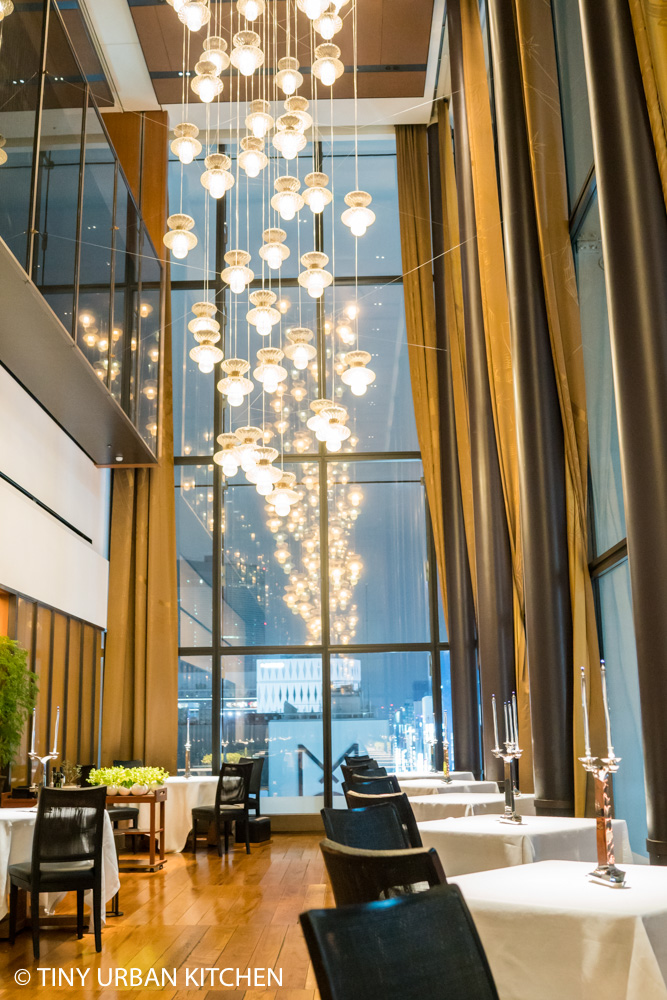
    I had been curious about Il Ristorante Luca Fantin for a while, now. This Italian restaurant in one of Tokyo's glitziest neighborhoods, Ginza, sits on top of the Bulgari building. Chef Luca Fantin himself has spent time at many top notch restaurants around the world, including Mugaritz (my favorite San Sebastian fine dining experience) and Ryugin, where he first fell in love with Japan.

    The restaurant has maintained its Michelin star since 2011, though many think it at least deserves one more. It Ristorante Luca Fantin is also number 18 on Asia's 50 Best Restaurants 2019 and 107th on the World's 50 Best list.

    When I initially asked Bryan whether he was interested in trying an Italian restaurant in Tokyo, he asked, "why would I want to eat Italian in Tokyo?"

    I explained that Luca Fantin incorporates top quality Japanese ingredients into his creative take on Italian cuisine. Italian happens to be Bryan's favorite cuisine in the world. Once he heard that, he was intrigued as well.

    We booked about one month in advance, and it wasn't a problem getting a reservation. We did have to pre-book which tasting menu we wanted. We also had to provide a credit card number. They would charge us a penalty if we did not cancel two days before our reservation.

    We decided to go with the signature Menù Luca Fantin, JPY25,000 a person.

    ...

    Read More »

    Imafuku Tokyo - 1 Michelin Star

    January 10, 2020 by Jennifer Che

    Sukiyaki Imafuku Tokyo
    Sukiyaki Imafuku Tokyo

    Up until recently, Bryan and I were quite "boring" eaters when it came to our trips to Tokyo. Invariably we would book a number of sushi restaurants. We would then throw in a few noodle, wagyu beef, or tonkatsu places and then call it a day.

    It wasn't until more recently that we started venturing out. Our trip to Kyoto and Osaka helped us expand our horizons, and we started to explore restaurants specializing in things like tofu, soba noodles, shabu, and much, much more.

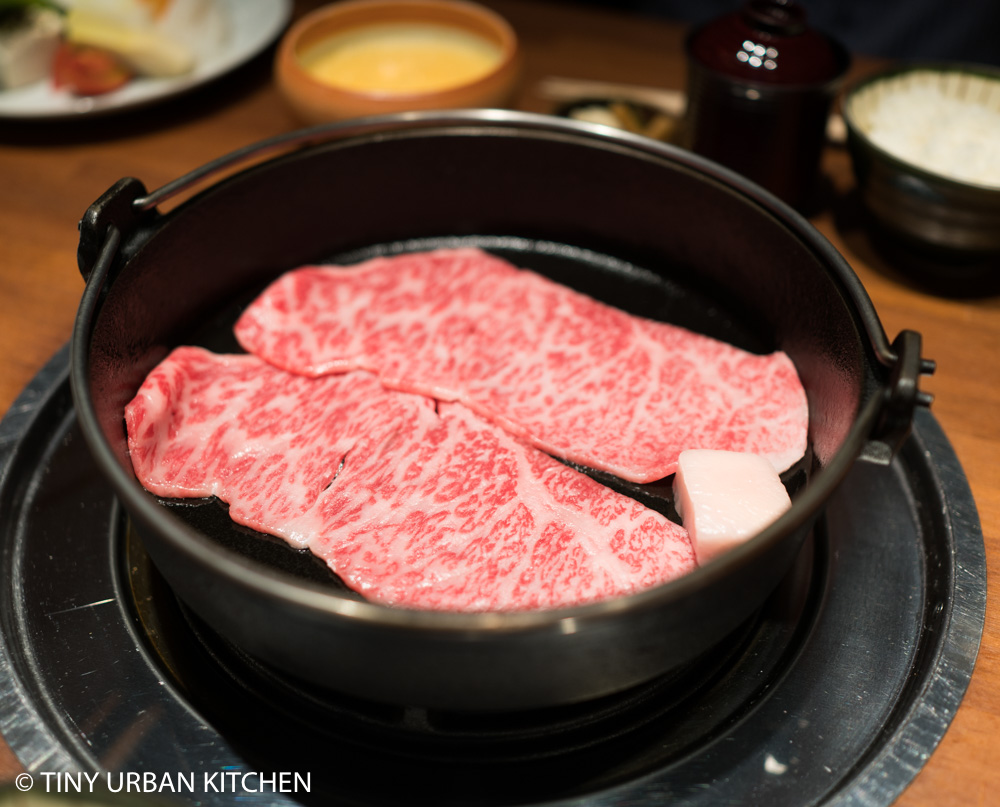
    I am still a bit shocked that it wasn't until 2019 that we discovered the beauty of sukiyaki, a type of Japanese beef hot pot.

    ...

    Read More »

    Sushi Ishiyama 鮨 いしやま

    January 9, 2020 by Jennifer Che

    Sushi Ishimaya Tokyo
    Sushi Ishimaya Tokyo
    Takao Ishiyama at Sushi Ishiyama 鮨 いしやま

    We've been fans of Chef Takao Ishiyama for some time now. We first "discovered" him while dining at 2-Michelin starred Sushi Kanesaka back in 2011. (Wow, has it been that long since that meal? We look so young. He looks so young!) He was the one who served us during that meal, not chef Kanesaka, who was at another table.

    Four years later in late 2015 we visited Sushi Ya because we had heard really good things about it. We were shocked when we walked in the door because we recognized Ishiyama-san as the person who served us so many years ago at Sushi Kanesaka. We loved the food at Sushi Ya. In fact, I made Sushi Ya one of my regular stops on future trips to Tokyo.

    In 2018, we visited him for what would be his last time at Sushi Ya. This is because the word had already been out that Ishiyama-san was finally going to open his own place.

    So finally, here we are. In 2019 we returned to see Ishiyama-san finally at his own restaurant. It's crazy to think we have been following him since 2011 through multiple places.

    ...

    Read More »

    Sushi Masataka Hong Kong

    May 5, 2019 by Jennifer Che

    Sushi Masataka Hong Kong
    Sushi Masataka Hong Kong
    Chef Masataka at Sushi Masataka Hong Kong

    I have been intrigued to try Sushi Masataka for some time now for several reasons. One, very trusted sources indicated that this restaurant was fantastic, arguably one of the best sushi places in Hong Kong. Second, Sushi Masataka Hong Kong (previously Rozan) has received significant accolades, such as being featured on numerous "best sushi" lists as well as having a Michelin Plate. Finally, it is literally just steps away from our apartment. We knew we would eventually try it, just to find out what our "neighborhood" sushi restaurant was all about.

    ...

    Read More »

    Sushi Nakamoto Hong Kong - Edomae Sushi

    December 2, 2018 by Jennifer Che

    Sushi Nakamoto Hong Kong

    Sushi Nakamoto Hong Kong

    I have a friend who is sort of my "eyes and ears" of the food scene in Hong Kong. We are both obsessed about sushi, so we often explore and try out new sushi places together. Perhaps because he works in the food and beverage industry (and because he can also read Chinese fluently), he tends to hear the latest sushi news (like, for example, the opening of Sushi Saito in Hong Kong), well before I find out.

    Lately, my sushi-dining friend has been really excited about Sushi Nakamoto Hong Kong, a relative newcomer to Central. Nakamoto-san worked at Tokyo's Michelin starred Ichiyanagi and Sushi Sase in Hong Kong before opening up his own place. Sushi Nakamoto serves traditional Edomae style sushi and only serves omakase set menus.

    My friend loves nigiri sushi and especially enjoys Sushi Nakamoto because he offers a sushi-only omakase during dinner. Most restaurants will add in other appetizers and sashimi to a dinner omakase. In some cases, like Sushi Shikon, these appetizers are exceptional and really make the restaurant stand out.

    If you're a purist and a pure nigiri sushi lover, however, you may have a harder time. Sukiyabashi Jiro is one notable restaurant that serves only nigiri for its dinner omakase menu. This, however, is not the norm.

    As a result, it was a pleasant surprise for my friend when he found out that Sushi Nakamoto also offers a nigiri-only omakase dinner. We went together to try it out.

    Here's a look at our omakase nigiri meal!...

    Read More »

    Tokyo Shiba Tofuya Ukai - Tofu Kaiseki at the foot of Tokyo Tower

    September 5, 2018 by Jennifer Che

    Tofuya Ukai Hana

    Tofuya Ukai Hana
    This is the fourth post in the extended Japan Series 2018. Other posts in this series include Totoro, Fall Foliage, and Tofu Kaiseki , Potsura Potsura - Japanese modern izakaya, and Sushi Ya with Takao Ishiyama plus new Sushi Ishiyama

    At the foot of Tokyo tower lies an unlikely oasis tucked away from the hustle and bustle of the city.

    Nestled inside a stunning Japanese garden complete with a tiny stream, bridge, and perfectly manicured trees, Tokyo Shiba Tofuya Ukai is a Japanese kaiseki restaurant that specializes in tofu, one of my favorite foods in the world. The tofu is homemade using specially chosen high quality soy beans and spring water.
    Tofuya Ukai Hana
    Entering this oasis feels like a trip back in time. You are whisked away into the Edo period, experiencing what Tokyo was like 200 years ago. The buildings reflect the era, and the servers all wear traditional dress.
    Tofuya Ukai Hana
    The restaurant is located inside of a 200 year old sake brewery (transplanted here from Yonezawa, Yamagata Prefecture) within a samurai-era merchant's residence. The building is huge, with 55 rooms, and seats over 500 people. Most rooms are private tatami rooms, although there is at least one larger room with several tables, useful for small parties or solo diners like me who don't need a whole private room.
    Tofuya Ukai Hana
    The focus on high quality and impeccable service is characteristic of the Ukai group, who run three other well-known restaurants in Tokyo, including the fantastic Ukai-Tei Teppanyaki in Omotesando (where we had some of the best beef we've ever had)....

    Read More »

    Sushi Ya すし家 with Takao Ishiyama plus new Sushi Ishiyama 鮨 いしやま

    August 25, 2018 by Jennifer Che

    Sushi-Ya-Tokyo-5.jpg

    Chef Takao Ishiyama

    This is the third post in the extended Japan Series 2018. Other posts in this series include Totoro, Fall Foliage, and Tofu Kaiseki and Potsura Potsura - Japanese modern izakaya.

    This post describes a meal I had at Sushi Ya Chef with Takao Ishiyama back in November of 2017. Little did I know at that the time the he would be leaving Sushi Ya very soon to open up his own place, Sushi Ishiyama 鮨 いしやま, really soon!

    Chef Ishiyama left Sushi-Ya in April 2018. Another alumni from Sushi Kanesaka (honten), Chef Hashimoto, has taken over Sushi Ya as executive chef. Chef Ishiyama opened his own place in Ginza on July 25, 2018.

    I have not seen too many reports of it thus far (at least in English!), but I am personally quite curious what it is like, and will definitely plan on trying to visit my next trip to Japan! If you're curious, you can read through the initial reviews and look at photographs on tabelog by Japanese people who have visited. It definitely looks quite similar to the food at Sushi Ya, with some minor differences.

    So, I write this post sort of as a memoir instead of as information for meals to come. Although Takao Ishiyama will most certainly incorporate many elements from what he was doing at Sushi Ya, he may try to establish his own signature stamp onto his own restaurant.

    This dinner was delicious, but it was way too much food for this person who is usually happy eating about 10-12 pieces of sushi. The dinner omakase had a whopping twenty-four courses, and some of those courses were not small (see, for example, upper right corner which is half a crab).

    In any event, I think the size of lunch omakase suits me better, even though sometimes I think they save the good stuff for dinner....

    Read More »

    Potsura Potsura Tokyo - Bib Gourmande Izakaya ぽつらぽつら

    August 21, 2018 by Jennifer Che

    Potsura Potsura Tokyo

    Potsura Potsura Tokyo
    This is the second post in the extended Japan Series 2018. Other posts in this series include Totoro, Fall Foliage, and Tofu Kaiseki.

    If you're looking for something that's casual yet a bit different from the traditional izakaya, noodle, or sushi joint in Japan, consider Potsura Potsura (ぽつらぽつら), a modern izakaya that focuses on fresh ingredients from the sea and the farm.

    Potsura Potsura Tokyo

    The restaurant sources its vegetables daily from its partner farm Matzuzawa Farms in Azamino, Kanagawa. The restaurant also emphasizes "openness". Chefs prepare food in an open kitchen that patrons lucky enough to score a counter seat (like us!) can observe and enjoy. Head chef and owner Yoneyama Yu truly has a passion for showcasing local ingredients.

    The restaurant has received a lot of recognition, bib gourmand by the Michelin Guide and top 100 restaurants by Tokyo Calendar. They offer a nice selection of Japanese wines and sake as well.

    It seemed like the perfect place for me: one of my favorite cuisines (Japanese); a strong focus on fresh vegetables and seafood; recognition for excellent cooking at a good value; and the ability to try lots of small dishes (izakaya format).

    I made the reservation through my hotel a couple weeks before the trip, just in case.

    ...

    Read More »

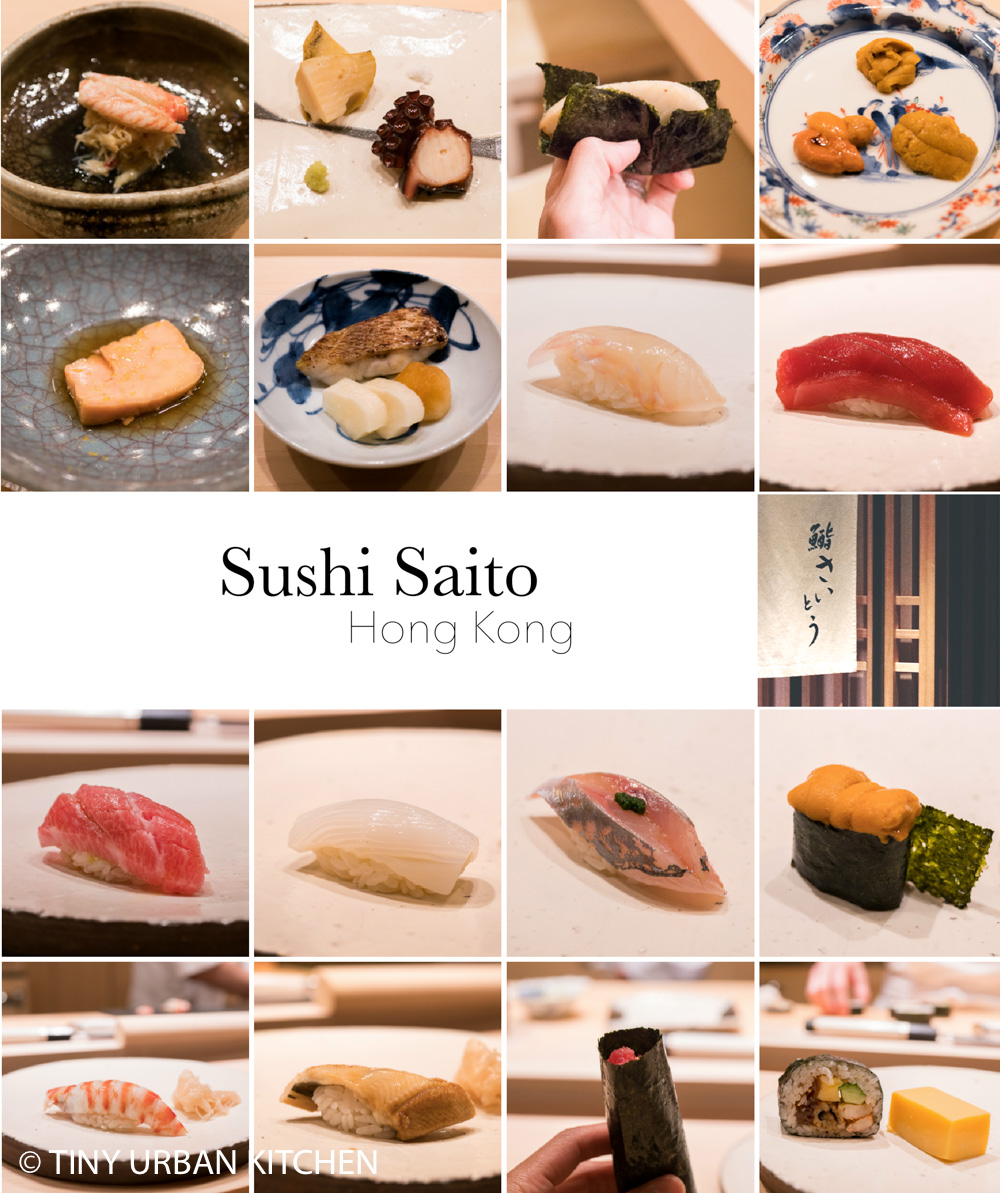
    Sushi Saito Hong Kong - Dinner Omakase

    May 16, 2018 by Jennifer Che

    Sushi Saito Hong Kong

    Sushi Saito Hong Kong

    Sushi Saito Hong Kong

    Sushi Saito in Tokyo has long been regarded as one of the best sushi restaurant in the world. It ranks number one on Japan's popular Tabelog (user-rated) website, and it has its fair share of accolades (Three Michelin stars, 26th on World's 50 Best, etc.).

    Sushi Saito is also one of the most exclusive restaurants. It is virtually impossible to get a reservation at the restaurant unless if you are an existing customer, or you are introduced by an existing customer. You can't just ask your hotel concierge in Japan to request a reservation on your behalf. Sushi Saito requires a personal referral from a prior customer, preferably a regular.

    For this reason, Sushi Saito has been elevated to a cult-like, unattainable status, a bucket-list item that many sushi lovers obsess over and dream about endlessly.

    Imagine the uproar and fervor that arose when news came out in late 2017 that Sushi Saito was planning to open up a second location in Hong Kong, in partnership with the Global Link Restaurant Group.

    Immediately, questions began flying around.

    How do you get a reservation? Do you need to also have a friend refer you?
    Sushi Saito Hong Kong
    Reservations seemed virtually impossible to obtain. Phone calls to the Four Seasons only led to referrals to an email address, which courteously responded by simply stating "Sushi Saito is not taking any new reservations for the time being." It seemed to be true that you needed a connection with someone who had gone to Sushi Saito Tokyo before, or at least had dined at one of Global Link's other restaurants, Ta Vie or Tenku Ryugin.

    Indeed, we eventually got our reservation several months later through a friend who worked at Sushi Saito. ...

    Read More »

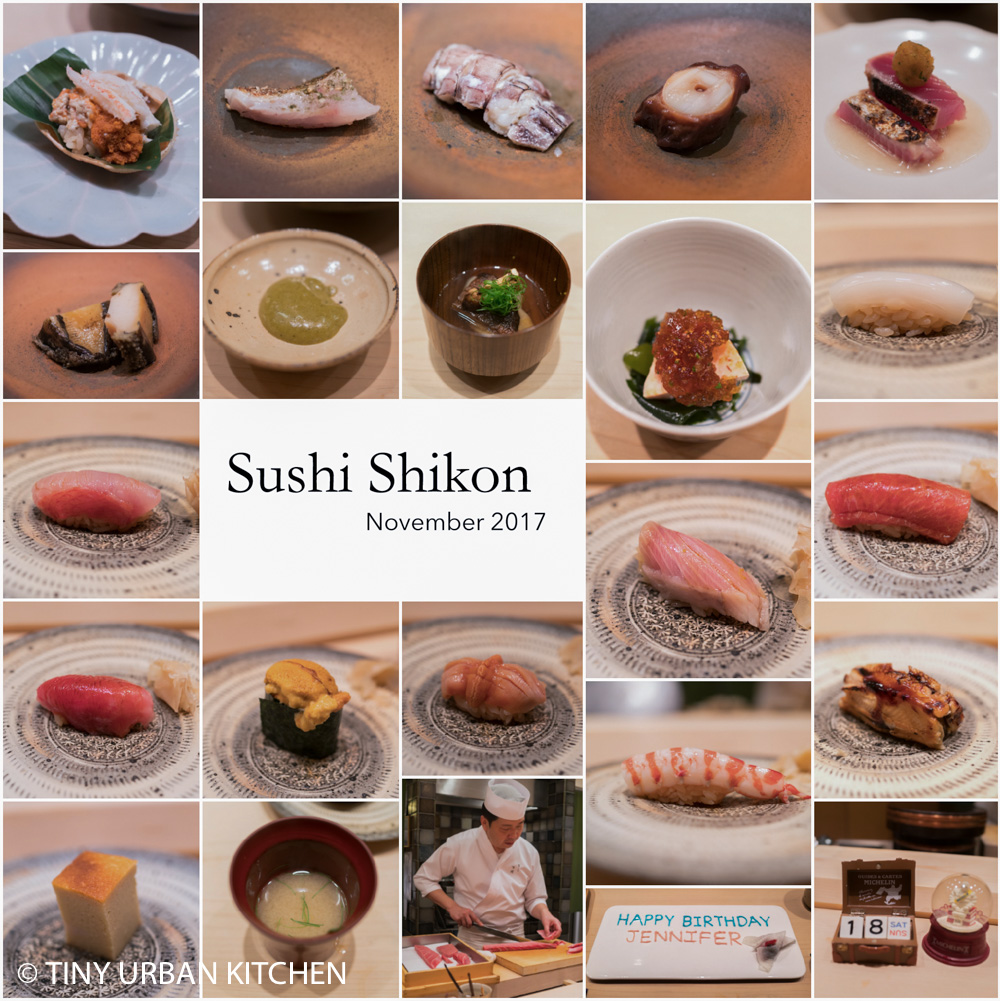
    Sushi Shikon Hong Kong - 3 Michelin Stars

    March 12, 2018 by Jennifer Che

    Sushi Shikon Hong Kong - November 2017

    Sushi Shikon Hong Kong

    This is one of many posts that are part of the series Jen's Guide - Best Places to Eat in Hong Kong for Visitors. This is also post #50 (!!) part of my #50PostsIn50Days personal challenge to document my first 100 days in Hong Kong. Other posts in this series may be found at the bottom of the original post.

    If someone were to ask me what my absolute favorite restaurant in Hong Kong is, of course I would have a hard time answering it. I might have a favorite dish at a particular restaurant, or I might really like the vibe at another place. Sure, there will be places I'm always happy to visit, but picking a favorite anything is really hard.

    Having said that, I think Sushi Shikon would definitely be one of the top contenders for that place.

    Sushi Shikon is the second location of Sushi Yoshitake from Tokyo. Originally also called Sushi Yoshitake, the Hong Kong location changed its name to Sushi Shikon after confusion arose from people booking at one location and showing up at another (oops!). I first heard of Sushi Yoshitake from Bryan, actually. After eating there solo a couple years ago, he couldn't stop telling me about what he declared to be "the best dish I've ever eaten in my life."

    !!!

    This was Sushi Yoshitake's signature dish, its steamed abalone with abalone liver sauce (more on that below . . . .)

    Sushi Yoshitake

    Us with Chef Masahiro Yoshitake in Tokyo

    I was lucky enough to be able to dine at Sushi Yoshitake myself about a year later, and the hype is real. It was divine. That abalone with liver sauce is something, and I discovered another love: aged uni! That stuff just blows my mind.

    Imagine our utter excitement when we found out that Yoshitake had decided to up a second location in Hong Kong . . . and that we would be moving to Hong Kong too!!...

    Read More »

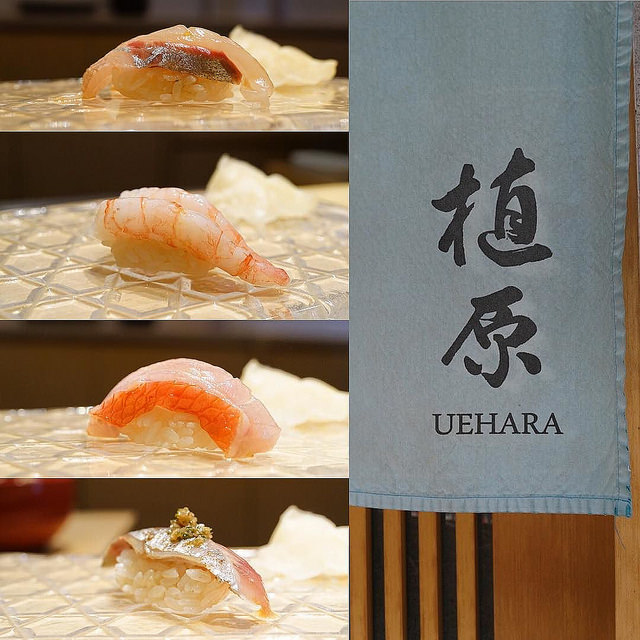
    Sushi Uehara Causeway Bay

    February 14, 2018 by Jennifer Che


    This is post #24, part of my #50PostsIn50Days personal challenge to document my first 100 days in Hong Kong. Other posts in this series may be found at the bottom of the original post.

    Sushi is incredibly good in Hong Kong.

    Hong Kong is one of the few places (outside of Japan) where the combination of (1) distance from Tokyo and (2) available money allows high-end sushi places to offer fish flown same-day from Tsukiji Fish Market in Japan.

    Of course, flying sushi in same-day is very expensive, and therefore only the highest end restaurants do it. However, being close to Japan still has its benefits, and Hong Kong is still able to access much more fish from Japan at lower price points than places that are further away.

    As a result, I definitely have found many more restaurants in Hong Kong that serve traditional, authentic edomae style sushi than I ever did in the States.
    Sushi Uehara Causeway Bay
    One of my local Hong Kong friends (a fellow sushi fanatic whom I actually met in Japan while dining at Sushi Ya), is always on the look-out for good sushi places in Hong Kong. If schedules line up, we try to explore some of these new sushi places together.

    The first sushi place we tried after my move to Hong Kong was Sushi Uehara, one of his top choices for a very reasonably priced sushi lunch. Sushi Uehara is a small counter-style sushi bar located on the edge of Causeway Bay. Diners face the sushi chef as they eat, which allows them to experience sushi the more traditional way - one piece at a time.

    Chef Uehara worked at Sushi Hiro for eight years before setting up shop on his own. His dinner omakase is much pricier ($1700 HKD /$218 USD), but at lunch there are lower priced options, such as the the Deluxe Lunch (12-pieces of sushi and 1 roll for $480 HKD / ~$60 USD); the Premium Lunch (8-10 appetizers/sashimi plus ~6 pieces of sushi for $800 HKD /~$100 USD); and various types of chirashi and donburi (seafood over rice) for $380 HKD a bowl (~$49 USD).

    Because we really just wanted to eat sushi, we opted for the the 12-course, which gives you more sushi (even compared to the Premium lunch)....

    Read More »

    Sushi Ta-Ke Causeway Bay - Hong Kong

    February 9, 2018 by Jennifer Che

    Sushi Ta-Ke Causeway Bay

    Sushi Ta-Ke Causeway Bay

    Sushi Ta-ke Causeway Bay

    This is post #19, part of my #50PostsIn50Days personal challenge to document my first 100 days in Hong Kong. Other posts in this series may be found at the bottom of the original post. 

    Sushi is very, very popular in Hong Kong, and it comes in all different forms and at all different price points.

    Since moving here, I've been on the lookout for really authentic, traditional sushi places that remind me of Japan. We started at the top, visiting 3-Michelin starred Sushi Shikon a few times already. That place is phenomenal, and easily one of my favorite restaurants in all of Hong Kong. However, at $3500 HKD a pop, it's reserved for very, very special occasions. I've only begun exploring, but a friend recommended Sushi Ta-ke as a good choice for authentic Japanese sushi.

    Sushi Ta-ke, which is part of the 1957 & Co hospitality group, appointed Chef Kaoru Mitsuhashi as its new executive chef at the end of 2017. Chef Mitsuhashi, who has over 2o years' experience, focuses on Edomae sushi, the traditional Tokyo-style sushi that emerged in the late 1800‘s in Japan. Edomae literally means “in front of Edo”, which refers to fish that come from Tokyo Bay. In the olden days, Tokyo was called “Edo,” and raw fish over vinegared rice became a popular item sold on the streets near the fish market in Tokyo. Because of the lack of refrigeration back then, raw fish was sometimes cured with soy sauce or vinegar in order for it to keep longer. Today, you'll inevitably find some cured fish as part of any edomae sushi omakase.

    Fish is flown directly from Japan, and a lot of the produce and other ingredients also come from Japan.

    Sushi Ta-Ke Causeway Bay Sushi Ta-Ke Causeway Bay

    The restaurant is located in the Cubus building right on the edge of Causeway Bay. The space is pretty big, with a sizable sushi bar, plenty of tables, and even a private room. One of the owners is an interior designer, so the interior is really pretty, with a bamboo theme and thoughtfully-placed lighting.

    Dinner is a pretty extensive affair, with omakase menus ranging from the "Ume" omakase at $1200 HKD all the way up to consulting Chef Mamoru Sugiyama's omakase at $1680 HKD. You can also order dishes a la carte, whether it be appetizers showcasing seasonal ingredients, sushi, sashimi, or various premium grilled items (A5 wagyu, swordfish belly, lobster, and the like).

    If you want to just try to sushi, consider coming at lunch, where there are lower priced set menus that include only sushi and sashimi. That's what I did. My friend and I went at lunch and ordered the Deluxe Sushi Platter, a lunch omakase with 9 pieces of sushi plus appetizers for $348 HKD. ...

    Read More »

    Sushi Tokami Hong Kong -1 Michelin Star

    August 21, 2017 by Jennifer Che

    Sushi Tokami Hong Kong

    Sushi Tokami Hong Kong

    Since opening in 2013, Sushi Tokami has quickly become one of the most respected and sought-after sushi restaurants in Japan. Within a year of opening, it gained a Michelin star in the 2014 guide. The restaurant is consistently one of the top 10 sushi restaurants on Tabelog, Japan’s user-reviewed restaurant site.

    Sushi Tokami opened its second location in Hong Kong in 2016. This location also received a Michelin star in the 2017 guide. Chef Taga-san, who oversees the location, is from Japan and worked at several sushi establishments in Japan before moving to Hong Kong to open this new location. Because Hong Kong is not that far from Japan, this location can still source essentially the same fish as the Tokyo location.
    Sushi Tokami Hong Kong
    Sushi Tokami Hong Kong is located inside the massive Harbour City Mall, specifically at Ocean Centre. Located a bit tucked in the back (look for the huge Louis Vuitton store), the small sushi bar is easy to miss (reminds me of all those times in Japan when we circled over and over looking for the entrance of a sushi-ya). This one’s not as hard to find, thankfully!

    Once you enter, you really do feel like you are in Japan, with one helpful difference: the server in the kimono speaks perfect English.

    During lunch, you have your choice between three omakase set menus: 12 pieces, 14 pieces, or 16 pieces. In short, if you want otoro, you need to order the 14-piece set. If you also want uni and another seasonal specialty (in our case, it was a rosy sea bass), then you must order the 16-piece. There is no option for a la carte.

    If you come at dinner, there is just one set menu, which includes several appetizers as well as 12 pieces of sushi. We chose to both get the 16 piece set, which in retrospect was totally worth it....

    Read More »

    Kyubey Tokyo - a follow up visit

    August 15, 2017 by Jennifer Che

    DSC02470.jpg
    I have a soft spot for Kyubey.

    It was one of my earliest exposures to high-end Japanese sushi. It was through Kyubey that I learned all the rules about eating high end sushi (and un-learned some American habits I had picked up). I learned not to put wasabi in my soy sauce; observed the proper way to eat sashimi; and watched some of the most incredible knife work I’d ever seen.

    I also wrote a long, loooong post about Kyubey for round 9 of the food blog competition Project Food Blog, the pentultimate post before my final winning post.

    For all of the above reasons, I’ve always had a soft spot for this restaurant.
    DSC02471.jpg
    It’s been years since I’ve visited Kyubey. I’ve become a much more sophisticated sushi diner (8+ years later), having now tried sushi from many of the top sushi masters in the world (Sushi Mizutani, Sukiyabashi Jiro, Sushi Sawada, Sushi Yoshitake) just to name a few. I wondered what I would think.

    We revisited Kyubey this past February to find out....

    Read More »

    Tsukiji Fish Market Auction + Sushi Bun Breakfast

    August 6, 2017 by Jennifer Che

    Tsukiji Fish Market auction

    Tsukiji Fish Market auction

    I've been to Tokyo over half a dozen times, yet I could never find the energy to drag myself out of bed the wee hours of the morning to visit the Tsukiji Fish Market auction. It wasn't until the news came out that Tsukiji Fish Market was moving that we started to take notice.

    The current market needs an upgrade in refrigeration technology, is vulnerable to a big earthquake, and takes up valuable real estate in the center of the city.

    The move date has been pushed back from the originally scheduled 2016 date, but it's inevitable. Tokyo's governor Yuriko Koike wants to move it before the 2020 Olympics in Tokyo. The current plan is to move the market to Toyosu, a manmade island of reclaimed land outside the city center, in autumn of 2018.

    So when we visited Taiwan in February of 2017, we concluded it might be our last chance ever to see the old-school Tsukiji Fish Market auction in its original 80+ year old location.
    ...

    Read More »

    Shima Steak Tokyo - The famous steak sandwich

    July 30, 2017 by Jennifer Che

    Shima Steak Tokyo

    Shima Steak Tokyo

    We've had Japan's famous steak a number of times.

    We tasted it grilled at 3-Michelin starred Taian in Kyoto. We've enjoyed it in shabu shabu (hot pot) at Seryna, and we've had it teppanyaki style at Ukai-Tei (2 Michelin stars). All of the meals have been excellent, and I've enjoyed each one for different reasons.

    However, my fondest memories would have to be from the new place I visited this past February, Shima in Tokyo....

    Read More »

    Afuri Ramen Tokyo - Yuzu Shio Ramen in Ebisu

    July 25, 2017 by Jennifer Che

    Afuri Ramen Tokyo

    Afuri Ramen Tokyo

    Hello Ramen!

    I was so excited when I learned about Afuri Ramen in Ebisu.

    Afuri's signature ramen uses a yuzu shio broth, a lighter broth made from a chicken, seafood, and seaweed stock and accented with yuzu's citrusy and floral flavors. I LOVE yuzu, a fragrant Japanese citrus fruit that I discovered back in 2011 when it was less recognized and less prevalent in the US.

    In the close to 15 years since the original location in Ebisu opened, Afuri Ramen has expanded significantly. There are numerous locations around Tokyo now (Harajuku, Nakameguro, Roppongi, Shinjuku, Azabujuban, etc.) and even one location in Portland, Oregon (!).

    Despite the expansion, there are STILL lines out the door. This place is super popular, and for good reason.
    Afuri Ramen Tokyo
    We showed up early to the original Ebisu location (before 11:30AM) and thankfully had no trouble finding a seat....

    Read More »

    Matsuya Kanda - 130+ year old soba shop in Tokyo

    July 25, 2017 by Jennifer Che

    Matsuya Kanda Soba

    Matsuya Kanda

    There are many excellent places to get soba in Japan.

    However, very few places have the historical charm and heritage of Matsuya Kanda, a family-owned soba restaurant that has been running since 1884 (!). Matsuya Kanda is located within walking distance of Akihabara, the famous electronics area in Tokyo. It's the perfect place to catch a casual, inexpensive, yet very tasty lunch of freshly made soba noodles after wandering around Akihabara and nearby Kappabashi Dori (Kitchen Street) for a a couple hours.

    ...

    Read More »

    Sushi Sho (Sushi Shou) - Chef Keiji Nakazawa

    February 17, 2014 by Jennifer Che

    _DSC4125
    This is the ninth post in the Tokyo - Kyoto - Osaka series. Other posts in this series include the intro post: Tokyo, Kyoto, and Osaka, Matsugen (soba), Sushi Iwa, Ramen Honda (Tokyo Ramen Street), Ryugin, Omen (udon), Shouraian (tofu), Dotonbori in Osaka (street food), and Taian (3-star Michelin).

    How do you cap off an intense week of traveling throughout Tokyo, Kyoto, and Osaka, having dined at so many incredible places? After all the exotic, unusual, and variety of food in Japan, we decided on going back to what we loved most for our last meal: sushi.We'd already had pretty world class sushi up to this point: 1-star Michelin Sushi Iwa early in the week and 3-star Michelin legendary Sushi Mizutani later on in the week. Sushi Sho was the first non-Michelin rated restaurant we were visiting.
    _DSC4131
    According to an article in CNN Travel, Chef Keiji Nakazawa "kicked out the Michelin reviewers" because they "didn't know how to appreciate sushi." When asked personally by blogger Aun Koh from Chubby Hubby, Chef Nakazawa explained that he never kicked anyone out.

    A Michelin reviewer had instead approached him about possibly including Sushi Sho in their guide. As the reviewer returned to eat at (and presumably review) his restaurant several more times, Chef Nakazawa became more and more unhappy with this man, concluding that he knew absolutely nothing about sushi.

    He told the reviewer exactly what he thought.

    And then his restaurant never appeared in any sort of Michelin guide.
    _DSC4143
    10-day aged maguro

    Despite the fact that Chef Keiji Nakazawa may not be known as much internationally, this does not mean he's not loved and revered in Japan.

    Sushi Sho regularly shows up on top sushi lists in Japan. Chef Nakazawa competed against Chef Morimoto in Iron Chef Japan (though Morimoto did win with his fusion style over Nakazawa's traditional Edo style). He has trained many proteges who have gone on to open very, very successful restaurants of their own, many of which are named after him (e.g., Sushi Sho Masa, Sushi Sho Shingo and Sushi Sho Saito).

    We arrived at Sushi Sho at 9PM on our last night in Tokyo (the only time that was available to us). Inside, the ambiance was boisterous and loud. Many of the guests were in the middle or end of their meal, already on their nth glass of sake and looking quite pleased with everything.
    _DSC4129-2
    We settled into four seats at the end of the circular counter. They handed us the most interesting assortment of seaweed: umibodo, wakame, and ginger.
    _DSC4128
    Also known as sea grapes or green caviar, Umibodo comes from Okinawa and pops like caviar when you bite into it. I found it delightful, and savored each "strand" of tiny little pearls as I bit into them.

    Pop pop pop pop pop.
    _DSC4130 We began with some lightly cooked Hamaguri (clam), served with just a small dollop of wasabi on the side.
    _DSC4133 Next came two rolled up pieces of sashimi: Kinmedai (Golden Eye Snapper) and Ara (Cod).
    _DSC4134 Chef Nakazawa does a mix of traditional nigiri sushi, sashimi, and creative combinations like this ika (cooked squid) which was filled with rice inside, a tiny bit of soy sauce, and a delicate dab of wasabi. The squid was a bit chewier than the ethereal squid we've had at 3-Star Michelin places like Mizutani and Jiro (maybe because they massage the squid for a long time?). Nevertheless, the flavors were still excellent.
    _DSC4136Aji, or Horse Mackerel, was served filled with finely sliced raw ginger, cucumber, and shiso. I love the pop of the herb, which offset this fattier fish nicely.
    _DSC4137Sagoshii (Baby Spanish Mackerel) nigiri.
    _DSC4138Katsuo (Skipjack Tuna) is the same type of fish used in making bonito flakes. I have often seen it slightly seared at restaurants, a preparation that I love. Here, the skin seems just barely seared and it's topped with a tiny dollop of onion and Japanese mustard. It's definitely a milder preparation, not as salty or smoky as the grilled ones (which I still prefer).
    _DSC4139 The simple Ika (squid), is good, though less tender than the best ones I've had.
    _DSC4144 It seems like every Japanese sushi chef I've ever run into translates Shirako into "monkfish liver." Either they are all getting their translations from the wrong book, or it's just a euphemism that they prefer to use because the truth would gross people out a bit too much.

    In fact, shirako is "milt", or sperm sac. The first time I had it in Japan (in a 2-star Michelin sushi restaurant, no less), I was also told it was "monkfish liver." In fact, I announced it proudly on the blog. It wasn't until a kind commenter told me the truth (at least a month later) that I realized what I had eaten.

    This time, I knew, though they still told us it was monkfish liver.

    The exotic brain-like organ was hot, creamy, and  mild. If you didn't know what it was, you'd probably think it was quite delicate and tasty. Unfortunately, psychology is a strong deterrent. One of my male friends who was dining with us said "that is a little too weird for me."
    _DSC4145Kamasu, or Barracuda, reminded me of hamachi (yellowtail), but softer and a bit saltier. I enjoyed this piece quite a bit. _DSC4146
    Samma, or Mackerel Pike, was super soft, very fatty, and had a strong, intense, mackerel-like "fishiness" (for lack of a better word).
    _DSC4147 At this point in the meal, they gave us a few slices of pickled radish to cleanse our palates.
    _DSC4148
    Chef Nakazawa uses several different types of rice for different types of seafood. For example, in this next unusual style of Ebi (Shrimp), our rice was brown due to the use of a special type of dark vinegar. The shrimp was topped with an interesting egg and vinegar powder.

    Although the flavor was interesting, the quality and texture of the shrimp was only average, not nearly as good as ones we've had at other sushi place, which have been sweeter and juicier with a texture that  really "pops" when you bite into it. I found this one to be only OK.
    _DSC4149You never see freshwater eel, or Unagi, in a restaurant that strictly serves Edo style sushi. This is because Edo purists will only serve seafood that comes from Tokyo Bay. As a result, you will only see sea eel, or Anago, at these types of restaurants. The Grilled Anago we had was pre-dressed for us with a tiny bit of wasabi and soy sauce. It was good, on par with most places we've visited.
    _DSC4150Kombu (seaweed)-cured Ebodai, or butterfish.
    _DSC4151 This Hokkaido Oyster was extremely flavorful, boiled in soy sauce, sugar, yuzu, and several more ingredients that I just couldn't catch while he was explaining it to us.
    _DSC41521 Chef Nakazawa is well known for how he ages various types of fish. He believes that fresh fish is not always necessarily the best. Instead, sometimes aging fish can intensify and bring out the flavors. In this case, we had a 1-week aged Hamachi (yellowtail) served with rice that was mixed with brown vinegar. The aged fish definitely tasted different. It was softer, more mushy in texture than fresh fish. It definitely tasted fatty and had a nice intense flavor.

    I guess I forgot to photograph this next course, but we also had two pieces of Mackerel, one with scallions and ginger pesto and another one flavored with just Japanese mustard. The mackerel was soft, fatty, and flavorful - not a hint of that fishy flavor you sometimes associated with these fattier fish. Along with that we enjoyed some Grilled Snapper Skin (also not pictured).
    _DSC4154 The Uni (Sea Urchin) was from Hokkaido. The quality of the uni was excellent: the flavors were clean and sweet, without any hint of stink. The seaweed itself was a bit soggier than I would have liked, and the uni was colder than I expected. Overall, it was still a very enjoyable piece of sushi despite the minor flaws.
    _DSC4156 Hamaguri (Clam) was simply prepared with just a tiny bit of wasabi. This piece was perfectly seasoned (good salt level), very fresh, and overall very enjoyable.
    _DSC4158 We also tried 10-day aged Maguro (Tuna), which again was softer in texture than fresh tuna. It was also saltier and seemed to have the texture of a fattier piece even though this piece had very little fat.
    _DSC4159On the left we enjoyed Mehikari,  a deep sea fish called Round Green Eyes. It was served with a crispy skin. On the right we had a slice of grilled Nodoguro (Rosy Sea Bass). Both were excellent.
    _DSC4161We then each enjoyed a single Sardine Maki beautifully rolled with cucumbers, ginger, and a slightly sweet soy sauce. The fish itself was quite fatty, and I was slightly surprised at the presence of a few tiny bones in my piece. Overall, I found it to be decent, but it wasn't a favorite.
    _DSC4164
    We then had Ebi (shrimp), which was sweet, super fresh, and warm. The texture was juicy and "popped" the way super fresh shrimp pops. It had balanced flavors and overall was excellent.
    _DSC4165 They also served us the head of the shrimp separately, which was crunchy, mushy, and warm all at the same time. The psychology of what I was eating got the best of me, and I did not enjoy that bite much at all.  I was too grossed out, unfortunately.
    _DSC4167
    Our last bite was Kinmedai (Golden Eye Snapper), the same piece we had enjoyed as sashimi at the beginning of our meal. Here, just lightly grilled, it was slightly smoky yet super soft and fatty, reminding me of fattier belly pieces. I loved how the bitter daikon purée on top balanced out the smoky, fatty fish. We loved this bite.
    _DSC4171And finally, we had a cleansing bowl of Shijimi, or clam soup. The flavors of this barely milky broth were fantastic. It was simple, clean, yet richly full of clam umami flavor. It was a lovely way to close out the meal.
    _DSC4169-2You can't finish a sushi tasting without Tamago, or Japanese egg omelet. We tried two different types here: the one on the left was a shrimp flavored tamago; the one on the right, a scalloped flavored tamago. These were mild and had decent texture. The flavors made it interesting, though I believe most sushi chefs use a variety of trade secret seafood-based ingredients in their tamago.

    These were good, but nothing close to my all-time favorite transcendent tamago at Mizutani.

    We were super full, yet it was a lovely way to enjoy our last night in Tokyo.

    General Thoughts and Tips
    Sushi Sho was definitely a fun experience and we had lots of excellent sushi there. The atmosphere is boisterous and casual, and the staff is friendly. Perhaps due to the recent increased attention after a couple food blogs "outed" this place, they now do not allow photography of their staff (though photography of sushi is still OK).

    I don't think Sushi Sho is quite on par with the top sushi places in Tokyo, but it's still an excellent experience and costs a bit less than some of the other 3-Star Michelin sushi places. Our total bill, all-in, was just shy of $200 USD (20,000 yen) per person. Expect to pay closer to $300 per person at some of the other top sushi places in Tokyo. My favorite parts of this meal would be the fun "sea grapes" green caviar, the grilled Kinmedai, and that beautiful clam soup.

    I booked my dinner for a party of four about a month in advance. I had my hotel concierge call for me. I've heard they only speak Japanese, so that is definitely the easiest way to get a reservation. Because the restaurant only has 10 counter seats, it's crucial to make reservations in advance, especially if you have a larger party. Because they shop for your ingredients that morning (at the fish market!), you cannot cancel same-day. The penalty is 20,000 yen a person for same-day cancellations.

    Thanks to Cindy of Chubby Chinese Girl for first telling me about this place!

    ©2009-2014 Tiny Urban Kitchen
    All Rights Reserved

    Ramen Honda (Tokyo Station Ramen Street)

    November 21, 2013 by Jennifer Che

    _DSC3799
    This is the fourth post in the Tokyo - Kyoto - Osaka series. Other posts in this series include the intro post: Tokyo, Kyoto, and Osaka, Matsugen (delicious soba), and Sushi Iwa.

    The past few years have been very exciting for ramen aficionados.

    Two words: Ramen Street

    It's exactly what it sounds like: eight of the city's top ramen places - in a row - serving swoon-worthy bowls of noodles at one of the most convenient intersections of the entire city. For a ramen-seeker, it's a dream come true. Forget trekking around the city to random out-of-the-way places, just to seek out ethereal bowls of noodles.
    _DSC3836
    Now, they are all right at Tokyo Station - just about as central of a location as you can imagine. It's where both the Narita Express and the train from Haneda International Airport drop you into the city. It's where you pick up the Shinkansen (bullet train) to all sorts of neighboring cities, like Kyoto, Osaka, or Kobe. It's where Japan Rail, the Tokyo subway, and the Keio Line all converge.

    Since the original four noodle stands came in 2009 and four additional ones in 2011, there's arguably no better or more concentrated single location for ramen (well, except for maybe the Ramen Museum in Yokohama, but that's far!).

    Really, there's almost no excuse not to stop by Ramen Street.

    DSC00084
    We took the JR Yamanote line to get there, but as I mentioned above, there are countless ways to arrive at this station. The station is huge, and I must confess that the first time I tried to find Ramen Street (about a year ago), for some reason I couldn't find it (thought I did find Character Street, another super fun area in Tokyo Station). Look for exits pointing to the Yaesu Central Exit. Once you exit, turn right.

    {Yes, there are "Women Only" areas in the train - much more important during rush hour!).
    _DSC3786
    It's pretty much impossible to avoid waiting in line. It seems like Japanese people love their ramen at all hours of the day. Thankfully, our wait was only about 20 minutes, which isn't too bad.
    Ramen Honda Vending
    Oh, you do have to buy your tickets for your order before getting in line. We had just gotten in line when a lady came by asking us for our tickets. Oops! We had to get out of line to purchase them. Thankfully, she came by pretty immediately so we hadn't really moved that far in line before having to step out.

    The machines are only written in Japanese, so it's a bit stressful if you don't read the language. I can read a tiny bit of Japanese (plus I can sort of read Chinese), but it was still hard. They do have certain buttons marked as "most popular!" or "No. 1!", so if in doubt you can always choose one of those.
    _DSC3791
    And then the torturous wait begins. Thankfully, there are seats as you get closer to the front of the line.
    RamenHonda
    We were finally seated after about a 20-minute wait. It's amazing how efficient the whole operation is, actually. Once you enter, you don't wait that long before beautiful, hot piping bowls of noodles appear right in front of you.
    _DSC3798
    Here is a Tsukemen, or "dipping noodles" with chashu (roast pork) and a poached egg. Aren't those gorgeous pieces of pork?
    _DSC3797
    You dip the noodles into this rich, velvety "broth" (or shall I call it sauce, it was so thick!), which is made with a combination of fish and pork bone broth. It was deeply rich, superbly satisfying, and overall fantastic.
    _DSC3811  _DSC3805
    And slurping is totally encouraged.
    _DSC3802
    We also got a bowl of their shoyu (soy sauce based) noodles, whose broth is made from a combination of chicken and fish stock.
    _DSC3806
    This was also very good, with a perfect, super yellow yolk.
    _DSC3801
    You can order supplementary sides for about 300 yen (about $3) each. Here is a simple chashu over rice topped with Japanese negi (onions).
    _DSC3800
    Here is a more complex side dish, with chashu, bamboo shoots, and a boiled egg over rice. Personally, I thought the ramen provided plenty of food, but I guess if you have a larger appetite it's nice to have some "snack" you can order on the side.
    _DSC3793
    Overall, we had a great time there. Personally, I might give Rokurinsha (also at Ramen Street, but with more than an hour's wait that day) an edge for the flavor of the broth in the tsukemen. However, everything at Honda Ramen was still very, very good.

    Most of the ramen costs between $8-$10 USD, with the "sides" costing around $3. Do remember to bring cash though, since I don't think the machines accept foreign credit cards (or any card, for that matter).

    The original location of Honda Ramen is an inconvenient 15 minute walk from a train station north of the city. This is most certainly a much easier way to access these delicious noodles.

    Tokyo Ramen Street
    B1F Yaesu South Exit, Tokyo Station (First Avenue Tokyo Station B1F South Street)
    Access by exiting through the Central Yaesu exit and turning right.
    General Hours 11:00-22:30 (kitchen closes at 22:00), though hours vary by shop

    ©2009-2014 Tiny Urban Kitchen
    All Rights Reserved

    Sushi Iwa

    November 19, 2013 by Jennifer Che

    Sushi Iwa Collage
    This is the third post in the Tokyo - Kyoto - Osaka series. Other posts in this series include Matsugen (delicious soba) and the intro post: Tokyo, Kyoto, and Osaka.

    A popular first thing to do in Tokyo following a long, tiring flight is, surprisingly, to get up at 4AM the next morning to visit the daily auction at the world famous Tsukiji Fish Market.

    The rationale goes like this: since you're super jet-lagged anyway upon arriving in Japan, why not take this opportunity to visit the one place where you have to be up at a crazy hour anyway?

    I had the same thought.

    After all, in the past several visits to Tokyo, I never saw the live auction at Tsukiji. I came close - once - with my mom and sister when I was still in high school. We just missed the actual auction, though we did manage to see up close and personal huge whole tuna fish, vendors cutting up ultra fresh sashimi, and all those interesting wheeled vehicles full of seafood roaming around.
    _DSC3670
    Unfortunately, it's getting harder and harder to see the live auction. The influx of tourists made the crowds so unwieldy, there is now a hard limit to the number of tourists who can enter per day. Only 60 people can enter the space at once, in two waves: one at 5:25 AM, and one at 5:50AM. It's first come first serve, so there's a chance you could get up super early, stand in line, and still not be able to enter.

    Furthermore, they are renovating and expanding the entire market, so the historic, crowded, crazy market as we know it today will soon cease to exist.

    Despite all those reasons to visit now, we still ended up not going. After a long flight from the U.S., it's exhausting to imagine just sleeping a few hours before getting up again super early to watch the auction. We were all starting to get sick and didn't want the lack of sleep to incapacitate us for the entire trip. Plus, the risk of potentially getting up early and still missing the auction would just be too, too disappointing.

    So we chose not to go.

    Someday. I swear, someday I will make it out there.

    At least, as a consolation prize of sorts, we were still able to enjoy the fruits of the market.
    _DSC3644
    After visiting the market in Tsukiji, most tourists eat "sushi breakfast" at one of the many sushi restaurants nearby. The most popular places have insanely long lines (2-3 hours is not uncommon). The fish is fresh and the prices are good, but you do pay for it by standing in line for hours.

    A sushi breakfast at one of these places will run you around 3800 yen ($38 USD), a pretty good price considering the freshness and quality of the fish. Don't be fooled into thinking this is the best sushi you can find in Tokyo, though. It's decent, but it's not even close to the best.

    For much higher quality sushi, consider heading down a few blocks to a place like Sushi Iwa (one Michelin star), where sushi lunch starts at 4750 yen (a mere $10 USD more), there's no multi-hour wait in line, and you can eat at a reasonable time.

    We had a fantastic lunch here. It was nice being able to sleep in, get well-rested, and then leisurely show up for our 11:30AM lunch reservation.
    _DSC3641
    Sushi Iwa is tinywith only six counter seats. I was surprised I was able to make a reservation with relative ease, booking a mere two weeks before my arrival.
    Sushi Iwa miso & Wakame
    Not all sushi places will do this, but Sushi Iwa gives you wakame (kelp) to munch on as well as hot miso soup.

    For lunch, the chef gave us a choice of 10 pieces or 13 pieces. We opted for the 13-piece lunch, which cost around ¥8000 ($80). In general, lunch prices range between ¥4,725 to ¥15,750 (roughly $48 to $158), which is much cheaper than dinner ¥18,900-26,250 ($189 to $263).
    Tai (red snapper)
    A sushi tasting usually starts with lighter, white fish, such as Tai (red snapper).Hirame (flounder) Usually, the sushi chef seasons the nigiri for you. The wasabi is nestled inside between the rice and the fish (in this case, Hirame or fluke) while the soy sauce is brushed on the outside. You don't get a separate dish of soy sauce or any dollops of wasabi for dipping.

    We also had Kampachi (amber jack), which I sadly forgot to photograph.kaibashira (adductor muscle of Scallop)
    You can either eat with your hands or use chopsticks. Though most pieces are nigiri (fish on top of rice), sometimes you'll see this gunkan-style sushi (translated as "warship" sushi, invented at Kyubey!). Here is a gunkan-style Kaibashira, which translates to mean "adductor muscle of a shellfish" (tiny scallops in this case).Ika sliced
    We were intrigued by the unusual preparation of Ika (squid) here.  The sushi chef sliced crazy thin sheets using just his knife. He then julienned these slices some more, finally bringing it all together like this: Ika It was super tender and delicious.Maguro or Akami (Tuna) Nothing beats the tuna in Japan, called Maguro or Akami. Iwa ages all of his tuna, which results in a softer, more tender, and more deeply flavored piece of fish.Seared Toro One of my favorites is seared Toro (tuna belly). Kohada (gizzard shad)
    I loved the meticulous artistry that went into every piece, like the perfectly spaced cuts in this piece of Kohada (gizzard shad).Aji (horse mackerel)Aji (horse mackerel), came with a tiny dollop of leek "pesto" on top.Ikura (salmon roe)Ikura (salmon roe) in Japan has absolutely no element of fishiness, and I actually enjoy it here.Hotate (Scallops) Here is a much larger scallop, called Hotate.Anago (salt water eel)
    True practitioners of Edo-style sushi (serving only seafood that comes out of Tokyo Bay) will only serve Anago (saltwater eel) and never Unagi (freshwater eel). I  actually prefer Anago, which I find to be sweeter, more tender, and a bit lighter in flavor. Lime is a common Maki with toro and MaguroAt the end of most sushi meals, the chef will make a maki roll. Maki with toro and Maguro
    Here, the chef makes a maki with Toro (tuna belly) and Maguro (tuna)._DSC3678
    Isn't that absolutely beautiful?_DSC3646
    It was a great first sushi meal in Japan. We had allowed ourselves to sleep a solid 9-10 hours after crashing the night before (following our reasonably light Matsugen soba meal). It was nice to roam around Ginza just briefly before our 11:30 AM reservation (though it also surprised us that most department stores in Ginza do not open intil 11AM! - late culture!).

    The food is very good here. It doesn't quite reach the ultimate perfection of the top sushi places we've visited, such as Sukiyabashi Jiro, Sushi Mizutani, or Sushi Sawada. However, it was significantly better than the sushi we've had at Tsujiki Fish Market (though, to be fair, we've never lined up at the two most popular places).

    Like most sushi restaurants in Japan, this one has no English signs out front, so you'll have to look for the Japanese characters (see sign below). Thankfully, this restaurant faces the street (unlike many that are either in basements or in highrises), so it's a bit easier to find the sign!

    Sushi Iwa
    8-5-25 Ginza, Chuo-ku
    Tokyo, Japan
    Tel: 03-3572-0955

    Related Posts
    Japan Eating Guide
    Kyubey
    Sukiyabashi Jiro
    Sushi Mizutani
    Sushi Sawada
    Sushi Kanesaka
    _DSC3639-2_DSC3639

    ©2009-2014 Tiny Urban Kitchen
    All Rights Reserved

    New series! Tokyo - Kyoto - Osaka

    November 13, 2013 by Jennifer Che

    _D4C2520
    I've been dying to share this new series with you.

    It's different from all my other Japan posts up to this point.

    In the past, whenever I followed Bryan to Japan on one of his business trips, we always had to stay in Tokyo. As a result, I knew next to nothing about any other cities in Japan.

    This time, things were different. For once, Bryan wasn't here on business. We specifically planned a separate Japan trip with friends. For the first time, we bought JR Rail passes and ventured outside the capital. Though we only had eight days, we managed to spend some quality time in both Kyoto (gorgeous, gorgeous place by the way) and Osaka, a neighboring self-proclaimed food-obsessed city that's only a 14 minute shinkansen (bullet train) ride away.

    Here's a peek at some of the places we visited, to be explored in much more detail in this new series: Tokyo - Kyoto - Osaka.
    _X1C6456
    Autumn is the perfect time to visit Japan, especially Kyoto, a city filled with meticulously kept zen gardens.
    _DSC3635
    On our first night - fresh off the plane - we headed straight for this soba restaurant that Jean-Georges Vongerichten loved so much he convinced the owners to move to New York to open another location (now closed).
    _DSC3670
    Instead of waiting in long lines at Tsukiji Fish Market for "sushi breakfast", we headed down the street to enjoy a fabulous and reasonably priced one-star Michelin sushi lunch.
    _DSC3678
    Can you make maki more perfect than this? Seriously impressed.
    _DSC3760
    We tried modern kaiseki for the first time at a very famous three-star Michelin restaurant in Roppongi.
    _DSC3751
    Instead of wine, they paired sake with each course.
    _DSC3799
    We finally made it out to Ramen Street at Tokyo Station (after just missing it last time), and it was totally worth the reasonable wait in line.
    _DSC3814
    Of course, we had to go to Bryan's favorite place in the world, Yodabashi Camera at Akihabara.
    _DSC3851
    We took our friends to some of our favorite places, like this ethereal two-star Michelin tempura restaurant in Ginza.
    _DSC3825
    Though we were unable to book Jiro this time, we did visit his protege, who is still my favorite sushi master in the world.
    _DSC3909
    Bryan's birthday occurred during our trip, so he picked a few restaurants at which to celebrate, such as this fantastic and reasonably priced three-star Michelin restaurant in Osaka that specializes in grilled meats.
    _DSC3939
    In Kyoto, we had fantastic udon right near the beautiful temple called Ginkaku-ji, or Silver Pavilion (pictured at the top).
    _DSC3951
    We tried traditional kaiseki for the very first time on Bryan's birthday. The experience was a fascinating peek into the lifestyle of the nobility of the imperial court.
    _DSC3973
    The food at this three-star kaiseki was exquisite.
    _X1C6535
    In Kyoto, we visited the famous bamboo forests at Arashiyama.
    _DSC4022
    And then hiked (a bit) through the forest to a remote tofu restaurant hidden off the beaten path.
    _DSC4026
    Some say it is the best tofu restaurant in all of Japan.
    _X1C6589
    Our last day in Kyoto, we visited Fushimi Inari Shrine, a fascinating path on a hill lined with hundreds of torii gates, some dating back as early as the year 711 (!).
    _DSC4060
    We tasted the most famous street dishes of Osaka one evening, sampling bites of okonomiyaki and takoyaki at Dotonburi, a crazy, bustling night area in Osaka.
    _DSC4114
    On our last day in Tokyo before our flight, we stopped by one of our favorite tonkatsu places for a quick lunch.
    _DSC4148_DSC4144
    For dinner, we had unusual sushi at a place that's not very well known to westerners, but is highly regarded within Japan. Black vinegared rice, shrimp, and yuzu powder or cod sperm sac, anyone?
    _DSC3646
    It was a fantastic trip. Unlike past trips where Bryan was usually here for business (and thus working a lot of the time), this was a dedicated vacation with friends. It was awesome.

    Stay tuned for detailed posts on many of the above mentioned restaurants!

    UPDATE: Here are all the posts!
    Sushi Iwa
    Ramen Honda (Tokyo Ramen Street)
    Ryugin, Omen (udon)
    Shouraian (tofu)
    Dotonbori in Osaka (street food)
    Taian (3-star Michelin)
    Sushi Sho/Shou (Chef Keiji Nakazawa)
    Nakamura (3 star Michelin kaiseki)

    ©2009-2014 Tiny Urban Kitchen
    All Rights Reserved

    "Street Food" in Tokyo

    January 28, 2013 by Jennifer Che

    _MG_0386-2
    This is the seventh post in the series titled Tasting Tour of Tokyo detailing my recent trip to Japan. Other posts include Kikunoi Akasaka, Rokurinsha, Mikawa Zezankyo, Kaoriya, Sushi Sawada, and Sushi Aoki.

    The idea of street food in Japan may almost seem like a oddity.

    After all, it's considered quite rude in Japanese culture to walk while you're eating. Even though vending machines seem to be everywhere on the streets of Tokyo, people are expected to stand near the machine and finish their bottles before walking to their destinations.

    Despite all that, you still do see street food quite a lot. One of the most famous (and most fun, in my opinion) streets is the path leading up to Sensōji Temple, a huge Buddhist temple in the Asakusa neighborhood of Tokyo (walking distance from Kappabashi, my favorite kitchen shopping neighborhood!).
    _MG_0390
    Sensōji Temple

    If you've been reading this blog for awhile, you'll know that I absolutely love snacks and street food. From the unique rice wine yogurt in Beijing and the "bawan" (rice dumpling) in Taiwan to the roli roti in San Francisco and the gyros in Greece, I love it all.

    If you love street food and snacks as much as I do, I would highly recommend taking a stroll down this fun path. You'll get to see people making fresh rice crackers (sembei) over hot coals, red bean filled cakes made by hand or by robot, and many, many other fun snacks.
    IMG_0104
    One of my favorite Japanese snacks is senbei, a type of rice cracker. On the street leading up to the temple, you'll see people "grilling" these crackers over a bed of hot charcoal.
    IMG_0105-2
    It's fun to watch them puff up and brown. You can buy a pack to take home or also just try one piece.
    _X1C2346
    I was also fascinated by this guy who sat behind a window tirelessly hand-making little red bean cakes using a traditional cast iron mold.
    Untitled
    The crowd surrounding this man was huge, each person fascinated by the process.
    _X1C2354
    I was tickled by these Doraemon shaped cakes filled with some sort of yellow custard cream.
    _MG_0384-3
    Another place decided to forgo the human and use this really neat robot machine to churn out a similar type of cake. You could buy one piece to try for 60 yen, or buy packs to take home.
    _X1C2344
    Aren't these cool? I think they are green tea mochi cakes, nicely browned on a hot plate.
    _MG_0488
    I'm not even sure exactly what this is, but it surely looks delicious. If you know what these are, please let me know in the comments and I'll update the post! [Update! It appears that these are grilled or toasted mochi. Thanks all for your help!]
    _X1C2355
    You know you've reached the end of the path when you arrive at the huge temple. After this, if you're comfortable with wandering a bit, you can meander through various side streets to reach Kappabashi, a really fun place to get very reasonably priced Japanese dishware, kitchen supplies, and fake display food. It's one of my favorite places to shop, and probably isn't more than a 15-20 minute walk away. I used the GPS feature on my phone, which was very helpful.

    But Wait! There's More!
    Although the path leading up to Sensōji is the most famous, it's not hard to find other types of food being sold on the streets, especially at festivals or outdoor markets. Bryan and I serendipitously stumbled upon this fun outdoor market during out most recent trip to Tokyo. Here's a look at some of the fun foods they were selling.
    _MG_0472
    All sorts of sweets made with (presumably) taro, green tea, and maybe vanilla or mango?
    _MG_0475-2
    I thought these loaves were super cute. The one on the lower left corner sort of looks like Totoro.
    _MG_0483
    I believe these are okonomiyaki, the Japanese version of an omelete/pancake filled with various types of savory fillings, such as vegetables, seafood, and even noodles!
    _MG_0471
    Cold cucumbers on a stick! Perhaps they are marinated?
    _MG_0485
    I am guessing this is puffer fish, based on the cute little inflatable pusher fish on the left side of the case. They were giving out free samples. Though Bryan has had the nerve to try puffer fish once in the US, I've been hesitant. Nevertheless, we tried a bit and it was fine. It sort of tasted like normal fish, actually.
    _MG_0486
    I guess it's popular to grill this special type of fish, which is brimming full of eggs inside. I had tried something sort of similar at Sushi Mitani, shako filled with eggs.
    _MG_0487
    Here's a pic of the finished product.
    _MG_0482
    The Japanese love their fried fish cake products, and this guy is selling all sorts of shapes and sizes.
    _MG_0477
    And then there were these peculiar yellow-orange citrus fruits.
    _MG_0476
    They're like oranges but with a very different colored skin.
    _MG_0480
    And my favorite? These guys were hand pounding rice in this huge wooden bowl to make mochi.
    _MG_0481
    So fun! Here are the fruits of their labor - all different types of freshly pounded mochi.

    Hope you enjoyed this light and casual post! We only have a few more posts left in the Tasting Tour of Tokyo: a gorgeous 1-star Michelin teppanyaki place where Bryan tasted "the best steak I've ever had in my life", a fun "pop-up" coffee shop inside a traditional Japanese house, and the highly anticipated Sukiyabashi Jiro.

    Stay tuned!

    ©2009-2014 Tiny Urban Kitchen
    All Rights Reserved

    Sushi Aoki

    January 22, 2013 by Jennifer Che

    Sushi Aoki
    This is the sixth post in the series titled Tasting Tour of Tokyo detailing my recent trip to Japan. Other posts include Kikunoi Akasaka, Rokurinsha, Mikawa Zezankyo, Kaoriya, and Sushi Sawada.

    Spending a week eating in Tokyo is more like a marathon than a sprint.

    Usually many of the meals I enjoy are omakase in nature, which means they often have many, many courses. Near the beginning of the week I’m OK. However, by the end of the week, my stomach is crying uncle and I begin to feel like I cannot eat anymore.

    It was near the end of our trip when I told Bryan, “I can’t do this anymore.” The idea of yet another omakase where a sushi chef would continue to hand me food, piece after piece after piece, terrified me.

    I was all ready to just stop by a local ramen shop for a simple meal.

    “But it’s our last night in Tokyo, a city known for its incredible sushi. We won’t get to eat sushi like this again for another year at least.”

    Bryan wanted sushi. And I wanted control over what I ate.
    Untitled
    So I asked the concierge at our hotel. Although most high-end sushi places only serve omakase, there are a few exceptions that still serve excellent sushi. The most famous one is Kyubey, which we’ve visited several times in the past. Kyubey not only offers a really reasonable lunch for around 5000 yen, it also offers various types of lower priced set menus, as well as a la carte. Our concierge also recommended Sushi Aoki, a 1-star Michelin family-owned sushi restaurant that has expanded to three locations. Similarly, it offers lower priced set lunches (3000-4000 yen) as well as a la carte options.

    Mostly because we’d already been to Kyubey several times, we opted to try Sushi Aoki. Sushi Aoki
    Clean and sparse, the ambiance of this location was similar to many other sushi places we had visited. Blond wood, bare walls, and serious sushi chefs focused on their craft in the middle of the sushi bar.

    There was a bit of confusion at first as I tried to order a la carte for myself but omakase for Bryan. We got it clarified at the end, but in the beginning Bryan didn’t get the true omakase experience because the sushi chef was also giving him the a la carte stuff that I was ordering.

    Oops! Sushi Aoki
    We began with a gorgeous starter of bonito sashimi with chives, which was fresh, flavorful, and a perfect way to begin the meal. I tasted hints of ginger, likely from the sauce in which the fish sat.
    Sushi Aoki
    Off to the side, one of the chefs began grinding fresh wasabi from the stem. Fresh wasabi is less pungent compared to the "imitation" horseradish variety of wasabi that we get in the States. It has a deeper and more intense flavor, even though it has less "sting."
    Sushi Aoki
    And then, sashimi began to appear, starting with three slices of the delicate white fish hirame (fluke).
    Sushi Aoki
    Next, we sampled various "grades" of tuna, from chutoro (medium fatty tuna) to otoro (fatty tuna). It was quite good, though I could easily tell that the quality and precision of these cuts were not quite up to par as the best sushi places in Tokyo (namely Mizutani and Jiro).
    Sushi Aoki
    As part of my self-designed "a la carte" menu, I ordered ika (squid) because I was still dreaming about the luxuriously soft squid nigiri that I had enjoyed at Sukiyabashi Jiro earlier that week. Alas, even though this ika was still very fresh and tasty, the texture of it was much tougher, noticeably inferior to those served at Sukiyabashi Jiro or Sushi Sawada (places I had tried earlier that week).
    Sushi Aoki
    We had another tasting of tuna, this time in nigiri form. From left to right: otoro (super fatty tuna), chutoro (medium fatty tuna), and akami (tuna).

    The Rest of Bryan's Omakase
    At this point I was quite full and decided to stop, but Bryan wanted to keep on going. Here is the rest of Bryan's omakase.
    Sushi Aoki
    Kohada, or gizzard shad, is in the herring family and is a rich, fattier fish.
    Sushi Aoki
    Saba, or mackerel, was softer than kohada and came as three slices on top of the rice.
    Sushi Aoki
    Next was Scallop and Akagai (Red Clam) which were both very good. The scallop was fresh and sweet and the red clam had that interesting, characteristic "bouncy"and almost crunchy texture which we both love.
    Sushi Aoki
    Ikura, or salmon roe, came served sort of as an "upside down" nigiri with the rice and wasabi on top of the eggs. You use the spoon to mix everything together, which tastes divine.
    Sushi Aoki
    Out of all the sushi places we visited, Sushi Aoki was the only places to give us a sampling of uni from different regions. The lighter one pictured at left is from Kyushuu while the darker orange one on the right is from Hokkaido.  Though both were delicious, Bryan preferred the Hokkaido one better, which was creamier.
    Sushi Aoki
    Ebi (or prawn), was juicy and sweet. Anago (saltwater eel) [not pictured] was super soft and tender.
    Sushi Aoki
    Next was hamaguri (clam), which came brushed with just a tad of sauce on top.
    Sushi Aoki
    Finally we ended the meal with one of my favorite pieces, the tamago (egg omelet). This one was sweet and spongy with a lovely browned top. Perfect.

    The Facts
    In Tokyo, there are two locations of Sushi Aoki: the original one in Ginza and a newer one in Azabu-juban. There’s also a third one in London, interestingly enough. The one at Ginza was very hard to find! Signs are not written with English characters, so it's important to know the kanji (Chinese) characters. Even with our GPS-enabled phones, we still had trouble locating the entrance. We ended up searching for the restaurant's kanji characters on the web and comparing it with the sign shown below to confirm we were at the right place!
    Sushi Aoki
    Sushi Aoki is open for lunch as well as dinner, and you can order either omakase or a la carte. It holds one Michelin star and often shows up on "Best sushi in Tokyo" lists. It's well known in Tokyo, and boasts quite a pedigree of "graduates", including the well revered Sawada-san. Everyone who works there is polite and pleasant, which makes a visit less intimidating for a foreigner (compared to Mizutani, who can be a bit distant, or Jiro, who stresses you out with the speed by which he doles out the sushi).

    I was sort of biased when I visited Sushi Aoki because I had just tasted Sushi Sawada and Sukiyabashi Jiro right before, both arguably among the top 3-4 sushi restaurants in the world. Compared to those world class establishments, I definitely noticed some minor "misses" and differences in quality. I'm sure if I had visited any other time of the year, I would have raved much more highly about this place.

    It's just that -  Sawada and Jiro are pretty much impossible acts to follow.

    So rest assured that this place is excellent and serves very high quality sushi. What I like best is that you can get excellent sushi in a very accessible location with friendly staff who are happy to let you choose your meal, if you so wish.  No sushi nazis here.

    Of course, if I'd had the stomach space, I would have still let them design the omakase. After all, chef seems to always knows best, and I confess that Bryan's meal seemed to have much better theme and flow compared to the haphazard toro-focused mish-mash that I created.

    Live and learn.

    Sushi Aoki, 2F Takahashi Building
    6-7-4 Ginza, Chuo-ku, Tokyo
    + 81 3 3289 1044

    ©2009-2014 Tiny Urban Kitchen
    All Rights Reserved

    Sushi Sawada

    January 14, 2013 by Jennifer Che

    Sushi Sawada
    This is the fifth post in the series titled Tasting Tour of Tokyo detailing my recent trip to Japan. Other posts include Kikunoi Akasaka, Rokurinsha, Mikawa Zezankyo, and Kaoriya.It’s doesn’t get much more personal than this.David Chang of Momofuku fame calls it “a breath of fresh air”, naming Sushi Sawada his favorite sushi restaurant in the world. The Michelin Guide has awarded it two stars. It is frequently uttered in the same breath as sushi giants Sushi Mizutani, Sukiyabashi Jiro, and Sushi Saito. Many consider it among the best in Tokyo.Dining at Sushi Sawada is nothing like eating out in a normal restaurant in Japan. It’s even markedly different from most high-end sushi experiences in Tokyo. Missing are the multitudes of sushi indentured “servants” making rice, massaging octopus, or churning out all sorts of other tasks in the back kitchen. There’s not a single server to take your beer order or bring you more tea.Instead, it’s just Sawada-san and his wife.

    Sawada-san and his wife prepare every aspect of the entire multi-course omakase. You get to watch them from one of six exclusive seats at the tiny sushi bar. It’s an evening full of fascinating visual delights - from the mesmerizing transformation of a piece of fish as it slowly roasts over hot stones to Sawada-san’s ninja-like construction of sushi.

    Sushi Sawada
    Entrance to the restaurant on the third floor

    We arrive on a cool, autumn Sunday just around noontime. Sushi Sawada only takes one seating during lunch, and we are the first to arrive.

    A shy but pleasant young woman bows with traditional Japanese humility and offers to take our huge backpacks (filled with camera equipment, among other things) and our coats. The tiny barstools at the small restaurant don’t accommodate such monstrous bags so well.

    “Sorry, no camera,” She says.

    Apparently, photography is OK as long as there are no other guests dining that day. However, if there are other diners present, the restaurant does not allow photography. In other words, unless if the other seats happen to be empty (very unlikely), or the entire party at the restaurant is part of one group, no photos are allowed.

    “Is it possible to take photos until the other guests arrive?”

    She bows with the utmost regret.

    “So, so sorry, but no. I am so, so sorry.” She bows again.

    “Maybe one picture before they come?”

    She agrees to let me take one photo. At that moment, Sawada-san enters. I snap a couple quick pictures of the space with Sawada in the background.
    Sushi Sawada
    Sawada-san setting up

    There’s no food, but at least I got the room.

    We sit down.

    Sawada’s wife asks us what we want to drink, and Bryan orders a Suntory Premium Malt.

    Sawada-san hands us each a small, round green “nut” that resembles a green olive. It’s warm, salty, and slightly starchy.  If you're curious what it looks like, check out this photo of the same ingredient from my Kikunoi kaiseki meal earlier that week. It reminds me a bit of a boiled peanut or roasted chestnut, but more flavorful and less starchy. I love it.

    “What is this?”

    He smiles. “Ginko nut. In season right now.”

    Hirame (turbot) is next, followed by hirame fin, which is dense and chewy. Aori-ika (bigfin reef squid), is gorgeously soft yet dense. A juicy and tender piece of abalone is served with a salty jelly, and chutoro (fatty tuna) is blessed as being OK to eat with wasabi and soy sauce.

    Sawada’s wife appears in the background and begins preparing hot stones on a miniature “grill” of sorts. It has a wire mesh top on which she places a couple pieces of fish.

    We watch, mesmerized by the amber glow of the hot coals. She begins slowly searing two small pieces of fish, patiently turning the pieces with a skewer at regular intervals.

    Meanwhile, Sawada continues to serve us. Shimesaba (marinated mackerel), dried sea cucumber egg, and shimotori, a maki roll filled with chu-otoro (half chutoro and half otoro fatty tuna), daikon and wasabi.
    _X1C1954
    Sawada is a master at making rolls, and it’s fun to watch him execute. His knives are razor sharp, and he slices through the rolls with precision. As a palate cleanser, sort of a prelude to the nigiri, Sawada-san constructs a roll that’s just filled with fish, shiso, and chives. A single piece of rice acts as the glue to hold the roll together. It’s refreshingly crisp, successfully cleaning our palates in preparation for the second half of the meal.

    We finish this first portion of the meal with a piece of seared otoro (super fatty tuna) with soy sauce. Though mine has just the slightest bit of “stringiness”, overall the piece is fabulous. This is always one of my favorite pieces, and this is no exception.

    Bryan finishes his beer, so we switch to junmai sake, a pure grade of sake where no additional alcohol or starch is added during the production process. Sawada's wife refers to it as having a “medium” level of flavor and strength. We find it to be light, refreshing, and a perfect complement to the sushi.

    Nigiri
    We begin with kisu (smelt or smelt-whiting), a fish that Sawada-san says is “famous for its use in tempura.” Dense and salty, this fish has excellent texture and tastes very good, though it's borderline salty for my tastes. Akagai (giant red clam), is also salty and almost a bit crunchy. I love the fresh, “popping” texture of this fresh clam.

    Sawada-san motions his hand towards his mouth.

    “Hand eat. Hand eat.”

    I don’t know this at the time, but there is an entire article on CNN that highlights Sawada-san’s rules about how to eat sushi.  It’s an elaborate step-by-step photo tutorial that explains how you hold the nigiri (with your hands), flip it on one side, dip the fish part into the soy sauce, and then put it back into your mouth fish side face down on your tongue.

    It all makes sense now.
    Sushi Sawada
    aka (red tuna) and some uni in a basket in the background

    The gustatory exploration continues. Shima aji (horse mackerel) is gorgeously soft. It's followed by tairagi (razor clam) and then an ikura (salmon roe) gunkan roll (“warship” roll). I love the fresh flavors of the ikura. It's deep, briny, and flavorful - a far cry from the salt-bombs I've had in the US. Next is a “horizontal” tasting of tuna. We start with aka (red tuna), and progressively move up in fat level to various types of tuna belly: chutoro, chu-otoro, and otoro.

    We're far from done. Sawada-san next begins us on a journey exploring Edomae sushi.

    Edomae (often just called "Edo" style sushi) refers to a style of sushi that emerged in the late 1800's in Japan. Edomae literally means "in front of Edo", and the style uses only fish and seafood available during the Edo period when Tokyo was a shogun capital, about a hundred fifty years ago. Those that stay true to the style stick to only using seafood you can find in Tokyo Bay. Typically, they cure or marinate the fish, using techniques that were common back in the Edo days prior to the invention of refrigeration.
    _X1C2036
    Tokyo Bay at Sunset

    Katsuo (smoked bonito), is one of my favorites, beautifully smoky and salty. We also enjoy Edo-style ika (baby squid) filled with rice and sesame seeds. Continuing on the Edo journey, we sample Sawada’s own one-week marinated kohada (gizzard shad), which tastes “cooked” and has a tougher texture than the other pieces.

    We move away from Tokyo Bay to sample uni (sea urchin) from Hokkaido, which is extremely fresh and sweet though just a tad too cold for my mouth. Anago (saltwater eel) is served cut in half, meant to be eaten two different ways. The first half we dip into wasabi and salt; the second half we dip into soy sauce only. This anago is the best I’ve ever had. It is so incredibly soft (melt-in-your-mouth) and sweet at the same time.

    Finally, we end with the traditional piece of tamago (sweet egg omelet), the culminating piece of every omakase that is extremely difficult to execute well. The tamago is often the signature item that separates the mediocre from the masters (just watch Jiro Dreams of Sushi).

    Sawada-san's tamago is nicely browned at the top. More like a sponge cake than a typical omelet, this finishing bite is sweet and delicate. Though it's not the most complex tamago I've had, it hold its own and is a perfect ending bite to this meal.

    As a parting "dessert", Sawada-san hands us each a single gooseberry.
    _1040780-2
    Fresh gooseberries from Massachusetts

    Overall, the entire meal is exquisite. Sawada-san is jovial, outgoing, and friendly despite his limited (but perfectly workable) knowledge of English. At the end of our meal, we have gotten so chummy he’s telling us funny horror stories about his last trip to America.

    “America is not like Japan. In America things are so often late! We wait wait wait. Then we fly to the next destination. Then we wait wait wait some more! Delay! Delay! So different from Japan, where everything always runs on time.”

    He even share with us some of his favorite restaurants, places he likes to visit when he’s not working. Apparently, the man loves his tempura. In Azabajuban, he recommends Hatanaka Tempura, Gaiyen Mae, and Tempura Motoyoshi as places he likes to frequent.

    On our way out, both Sawada-san and his wife treat us with the utmost respect. They escort us to the door, both bowing and wishing us well as we head out the restaurant.
    Sushi Sawada

    The Details
    Similar to most sushi places in Japan, the restaurant is difficult to find. It seems to be customary to only use traditional characters for signs, so don’t expect to see any English signs pointing the way. Memorize the Japanese characters and read closely. Sawada is on the 3rd floor of an elevator building, so you’ll need to find the building before going up. Even with our GPS enabled phones, it still took us a few tries to find the right entrance to the correct building.

    Reservations are notoriously difficult to obtain, and the rules surrounding them are unforgivingly harsh. A credit card is required for reservations, and there is a 100% fee for cancellations made with three days of the reservation. I made my reservation through my hotel concierge, who asked me to fax over a form that included my credit card information. The cost of a meal is the same regardless of whether it's lunch or dinner, and will be between 32000 and 35000 yen (all inclusive).

    If it helps, I've included a picture of the front of the building below, so you'll have an easier time finding it than I did! The characters for "Sawada"  number 3.
    Sushi Sawada

    Final Thoughts
    Sawada-san is definitely up there with the finest sushi masters in Tokyo. The quality of his fish is as good as it gets, and his sushi rice is excellent as well (though I still give Mizutani and Jiro a slight edge). I thought a few of the pieces were a tad saltier than I preferred, though Bryan thought they were just fine.

    Overall, it still sits among the best sushi meals I've ever had. There is no other sushi dining experience that feels quite as personal, exclusive, and warm. It's fun to watch some of his unique techniques, such as the way he cooks his fish over hot stones. He's also really warm and friendly, which always makes a huge difference in the enjoyment of an omakase of this type.

    It's not surprising that this is one of the most difficult reservations to get in Japan right now. At least he's young, so hopefully he'll be doing this for a long, long time.

    Many opportunities to keep trying for a reservation.
    Sushi Sawada

    ©2009-2014 Tiny Urban Kitchen
    All Rights Reserved

    Tasting Tour of Tokyo

    December 1, 2012 by Jennifer Che

    Tokyo Skyline view from Westin Tokyo
    Bryan travels a lot for work (did I mention he recently hit the two-million airline miles mark?)

    In fact, we recently calculated that he has spent the last 7 weeks (out of 12) on the other side of the world. Interestingly, he's spent most of that time in countries that walk and drive on the left side of the road, which has made coming back a bit confusing (especially when walking on sidewalks and such).

    Although it's not fun having your husband away so frequently, there are sometimes perks. Occasionally, if the destination is enticing, I'll choose to go with him. It's great because I get to spend more time with him, and the trip becomes a bit cheaper because lodging is usually already covered by his work.

    About a month ago, I had the opportunity to go with him to Tokyo. I love Japan, and it's hard for me ever to pass up a chance to go there. Instead of focusing so much on sushi this time, we branched out, and tried several different types of Japanese food.
    Sukiyabashi Jiro
    Of course, we still had sushi. In fact, we had a chance to taste sushi made by probably the most famous sushi master in the world right now.

    Here's a brief summary of where we went on our trip, all to be described in mouthwatering detail in the upcoming posts in this new series: Tasting Tour of Tokyo.
    Joel Robuchon Tokyo
    This pic is just for fun. It's the gorgeous mansion that houses Joel Robuchon in Tokyo. It was right across the street from our hotel, so I walked by it everyday. Alas, my biggest regret is that I never took the opportunity to pick up some fresh baked items from the bakery downstairs.
    Homemade Soba with quail egg and mountain yam
    Bryan loves fresh noodles, so we visited this quaint, cozy, and very, very Japanese (the entire menu was not even translated) soba shop that made its own soba, served here with mountain yam (yamaimo) and quail egg.
    Tsukemen from Rokurinsha
    Speaking of noodles, I queued up for over an hour for one of the best bowls of ramen I've ever had at this simple, tsukemen (dipping noodles) shop inside the Tokyo Sky Tree complex.
    Fried Bitter Melon Snacks
    I love snacks, and it's always fun to see what different countries eat. I stopped by a 7-11 and picked up these cool, fried, bitter melon chips (surprisingly tasty!).
    Asakusa Street Food
    Of course, the most fun place to get Japanese snacks is to stroll the street at Asakusa leading up to the Sensō-ji Temple, where vendors sell snack-sized, freshly made portions of all sorts of goodies, such as homemade sembei (rice crackers), mochi balls, ningyoyaki (red bean filled cakes), and many other fun, delectable nibbles.

    This street is walking distance to Kappabashi, my favorite place to shop for inexpensive, Japanese kitchenware. It was easy and pleasant to visit both during one of my day-excursions while Bryan was at work.
    Akihabara
    While I always want to visit Kappabashi, Bryan invariably wants to go to Akihabara, electronics capital of the world. This time, we browsed endless rows of iPhone 5 cases (every type imaginable), as well as tons of other types of fun gadgets. Seriously, there's nothing else like this place in the world.
    Tokyo Station Character Street
    I finally found "Tokyo Character Street", a fun section in the Tokyo Train Station that houses stores devoted to different Japanese characters. Immerse yourself in all sorts of fun products featuring the likes of Domo-kun, Hello Kitty, Doraemon, Snoopy, and Totoro (just to name a few!).

    I didn't find out until later that Ramen Street was just around the corner - gahhhh! Next time, next time . . .
    Odaiba
    To relax, I took the monorail train across the beautiful Rainbow Bridge to Odaiba, a manmade island right in Tokyo Bay that offers gorgeous views of Tokyo, funky futuristic architecture (reminds me of Tomorrowland in Disneyland), as well as many recreational activities.
    Matsutake Soup from Kikunoi
    On my first night dining alone, I visited a two-star Michelin kaiseki place whose "mother ship" restaurant in Kyoto actually has three Michelin Stars. Matsutake mushrooms were in season at the time, and I had a sublime soup made out of them.
    Wagyu Beef from Ukai-tei
    Bryan has always wanted to try really, really good Japanese beef, so we tried ukai-gyu, top quality black beef (a breed of Wagyu) at a one-star Michelin Japanese teppanyaki place. Bryan's thoughts? "Best steak I've ever had in my life."
    Tempura Mikawa Zezankyo
    Tempura is treated very, very seriously here in Japan, to the point that it's an art form. I trekked out into the "burbs" in order to enjoy ethereal seasonal tempura (uni & shiso on left and gingko nuts on the right) made by a famous tempura-maker who essentially came out of retirement to open his own shop.
    Kyushu and Hokkaido Uni from Sushi Aoki
    Although we tried more of a variety of food, we had to at least eat some sushi in Tokyo. After all, sushi is really one of Tokyo's specialties. We sampled different types of uni (sea urchin) from two different regions at this one-Michelin star sushi place in Ginza.
    Sushi Sawada
    We weren't allowed to take pictures at this tiny, seven-seater two-star Michelin sushi restaurant, where the entire meal is prepared solely by the sushi master and his wife.

    Sukiyabashi Jiro
    And finally, the epitome of our trip - a chance to try sushi made by the eighty-six year old master (first ever to get three Michelin stars for sushi) in a tiny, basement shop right inside the Ginza subway station.

    It was a fabulous yet whirlwind trip (we were there for only 5 and a half days!), and I can't wait to share the details of it with you. Stay tuned!
    Jen at Sushi Jiro
    P.S. Yes, you're supposed to eat nigiri with your hands.

    UPDATE: Here are all the posts in the series
    Kikunoi Akasaka (kaiseki)
    Rokurinsha (ramen)
    Mikawa Zezankyo (tempura)
    Kaoriya (soba)
    Sushi Sawada (sushi)
    Sushi Aoki (sushi)
    Street Food in Tokyo (street food)
    Omotesando Koffee (coffee)
    Ukai-tei (teppanyaki)
    Japan's Underground "Depachika" Markets (market)
    Sukiyabashi Jiro (sushi)

    ©2009-2014 Tiny Urban Kitchen
    All Rights Reserved

    Super Fusion Sushi (Cambridge)

    April 2, 2012 by Jennifer Che


    This is the second restaurant post in the new series, Welcome to My New Hood. Other posts includes Rafiki Bistro.

    I am always suspicious when I hear a name like “Fusion” in the name of a restaurant. In my mind, FUSION = NOT AUTHENTIC, which then begs the question of how good can the food be?

    Clearly, Super Fusion Sushi is quite popular in Boston. The location that we visited in Cambridge is actually their third location. They started out in Brookline and quickly got the reputation of being a very good, authentic sushi bar with reasonable prices. A second one opened up in Watertown soon afterward. Finally, just about a year ago, this third location in Porter Square opened up.

    Considering there is quite a lot of competition in the Porter Exchange Mall (unofficially the “Little Tokyo” of Boston), you figure it has to be decent in order to stay in business, right?

    We decided to walk the 10-minute trek from our house to find out.

    What immediately caught my eye were the surprisingly reasonable prices. Most normal rolls were $8.50, with some "Chef's Special" ones costing $10.50. There was a healthy variety of nigiri, including toro (fatty tuna belly), uni (sea urchin), and saba (mackerel).

    A number of creative, “fusion”-type rolls were prevalent throughout the menu, including classics like Rainbow roll and Caterpillar roll and more creative ones like Cambridge roll (Eel tempura with cucumber, topped with tuna, torched with spciy mayo, eel sauce & tobiko) and Batman roll (Tuna tempura w/ spicy mayo topped w/ grilled eel, avocado & eel sauce).

    Toro (fatty tuna belly), Saba (mackerel), and uni (sea urchin).

    We decided to try a number of nigiri. I seriously believe Super Fusion Sushi wins the prize for the largest nigiris in Boston. The rice ball was about twice as a large as a normal rice ball, and likewise the fish on top was similarly huge (just look at that toro!). Because we had not expected each nigiri to be so big, we majorly over-ordered and had a really hard time finishing the dinner.
    The quality of the sushi reflects the prices. For cheap, take-out sushi, it’s acceptable. However, you can clearly tell that the fish is frozen (not fresh), and some of the pieces were really not that great. I would especially avoid the chutoro (tuna belly), which didn’t have good flavor, tasted frozen, and was still pretty expensive. Certain classics, like the yellowtail and salmon, were decent, but overall, the nigiri was very average.

    Maki Rolls


    Instead, I would stick with the “fusion” rolls, which don’t rely so much on the inherent quality of the raw fish to taste good. The spicy salmon rolls were reasonably tasty (I do have a weakness for any kind of spicy mayo in general), and some of the rolls were quite creative.

    Having said all that, I still think Super Fusion Sushi is definitely a good value for the money. You don’t even have to order as much as you usually do because their portion sizes are so humongous. I think you'll fare much better if you get fun, creative rolls as opposed to simple nigiri.

    Free dessert - green tea cream, tapioca, and azuki bean


    How does it compete with the nearby sushi places in Porter? Well, it's different. It's less authentic than places like Blue Fin, but you definitely get a lot more food for the same amount of money. I'm not sure if I'd go back for a sit-down dinner. However, I would consider ordering platters of rolls if I were having a party at my house or something. It sure beats a platter from a supermarket!

    Super Fusion Sushi (Cambridge)
    1759 Massachusetts Avenue
     Cambridge, MA 02140
    Super Fusion 3 on Urbanspoon

    ©2009-2014 Tiny Urban Kitchen
    All Rights Reserved

    Sushi Mizutani

    January 10, 2012 by Jennifer Che

    Sushi Mizutani
    This is part 7 of my latest travel series: Post Quake Japan. Other posts in this series: Kago, Daisan Harumi, Tempura Kondo, Sushi Mitani, Inakaya, and Aronia de Takazawa.I never expected ever to dine at Sushi Mizutani.

    It wasn’t for lack of trying, that’s for sure.

    In my last two trips to Japan, I tried to book a reservation at this tiny, 8-seater, 3-star Michelin sushi bar. Twice, I was rejected. Rumor has it that you have to book at least 2 months in advance, maybe 3 to be safe. Typically (purely a result of my disorganized propensities), I don’t start planning my trips until about 2 weeks before leaving. At that pont, it’s usually too late to reserve the really popular places.

    Surprisingly and sadly, I had no trouble reserving a coveted sushi bar spot this time around. The massive earthquake back in March had all but scared foreigners away. No one was coming to Japan, and therefore this sushi master’s table was actually open.

    Available for those like me to partake.

    Seriously, a once-in-a-lifetime opportunity.
    Sushi Mizutani Elevator
    First things first. This place is not easy to find. It is on the 9th floor of an elevator building in a back alley in Ginza. None of the signs are in English, so you need to know a bit of Japanese to be able to even read the signs. Furthermore, they won’t take reservations in English, so you need to either call and speak Japanese, or have your hotel concierge make the reservation for you.

    After lots of wandering around, Bryan and I finally find the restaurant!  The space is warm, yet quite humble and simple. It looks just like the dozens of ordinary sushi bars around town, hardly what you might expect for a three-star Michelin restaurant. Perhaps it is true – Michelin stars are granted purely for the quality of the food, nothing else.

    A friendly, grandmotherly woman, the master sushi chef’s wife, takes our coats and other things (like our backpack!) and puts them in a closet. The sushi bar seats are so narrow, there’s really no room for extraneous things. She doesn’t speak English, but motions a big “X” with her hands, and says, “ka-meh-la, NO.”

    No cameras??

    Bryan and I look at each other.

    Oh dear . . . well there goes my visions of sharing with you photos of this elusive meal.

    There isn’t much conversation in the beginning. Mizutani-san asks us whether we want just sushi, or sushi and sashimi. We say we want sushi and sashimi. His wife takes a drink order, and then we just sit and observe.
    Sushi Mizutani
    I had read that Mizutani-san is very serious about his craft, and comes off as less friendly to foreigners because he won't really talk to them. My initial impressions seem to confirm those sentiments. The room is quiet even though almost every seat is filled. There appear to be three Japanese diners, another couple from Singapore (who are speaking English), and us.

    Mizutani-san hands us our first plate full of several pieces of sashimi without saying a word. He almost acts as if we do not exist. Perhaps it's true. The experience is so different when you can’t interact with the chef.

    The next time he comes over, I muster up as much courage as I could, and sheepishly ask in my broken Japanese, “kore wa nan desu ka?” (what is this?) A tiny smile flickers across his face as he looks at me and slowly said, “ma-gu-ro.”

    On that same plate, we sample ikura (salmon roe) from Hokkaido served in a bowl. The eggs are firm, bursting with a slightly salty yet almost sweet, rich liquid. Hirame (fluke), a light, white fish is chewy and just slightly stringy. Abalone appears again, which is characteristically chewy yet sweet. At this point, I start to realize that all sushi restaurants get their fish from Tsukiji, which means most restaurants will have pretty similar offerings.

    Saba (mackerel), one of my favorites, is deliciously fatty, rich, full of flavor. I've mentioned before that I absolutly love ika (squid) sashimi in Japan. The ika here is beautifully creamy yet has a nice al dente texture to it.

    We washed all of this down with a few bottles of Kirin beer.

    I relentlessly express interest in what I am eating, constantly peppering him with questions.

    Occasionally I won't understand his Japanese, which causes him to ask his assistant to bring out a book with English words and pictures so he can show us. As the evening continues, the atmosphere relaxes and we start to chat a bit with the people around us.

    The couple from Singapore speak English, so we make some light conversation with them. A Japanese guy sitting a few seats away actually speaks excellent English, and starts helping me out with translations when Mizutani-san and I get into binds.

    The sashimi courses end, and we move onto sushi.

    We begin with akagai (bloody clam), which is toothsome and slightly sweet.

    But honestly, at this point I'm almost not noticing the clam. Why?

    I have just tried Mizutani-san's sushi rice for the first time.

    This is truly the most incredible rice I've ever had.

    Mizutani-san is seriously a master at making rice and slicing fish. Each piece of nigiri has an absolutely perfect ratio of fish to rice. The temperature of the fish and rice is precise and accurate; and the texture of the rice is phenomenal - perfectly "vinegar-ed", beautifully al dente, and just the right temperature. You can taste each individual grain of rice, which is crucial (no mushy rice here!).

    Kohada, gizzard shad, comes next followed by tuna (maguro). Unlike the typical red maguro, this one is slightly pink and rich full of flavor. In Japan, I actually prefer tuna over salmon! We continued down the line of tuna fatty-ness, trying chutoro next (tuna belly), which has noticeably more fat and a much richer taste. Finally, the mini-series ends with otoro (super fatty tuna belly), which is absolutely incredible. It really seems to just melt in your mouth!

    Aoyagi (red clam) then appears, followed by kobashiya, which looks like a bunch of mini bay scallops in a gunkan (warship) roll form. The few times I've tried mirugai (geoduck) in America, I haven't liked it because I found it to be stinky. Here, however, it is chewy and sweet, not the least bit stinky.

    I get more comfortable with my Japanese, and soon, Mizutani-san and I are chatting about all types of topics (sometimes with the help of Mr. Japanese Translator Man!).

    He tells me he has been making sushi for 50 years (!!!), and jokingly asks me whether I was born yet when he started making sushi. He used to work at Sushi Jiro (a well revered legendary sushi institution also holding 3 Michelin Stars) in Yokohama for 5 years before coming to Ginza to start his own place.

    At first, he had a space in the basement, but just last year, he finally was able to move to this 9th floor location. Though the place has no windows, he still likes being high up compared to being in the basement.

    "In Ginza, there is no Jiro, so Mizutani reigns," he half jokingly asserts.

    Mizutani-san is super friendly now as he continues to churn out expertly constructed, gorgeous sushi - one at a time.

    We continue our sampling feast. We try Aji (horse mackerel), a white fish that I see over and over at Tokyo sushi shops. Kuruma ebi (fresh, cooked prawn) is good but (shockingly), we think we actually prefer the one at Kyubey! This one was more cooked than I would have liked. Maybe something to do with cooking live shrimp  right before serving? . . . .  🙁

    Uni (sea urchin) is creamy, delicious, just like at all the other places. Anago (salt water eel) is not as fatty as unagi (freshwater eel), but is soft, tender, and flavorful like unagi.

    Finally, near the end, he hands us a simple tekkamaki (tuna roll). While at any other restaurant I would consider not eating this "filler" type ending course, here I love his rice so much I almost don't care what is inside. I savor every single bite of the tuna roll.

    We end with tamago (sweet egg omelet). This is fantastic - soft, delicate, and custard-like! It reminds me of the tamago from Sushi Kanesaka, the only other place with such perfect eggs.

    I tell Mizutani that his food is incredible, and that I have been trying to book a reservation here for over 2 years.

    He sighs and tells me, "it used to be that you had to book at least two months in advance to reserve one of the eight seats in this restaurant. However, ever since the earthquake, foreigners stopped coming."

    Suddenly, Mizutani hollars for his wife, "Obasan!" Before you know it, he has asked her to let us get out our cameras. Bryan and I are in shock - is he going to let us take a photo? The meal is already over, but he lets us take a coveted photo with him.
    Mizutani-San

    Is this the best sushi you’ve ever had?
    It’s hard to say. At this point, I’m seriously having a hard time distinguishing all these Michelin stars. We are still huge fans of Kyubey, and although it lost the one star that it had, honestly, we still think it’s very, very good.

    The nice thing about going to Sushi Miztani is that you are guaranteed to get the MAN HIMSELF when you dine there. Other places, like Sushi Kanesaka (2 stars) and Kyubey employ other sushi chefs. You may not necessary get the man himself when you dine there. Kyubey is such a huge operation, odds are you won’t ever get the same chef twice unless if you request someone.

    Mizutani-san goes to Tsukiji fish market every morning (only a 10 minute walk away) to scope out the best fish for the day. The sushi at Sushi Mizutani is incredible and definitely compete with the best sushi we’ve ever had.

    There’s nothing particularly fancy or inventive about what we ate. Most of our courses consisted of a very fresh piece of seafood either on its own with just a slight bit of sauce (sashimi), or over a perfectly formed ball of rice (sushi). At a place like this, it’s all about the quality of the fish and the precise execution of the numerous sushi skills needed to assemble that perfect, blissful bite (still thinking about that oh-so-perfect sushi rice . . .).
    Sushi Mizutani Candied Gourd
    The free sugared gourd slices that Mizutani-san gives to Bryan to enjoy while waiting for me to come back from our second ATM trip

    Cash only?? 
    This is something we didn’t know, but Sushi Mizutani is cash only. You may think that it’s ridiculous that a restaurant that charges over $200/head would be a cash only type restaurant. Mizutani’s wife tried to explain their reasons. Credit card companies charge a 10% commission. This really starts to add up when meals start hovering around $500 USD and up. She said they didn’t want to increase the prices even more since the meals are already so expensive. Thankfully, there is an ATM that accepts international cards (not all of them do!) inside a 7-11 down the street. In our case, one of the assistant chefs escorted us to the ATM and back. Interestingly, the ATM only lets you take out around 20,000 yen in one sitting, so Bryan and I had to take a trip each to make sure we had enough cash! Lesson learned. If you’re coming to Sushi Mizutani, come with enough cash!

    If you really, really enjoy top quality sushi made my one of the most expert hands around, Sushi Mizutani is definitely worth the visit. His rice alone is second-to-none. It goes without saying that the fish is incredible. If you don't speak any Japanese, I do think it would be beneficial to go with someone who speaks. It really makes the experience much more enjoyable.

    This ends the Post Quake Japan Series based on most recent trip to Japan a few months ago. It was truly an incredible trip. The Japanese people and culture continue to fascinate me and I am continually amazed at their resilience following such an awful tragedy.

    Can't wait to go back!

    RELATED POSTS

    2011 Japan Trip
    Post Quake Japan
    Kago
    Daisan Harumi
    Tempura Kondo
    Sushi Mitani
    Inakaya
    Aronia de Takazawa

    2010 Japan Trip
    Part 1: Kappabashi Dori
    Part 2: Tapas Molecular Bar
    Part 3: Suzuran
    Part 4: Matcha and Azuki Breads
    Part 5: Masamoto Tsukiji Knives
    Part 6: Maisen (Tonkatsu)
    Part 7: Snacking in Japan
    Part 8: Sushi Kanesaka

    2009 Japan Trip
    Everything I Learned About Sushi I Learned from My Mom . . . . And Kyubei
    Seryna (Kobe Beef Shabu Shabu)
    Sometaro (okonomiyaki)
    Maisen (tonkatsu)
    Kyubey (sushi)
    Suzuran (ramen)

    ©2009-2014 Tiny Urban Kitchen
    All Rights Reserved
    • 1
    • 2
    • 3
    • 4
    • Next Page »
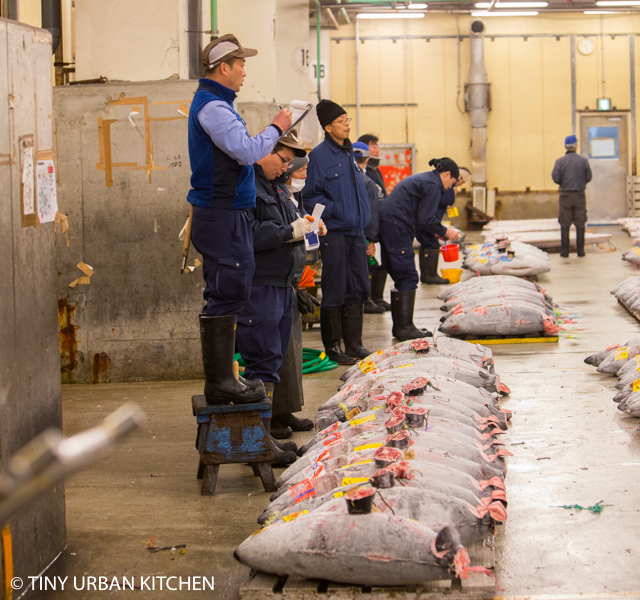
    Jennifer Che Tiny Urban Kitchen

    Hi, my name's Jen and welcome to my cooking, eating, and travel site! I am an expat who moved from Boston to Hong Kong 5 years ago. Born and raised in Ohio to Taiwanese immigrant parents, I am a chemistry nerd, patent attorney by day, blogger by night, church musician on weekends, and food enthusiast always. Feel free to explore away, maybe starting with the Recipe Index or one of the travel pages! I hope you enjoy this site!

    More about me →

    logo
    Food Advertisements by

    Explore

    • Recipe
    • Restaurant
    • US Travel
    • World Travel

    Popular Posts

    • Namsan Seoul Tower Korea
      Namsan Seoul Tower
    • Gwanjang Market Seoul Korea
      Street food at Gwanjang Market Seoul Korea
    • Hwangsaengga Kalguksu Seoul Korea
      Noodles and Dumplings at Hwangsaengga Kalguksu Seoul Korea
    • Tosokchon Samgyetang (土俗村蔘雞湯)
      Korean Ginseng Chicken Soup at Tosokchon Samgyetang (土俗村蔘雞湯)

    Recipes

    • Appetizer
    • Snacks
    • Meat
    • Vegetables
    • Soup
    • Salad
    • Seafood
    • Noodles

    Recently Traveled

    • Hong Kong
    • France
    • Belgium
    • Boston
    • California
    • United Kingdom
    • Germany
    • Spain

    Support Us

    Support Tiny Urban Kitchen by making purchases on Amazon through our affiliate link:

    Recognition


    Featured on the front page
    of the FOOD Section: 2015

    Best Food Blog Awards:
    Restaurant & Dining 2012

    Footer

    ↑ back to top

    About

    • About Me
    • My Equipment
    • In the Press
    • Project Food Blog
    • Privacy Policy

    Eating Guides!

    Eating & Travel Guides
    Trip Reports
    "Kawaii" (Cute Foods)
    Around the World

    • Pinterest
    • Facebook
    • Instagram
    • Twitter
    • LinkedIn
    • YouTube
    • Mail
    • RSS Feed

    As an Amazon Associate I earn from qualifying purchases.

    Shop at Amazon

    Copyright © 2024 Tiny Urban Kitchen